
Science
SoftBank and Yaskawa Collaborate to Launch Advanced Office Robots

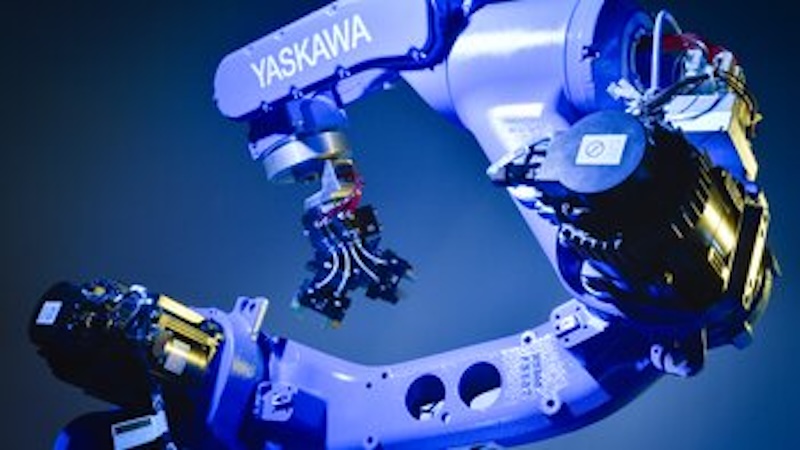
SoftBank and Yaskawa Electric have formalized their collaboration through a memorandum of understanding aimed at developing a new generation of robots for office environments. This partnership seeks to advance “Physical AI,” integrating sophisticated decision-making capabilities with flexible, multi-purpose physical functions. The two companies will leverage SoftBank’s AI-RAN initiative alongside Yaskawa Electric’s expertise in robotics and motion control technologies.
This collaboration is particularly timely as Japan grapples with significant labor shortages and demographic challenges. According to the press release, the partnership aims to facilitate the “social implementation” of Physical AI, addressing the urgent need for automation in various settings, including offices, schools, hospitals, and retail spaces. The first practical application of this collaboration will involve an office-oriented robot capable of integrating with building management systems, utilizing AI powered by Multi-access Edge Computing (MEC).
Revolutionizing Automation in Workspaces
Traditional robots are typically constrained to performing specific tasks. However, the new system developed by SoftBank and Yaskawa is designed to integrate multiple data streams in real time, enabling robots to perform a broader range of functions. This includes the capability to handle unpredictable scenarios that arise in dynamic environments. The companies emphasize that the goal is to create robots that can safely navigate and operate alongside humans while carrying out complex tasks.
A demonstration of this innovative system is scheduled for the 2025 International Robot Exhibition (iREX 2025), set to take place at Tokyo Big Sight from December 3 to 6. This event will showcase the practical applications of their collaboration, focusing on how robots can enhance productivity and safety in everyday workplaces.
Integrating Robotics with AI Infrastructure
Yaskawa Electric brings decades of expertise in precision motion control and industrial robotics to the partnership. The company is developing an autonomous robot named Motoman Next, which aims to enhance decision-making capabilities and operational flexibility through AI. On the other hand, SoftBank will provide the MEC environment, enabling low-latency processing of vast amounts of sensor and camera data. This integration allows robots to gain an “external perspective,” crucial for interpreting their surroundings effectively.
Additionally, SoftBank has created a Vision-Language Model (VLM) that functions as the MEC-based AI responsible for generating tasks. Yaskawa complements this with a Vision-Language Action (VLA) system, which translates the VLM’s instructions into precise robotic movements. The architecture of this system includes a next-generation building management system, an AI layer within the MEC, and Robot AI, all working together to facilitate real-time decision-making.
The companies assert that this advanced integration will enable scenarios where robots can identify and retrieve specific items, such as a smartphone, while adapting to unexpected events within a building.
As the collaboration unfolds, SoftBank and Yaskawa aim to surpass traditional automation frameworks by merging robotics with cutting-edge communication technologies. They envision a future where robots can perform multiple roles, traditionally requiring specialized machinery. This initiative is a significant step towards enhancing the coexistence of humans and robots in various environments, ensuring a safer, more efficient workplace.

Trump Administration Ties Global Health Aid to Abortion Data Sharing

Congress Faces Uncertainty as Trump Questions Health Subsidies

Groundbreaking Research Explores ‘Covert Consciousness’ in Patients

Michael Jordan’s Race Team Takes On NASCAR in Landmark Trial

Chicago Remembers Deadly Our Lady of the Angels Fire, 65 Years Later

Columbus Utility Rates Set to Rise by Up to 18% in 2026

Homemade Ding Dong Cake Recipe Takes Dessert to New Heights

Eurozone Manufacturing PMI Plummets to 49.6, Signals Contraction

Im Si Wan’s New Photos Spark Heated Debate Online

Urgent Update: Tom Aspinall’s Vision Deteriorates After UFC 321

MIT Scientists Uncover Surprising Genomic Loops During Cell Division

University of Hawaiʻi Joins $25.6M AI Project to Enhance Disaster Monitoring

AI Disruption: AWS Faces Threat as Startups Shift Cloud Focus

Time Crystals Revolutionize Quantum Computing Potential

Honeywell Forecasts Record Business Jet Deliveries Over Next Decade

Discover the Full Map of Pokémon Legends: Z-A’s Lumiose City

Parenthood Set to Depart Hulu: What Fans Need to Know

GOP Faces Backlash as Protests Surge Against Trump Policies
-
 Top Stories1 month ago
Urgent Update: Tom Aspinall’s Vision Deteriorates After UFC 321
-
 Health2 months ago
MIT Scientists Uncover Surprising Genomic Loops During Cell Division
-
Science4 weeks ago
University of Hawaiʻi Joins $25.6M AI Project to Enhance Disaster Monitoring
-
 Top Stories1 month ago
AI Disruption: AWS Faces Threat as Startups Shift Cloud Focus
-
 Science2 months ago
Time Crystals Revolutionize Quantum Computing Potential
-
 World2 months ago
Honeywell Forecasts Record Business Jet Deliveries Over Next Decade
-
 Entertainment2 months ago
Discover the Full Map of Pokémon Legends: Z-A’s Lumiose City
-
 Entertainment2 months ago
Parenthood Set to Depart Hulu: What Fans Need to Know
-
 Top Stories2 months ago
GOP Faces Backlash as Protests Surge Against Trump Policies
-

 Politics2 months ago
Judge Signals Dismissal of Chelsea Housing Case Citing AI Flaws
-

 Sports2 months ago
Yoshinobu Yamamoto Shines in Game 2, Leading Dodgers to Victory
-

 Health2 months ago
Maine Insurers Cut Medicare Advantage Plans Amid Cost Pressures