
World
Venezuelan President Maduro Defies Expectations Amid Crisis

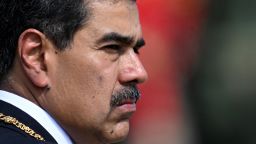
Venezuelan President Nicolás Maduro has consistently defied expectations throughout his political career, emerging as a figure of resilience amid significant challenges. His tenure has been marked by economic turmoil, international isolation, and allegations of human rights abuses. As Maduro approaches over a decade in power, he confronts renewed military and diplomatic pressures, particularly from the United States.
Maduro ascended to the presidency in April 2013 after being anointed by his predecessor, the late Hugo Chávez. His rise was met with skepticism; he garnered only a narrow victory against opposition leader Henrique Capriles, winning by just 1.59% of the vote. This initial election set the tone for his presidency, characterized by contested electoral processes and widespread dissent.
Despite being underestimated, Maduro has transformed into the longest-serving leader in Latin America, holding power for over 12 years. Critics have labeled his often eccentric behavior “maduradas,” a term that reflects both mockery and a recognition of his unexpected political survival. His administration has faced accusations of authoritarianism, with a notable decline in Venezuela’s economy, loss of democratic legitimacy, and severe humanitarian crises.
Political Maneuvering and Military Support
Maduro’s political journey began as a union leader, where he developed critical relationships, including with Cilia Flores, his partner and a notable figure in Venezuelan politics. His early career saw him climb the ranks within the United Socialist Party of Venezuela (PSUV), eventually becoming Chávez’s foreign minister. This position solidified his ties with Cuba, crucial for his political survival.
Cuban support has been instrumental for Maduro, particularly during periods of intense internal strife. His connection with Cuban leaders, including Fidel Castro, has been described as a significant factor in managing opposition movements and maintaining his grip on power. According to political analysts, his administration’s reliance on the military and alliances with traditional adversaries such as China and Russia has enabled him to navigate crises that have led to the downfall of other regimes in the region.
Maduro’s governance style has often resorted to repression and the use of force against dissent. Reports from the United Nations and the International Criminal Court (ICC) have documented a range of human rights violations occurring since 2014, including arbitrary detentions, extrajudicial killings, and systematic persecution of political opponents. These findings have prompted ongoing international scrutiny and calls for accountability.
Economic Collapse and Humanitarian Crisis
The Venezuelan economy has faced catastrophic decline, with estimates suggesting it has lost 72% of its value since 2013. Oil production, which has long been the backbone of the economy, has plummeted, and revenues have fallen to just 20% of their previous levels. Maduro’s government has attributed these economic woes to sanctions imposed by the United States, yet many analysts argue that mismanagement and corruption have played a more significant role.
As the humanitarian crisis deepens, millions of Venezuelans have fled the country, contributing to one of the largest migration crises globally, with nearly eight million now living abroad. This exodus has created a complex situation for Maduro, who faces mounting domestic pressure while attempting to maintain his authority.
Despite facing numerous challenges, including an increasingly aggressive U.S. policy aimed at undermining his regime, Maduro has demonstrated an ability to adapt and survive. His administration has skillfully navigated international sanctions and military threats, employing a narrative of anti-imperialism that resonates with certain segments of the population.
In the face of these pressures, Maduro’s future remains uncertain, yet his track record suggests that underestimating him could lead to further surprises. His government continues to employ tactics that focus on consolidating power and countering external threats, all while the Venezuelan populace grapples with the dire consequences of a prolonged crisis. As events unfold, the world watches closely, questioning whether Maduro can once again defy the odds and maintain his grip on power.

FanDuel Casino Launches Bonus Offering 500 Spins and $40 Credits

Rutherford B. Hayes Library Hosts December Book Clubs

Understanding Hair Loss: Insights from Traditional Chinese Medicine

Lincoln Nonprofit Fights Funding Cuts to Support Foster Care Children

FanDuel Casino Launches $40 Bonus and 500 Free Spins NOW!

Incyte’s Experimental Drug Shows Promise for Myelofibrosis Treatment

Himes Calls Hegseth’s Claims on Boat Strikes “Zero Credibility”

Trump’s Influence Shifts Speaker of the House Role, Experts Warn

Urgent Update: Xeon CPUs Revolutionize Home Labs for Tinkerers

Urgent Update: Tom Aspinall’s Vision Deteriorates After UFC 321

University of Hawaiʻi Joins $25.6M AI Project to Enhance Disaster Monitoring

MIT Scientists Uncover Surprising Genomic Loops During Cell Division

AI Disruption: AWS Faces Threat as Startups Shift Cloud Focus

Time Crystals Revolutionize Quantum Computing Potential

Discover the Full Map of Pokémon Legends: Z-A’s Lumiose City

Parenthood Set to Depart Hulu: What Fans Need to Know

GOP Faces Backlash as Protests Surge Against Trump Policies

Honeywell Forecasts Record Business Jet Deliveries Over Next Decade
-
 Top Stories1 month ago
Urgent Update: Tom Aspinall’s Vision Deteriorates After UFC 321
-
Science1 month ago
University of Hawaiʻi Joins $25.6M AI Project to Enhance Disaster Monitoring
-
 Health2 months ago
MIT Scientists Uncover Surprising Genomic Loops During Cell Division
-
 Top Stories2 months ago
AI Disruption: AWS Faces Threat as Startups Shift Cloud Focus
-
 Science2 months ago
Time Crystals Revolutionize Quantum Computing Potential
-
 Entertainment2 months ago
Discover the Full Map of Pokémon Legends: Z-A’s Lumiose City
-
 Entertainment2 months ago
Parenthood Set to Depart Hulu: What Fans Need to Know
-
 Top Stories2 months ago
GOP Faces Backlash as Protests Surge Against Trump Policies
-
 World2 months ago
Honeywell Forecasts Record Business Jet Deliveries Over Next Decade
-

 Politics2 months ago
Judge Signals Dismissal of Chelsea Housing Case Citing AI Flaws
-

 Health2 months ago
Maine Insurers Cut Medicare Advantage Plans Amid Cost Pressures
-

 Sports2 months ago
Yoshinobu Yamamoto Shines in Game 2, Leading Dodgers to Victory