
Top Stories
CEOs Challenge Assumptions on Driverless Tech Amid Growing Demand

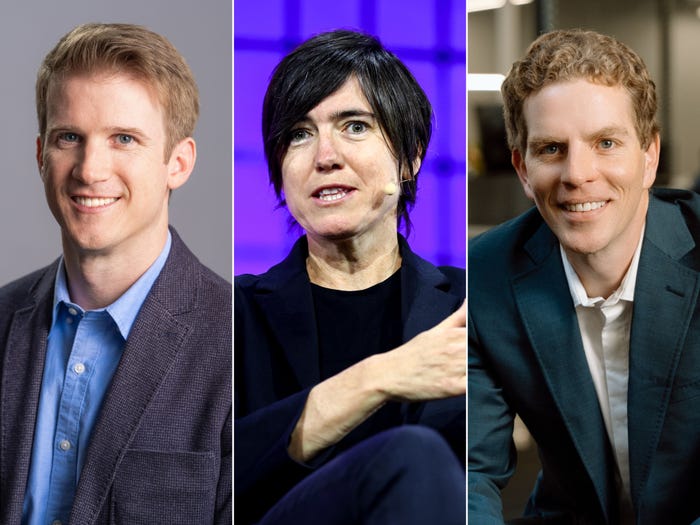
URGENT UPDATE: Three leading CEOs in driverless technology have just challenged the prevailing assumptions about self-driving vehicles, revealing critical insights that could shape the future of autonomy. Don Burnette of Kodiak, Raquel Urtasun of Waabi, and Dave Ferguson of Nuro spoke with Business Insider about their experiences and the current state of the industry.
As the demand for autonomous vehicles surges, these industry leaders are highlighting transformative ideas that could redefine how we view self-driving technology. Burnette’s company, Kodiak, is already deploying eight driverless trucks in the Permian Basin, transporting sand for hydraulic fracking. Urtasun’s Waabi plans to launch fully autonomous trucks by the end of this year in collaboration with Volvo. Meanwhile, Ferguson’s Nuro is gearing up to compete with Waymo in the robotaxi market by 2026.
The trio agrees: technology is no longer the bottleneck. “Everyone focuses on the technology,” Burnette stated, emphasizing that the real challenge now lies in achieving profitability and scaling operations. Ferguson acknowledged that while certain technical challenges remain—particularly related to operating in adverse weather conditions—these are not insurmountable.
Another surprising revelation: the number of autonomous miles driven may not indicate technological readiness. Urtasun argued that this metric merely reflects how long a company has been in the game, not the efficacy of its technology. “The sample pool of autonomously driven miles for trucks is too small to make a comparable safety case,” she explained, noting that the fatality rate for large truck drivers is 1.3 fatal crashes per 100 million miles.
Furthermore, the leap from assisted driving to full autonomy is vast. Ferguson pointed out the substantial differences between Level 2 and Level 4 autonomy, which involves completely driverless operation. He recalled his time at Google’s self-driving project, underscoring the long journey it took to achieve meaningful advancements.
Debates surrounding the use of lidar versus cameras in autonomous vehicles are deemed a distraction by these CEOs. While Tesla advocates for a camera-only approach, Burnette argues that the focus should be on making the technology economically viable and ensuring safety. “It’s very much an ROI question,” Ferguson added, highlighting the importance of safety enhancements over cost-cutting measures.
This urgent dialogue among industry leaders signifies a pivotal moment for driverless technology, as they work towards overcoming current barriers and reshaping public perception. As the race to deploy self-driving vehicles intensifies, stakeholders must pay attention to these insights.
What’s Next: With companies like Kodiak, Waabi, and Nuro at the forefront, we can expect rapid developments in the coming months. Keep an eye on their progress as they navigate the complex landscape of autonomous driving, aiming for safer and more efficient transportation solutions.
Stay tuned for further updates as this story evolves.

New York Passes Historic Bill for First State Holocaust Memorial

Urgent Warning: ‘King Tides’ to Hit North Coast This Week

ADHD Drug Exemptions Plunge to Record Low in MLB, Urgent Update

Trump Urges Support in TN Race Amid Signs of GOP Struggles

College Football Coaching Shakeup: Key Moves and Changes in 2025

Looq AI Broadens Global Partnerships for Enhanced Reality Capture

Netflix Eliminates Casting Support for Most TVs, Promotes Native Apps

Discover Unique Grateful Dead Merchandise for Holiday Gifting

Trump’s MRI Results Released After Weeks of Speculation

Urgent Update: Tom Aspinall’s Vision Deteriorates After UFC 321

MIT Scientists Uncover Surprising Genomic Loops During Cell Division

University of Hawaiʻi Joins $25.6M AI Project to Enhance Disaster Monitoring

AI Disruption: AWS Faces Threat as Startups Shift Cloud Focus

Time Crystals Revolutionize Quantum Computing Potential

Honeywell Forecasts Record Business Jet Deliveries Over Next Decade

Discover the Full Map of Pokémon Legends: Z-A’s Lumiose City

GOP Faces Backlash as Protests Surge Against Trump Policies

Parenthood Set to Depart Hulu: What Fans Need to Know
-
 Top Stories1 month ago
Urgent Update: Tom Aspinall’s Vision Deteriorates After UFC 321
-
 Health2 months ago
MIT Scientists Uncover Surprising Genomic Loops During Cell Division
-
Science4 weeks ago
University of Hawaiʻi Joins $25.6M AI Project to Enhance Disaster Monitoring
-
 Top Stories2 months ago
AI Disruption: AWS Faces Threat as Startups Shift Cloud Focus
-
 Science2 months ago
Time Crystals Revolutionize Quantum Computing Potential
-
 World2 months ago
Honeywell Forecasts Record Business Jet Deliveries Over Next Decade
-
 Entertainment2 months ago
Discover the Full Map of Pokémon Legends: Z-A’s Lumiose City
-
 Top Stories2 months ago
GOP Faces Backlash as Protests Surge Against Trump Policies
-
 Entertainment2 months ago
Parenthood Set to Depart Hulu: What Fans Need to Know
-

 Politics2 months ago
Judge Signals Dismissal of Chelsea Housing Case Citing AI Flaws
-

 Sports2 months ago
Yoshinobu Yamamoto Shines in Game 2, Leading Dodgers to Victory
-

 Health2 months ago
Maine Insurers Cut Medicare Advantage Plans Amid Cost Pressures