
Top Stories
Syrian Elections Spark Controversy Amid Authoritarian Concerns

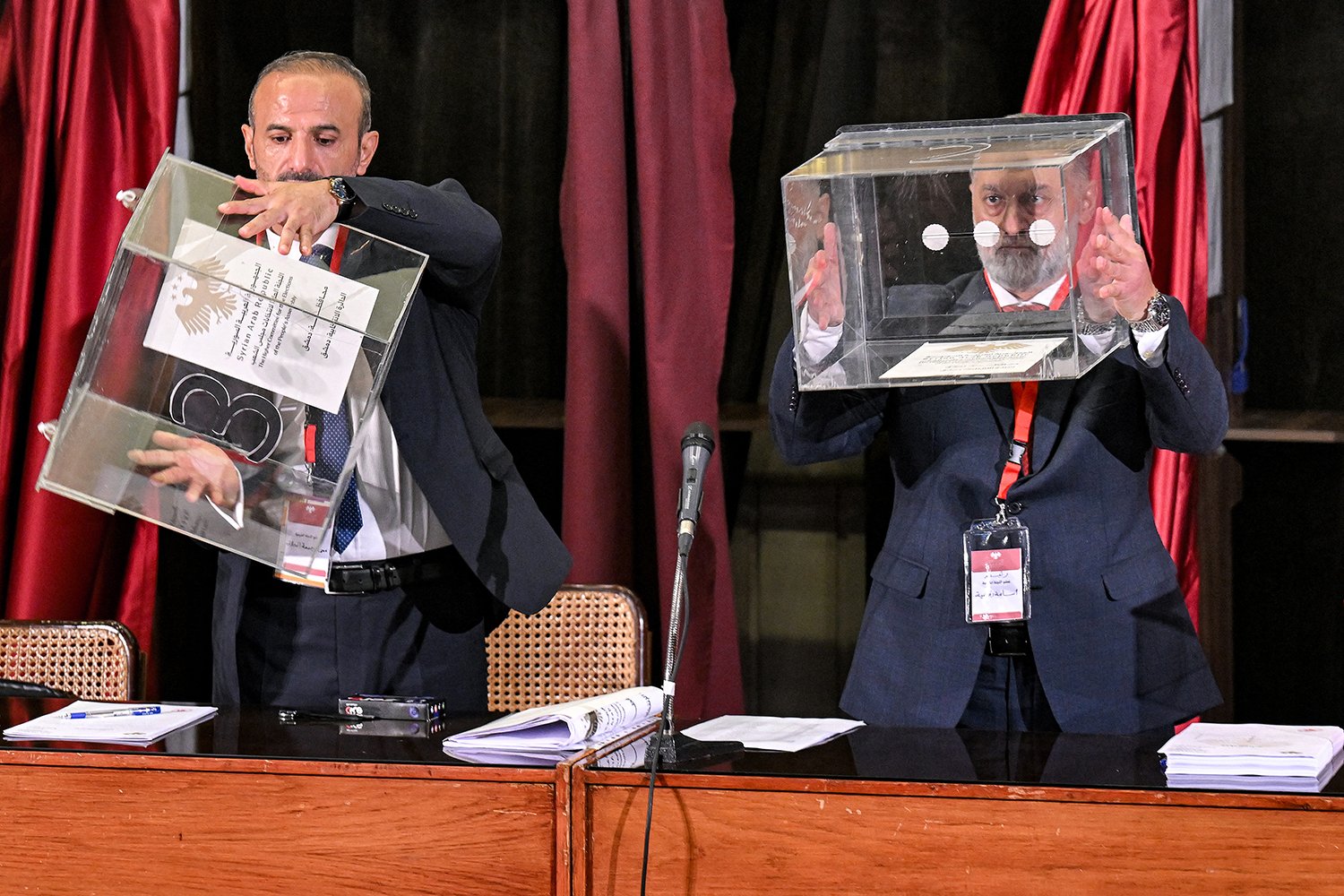
UPDATE: Syria has just held its first parliamentary elections since the regime took a new direction under interim President Ahmed al-Sharaa on October 5, 2024. While many hoped for a genuine democratic process, concerns are mounting about authoritarian practices persisting in the newly formed government.
Only a few thousand Syrians participated in these elections through a tiered electoral college system, with approximately 6,000 delegates voting to fill just 119 out of 210 seats. This limited turnout raises alarms about the legitimacy of the electoral process, as many citizens were unaware that elections were even occurring.
Critics argue that the elections were designed to maintain the status quo set by former leaders Hafez al-Assad and Bashar al-Assad, who used the parliamentary body to legitimize their policies without allowing for real opposition. Adham Masoud al-Qaq, a candidate with a history of opposing the regime, expressed skepticism about the electoral integrity, noting, “We could clearly sense that this or that person would win as a representative before the voting even took place.”
The government claims that traditional elections are unfeasible due to the ongoing displacement crisis, stating that “Syria cannot hold traditional elections given the presence of millions of internally and externally displaced persons.” Officials assert that under these circumstances, the current electoral framework is necessary.
The recent elections were held as part of a five-year transitional period established by Sharaa’s constitutional declaration issued in March. However, the assembly’s powers appear severely limited. It will not have the authority to initiate elections through a vote of no confidence, and presidential elections may not occur for another four to five years.
Despite these limitations, the enthusiasm observed during campaign events has sparked some hope for political engagement. Across candidate meetings, a pattern of civic involvement has emerged—a faint sign of democratic aspirations in a country long stifled by autocracy.
One notable incident occurred in Damascus where Mouyad Zaidan, a candidate, faced threats of violence, indicating the lingering presence of criminal elements associated with the previous regime. He remarked, “The same criminals who committed atrocities are now scattered among us, engaging in theft, fraud, kidnapping, and murder.”
The electoral process has been criticized for its opacity. Subcommittees, handpicked by Sharaa, controlled candidate nominations, limiting public participation and raising concerns about corruption. Although there were mandates for women’s representation—at least 20 percent of delegates—only six women secured seats, and just ten minority candidates were elected.
The political landscape remains fraught with challenges as Sharaa’s administration continues to prioritize diplomatic engagements over internal reforms. He recently met with Vladimir Putin and is scheduled to meet with former President Donald Trump on November 10—marking a historic moment as the first Syrian president to do so since the country’s independence.
With the elections concluded, many observers are questioning what comes next for Syria. The absence of substantial democratic reforms raises doubts about the future political landscape and whether genuine representation can emerge in the face of entrenched authoritarian practices.
As international eyes remain focused on Syria, the coming months will be critical in determining whether this transitional government can break away from its past or if it will continue to suppress the voices of its citizens. The stakes are high, and the world is watching.

Icy Roads Lead to Tragic Death of 21-Year-Old in Comanche County

UCLA Defensive Back Scooter Jackson Enters Transfer Portal Ahead of 2026 Season

Study Reveals Cinnamon and Turmeric May Impact Medications

University Policies Impacting Scientific Advancements, Study Finds

David Letterman and Adam Sandler Share Laughter and Memories

Trump’s MRI Results Declared “Perfect” by White House Amid Speculation

Psoriasis Cases Surge in Wealthy Regions, Study Reveals Alarming Trends

New York Passes Historic Bill for First State Holocaust Memorial

Urgent Warning: ‘King Tides’ to Hit North Coast This Week

Urgent Update: Tom Aspinall’s Vision Deteriorates After UFC 321

MIT Scientists Uncover Surprising Genomic Loops During Cell Division

University of Hawaiʻi Joins $25.6M AI Project to Enhance Disaster Monitoring

AI Disruption: AWS Faces Threat as Startups Shift Cloud Focus

Time Crystals Revolutionize Quantum Computing Potential

Honeywell Forecasts Record Business Jet Deliveries Over Next Decade

Discover the Full Map of Pokémon Legends: Z-A’s Lumiose City

GOP Faces Backlash as Protests Surge Against Trump Policies

Parenthood Set to Depart Hulu: What Fans Need to Know
-
 Top Stories1 month ago
Urgent Update: Tom Aspinall’s Vision Deteriorates After UFC 321
-
 Health2 months ago
MIT Scientists Uncover Surprising Genomic Loops During Cell Division
-
Science4 weeks ago
University of Hawaiʻi Joins $25.6M AI Project to Enhance Disaster Monitoring
-
 Top Stories2 months ago
AI Disruption: AWS Faces Threat as Startups Shift Cloud Focus
-
 Science2 months ago
Time Crystals Revolutionize Quantum Computing Potential
-
 World2 months ago
Honeywell Forecasts Record Business Jet Deliveries Over Next Decade
-
 Entertainment2 months ago
Discover the Full Map of Pokémon Legends: Z-A’s Lumiose City
-
 Top Stories2 months ago
GOP Faces Backlash as Protests Surge Against Trump Policies
-
 Entertainment2 months ago
Parenthood Set to Depart Hulu: What Fans Need to Know
-

 Politics2 months ago
Judge Signals Dismissal of Chelsea Housing Case Citing AI Flaws
-

 Sports2 months ago
Yoshinobu Yamamoto Shines in Game 2, Leading Dodgers to Victory
-

 Health2 months ago
Maine Insurers Cut Medicare Advantage Plans Amid Cost Pressures