
Top Stories
US Catholic Bishops Set to Elect New Leaders Amid Immigration Debate

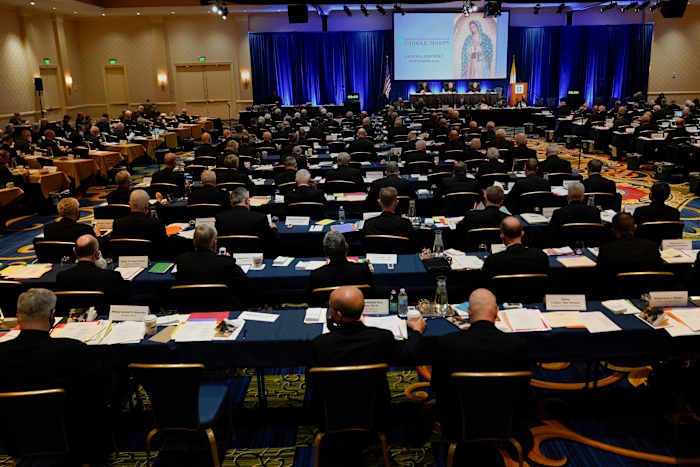
UPDATE: The U.S. Conference of Catholic Bishops is poised to elect a new president and vice president today, November 14, 2023, in Baltimore, and the decision could significantly impact the Church’s stance on key social issues, including immigration. This vote not only reflects the internal dynamics of the bishops but also serves as a barometer of the Church’s priorities in a polarized America.
The election comes amid urgent discussions surrounding the Trump administration’s immigration policies, which have created a climate of fear among migrants and have affected Mass attendance in various parishes. Many bishops are grappling with how firmly to address these contentious issues, and today’s vote could set a new direction.
With 10 candidates on the ballot, the election is expected to be closely contested. Half of these candidates hail from the conservative faction of the conference, indicating a split in the hierarchy. Notably, outgoing leader, Military Services Archbishop Timothy Broglio, will be succeeded by a new leader for a three-year term. The current vice president, Archbishop William Lori of Baltimore, is approaching the mandatory retirement age of 75.
Among the frontrunners, Archbishop Paul Coakley of Oklahoma City stands out as a strong candidate, previously serving as secretary of the conference. Coakley has a history of aligning with conservative viewpoints, including his support for Italian Archbishop Carlo Maria Vigano, a prominent critic of Pope Francis.
Another notable candidate is Bishop Robert Barron of Minnesota, renowned for his Word on Fire ministry and his role on Trump’s Religious Liberty Commission. Insiders suggest that bishops like Bishop Daniel Flores of Brownsville, Texas, and Archbishop Nelson Perez of Philadelphia, who represent the growing Latino demographic in the U.S. Church, could provide a unifying presence. Flores has been actively involved in the Vatican’s synod process, aiming to modernize the Church.
The election’s outcome could either deepen the divide among bishops or foster a pathway toward unity, particularly as the bishops plan to address immigration during their conference. Their discussions will likely reflect the broader societal polarization, yet most bishops, even those with conservative leanings, are expected to advocate for migrants’ rights.
Pope Leo XIV has emphasized the need for “deep reflection” on the treatment of migrants, highlighting the profound effects of current immigration policies on individuals who have contributed to society for years. His message underscores the urgency of addressing these issues within the Church.
As the bishops gather for this pivotal vote, the implications of their leadership choices will reverberate throughout the U.S. Catholic community and beyond. The outcome will be crucial for shaping not only the Church’s response to social issues but also its relationship with the Vatican and the broader public.
Stay tuned for more updates as the election results unfold.

Black Friday Sales Surge: Strong Consumer Confidence Reported

Church of Jesus Christ Announces Urgent Davao Temple Dedication

Icy Roads Lead to Tragic Death of 21-Year-Old in Comanche County

UCLA Defensive Back Scooter Jackson Enters Transfer Portal Ahead of 2026 Season

Study Reveals Cinnamon and Turmeric May Impact Medications

University Policies Impacting Scientific Advancements, Study Finds

David Letterman and Adam Sandler Share Laughter and Memories

Trump’s MRI Results Declared “Perfect” by White House Amid Speculation

Psoriasis Cases Surge in Wealthy Regions, Study Reveals Alarming Trends

Urgent Update: Tom Aspinall’s Vision Deteriorates After UFC 321

MIT Scientists Uncover Surprising Genomic Loops During Cell Division

University of Hawaiʻi Joins $25.6M AI Project to Enhance Disaster Monitoring

AI Disruption: AWS Faces Threat as Startups Shift Cloud Focus

Time Crystals Revolutionize Quantum Computing Potential

Honeywell Forecasts Record Business Jet Deliveries Over Next Decade

Discover the Full Map of Pokémon Legends: Z-A’s Lumiose City

GOP Faces Backlash as Protests Surge Against Trump Policies

Parenthood Set to Depart Hulu: What Fans Need to Know
-
 Top Stories1 month ago
Urgent Update: Tom Aspinall’s Vision Deteriorates After UFC 321
-
 Health2 months ago
MIT Scientists Uncover Surprising Genomic Loops During Cell Division
-
Science4 weeks ago
University of Hawaiʻi Joins $25.6M AI Project to Enhance Disaster Monitoring
-
 Top Stories2 months ago
AI Disruption: AWS Faces Threat as Startups Shift Cloud Focus
-
 Science2 months ago
Time Crystals Revolutionize Quantum Computing Potential
-
 World2 months ago
Honeywell Forecasts Record Business Jet Deliveries Over Next Decade
-
 Entertainment2 months ago
Discover the Full Map of Pokémon Legends: Z-A’s Lumiose City
-
 Top Stories2 months ago
GOP Faces Backlash as Protests Surge Against Trump Policies
-
 Entertainment2 months ago
Parenthood Set to Depart Hulu: What Fans Need to Know
-

 Politics2 months ago
Judge Signals Dismissal of Chelsea Housing Case Citing AI Flaws
-

 Sports2 months ago
Yoshinobu Yamamoto Shines in Game 2, Leading Dodgers to Victory
-

 Health2 months ago
Maine Insurers Cut Medicare Advantage Plans Amid Cost Pressures