
Top Stories
Canonical’s MicroCloud Launches: A Game-Changer for Home Labs

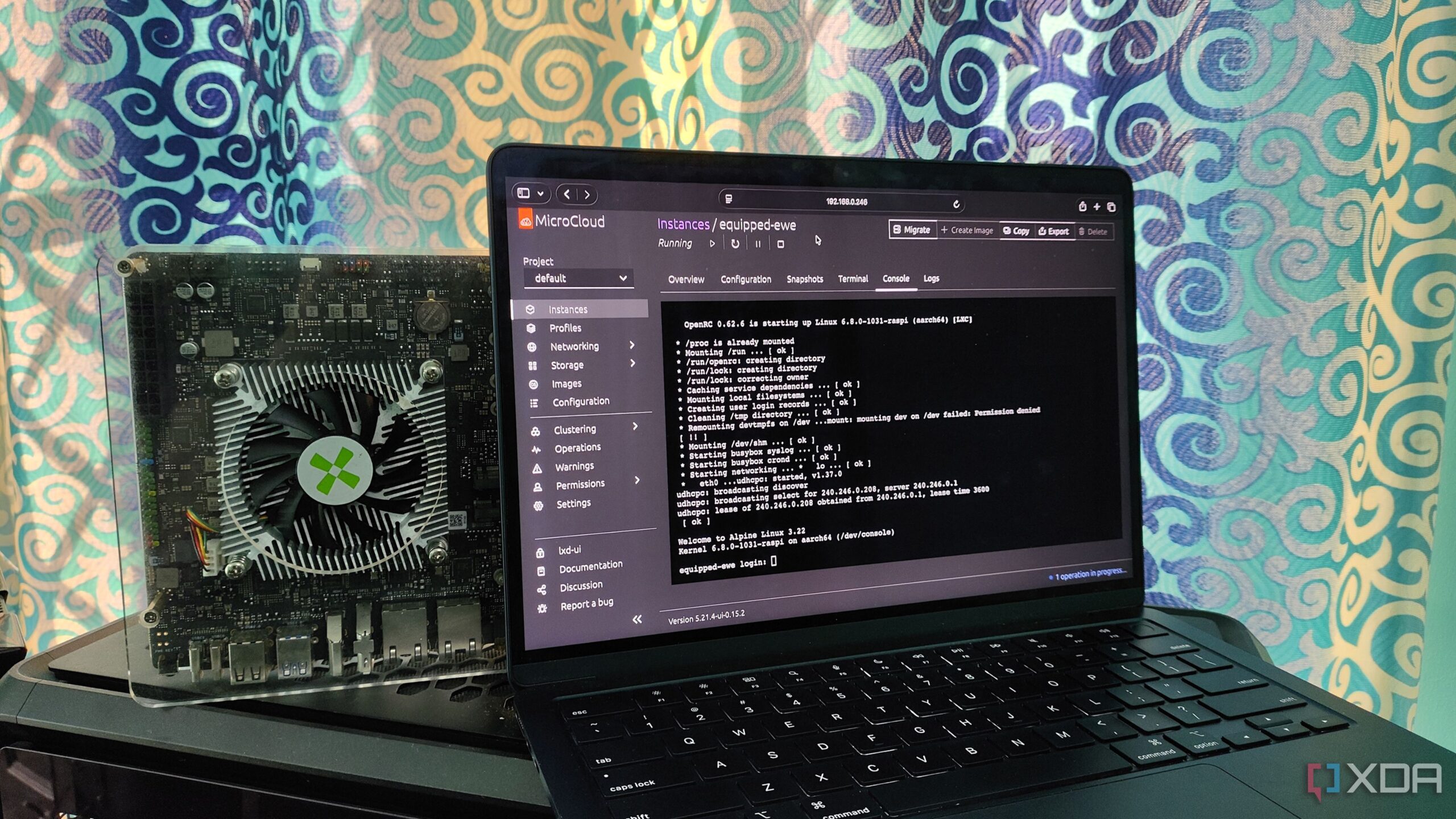
UPDATE: Canonical has just launched its revolutionary MicroCloud platform, promising to transform home lab setups for tech enthusiasts worldwide. This groundbreaking solution not only supports virtual machines but also integrates containerization, making it a must-try for hobbyists and professionals alike.
After extensive testing, MicroCloud has proven to be more than just another virtualization tool; it’s a robust platform that caters to both virtual machines and lightweight containers, which is a rarity among free server distributions.
Why This Matters NOW: With virtualization and containerization becoming essential for modern computing, MicroCloud provides an accessible solution that runs flawlessly on low-power devices, including the popular Raspberry Pi. This breakthrough allows users to maximize their hardware while exploring advanced features typically reserved for larger systems.
MicroCloud’s architecture is built on LXD, enabling users to deploy lightweight containers seamlessly. Unlike traditional platforms that often require complex configurations, MicroCloud simplifies the deployment process, making it ideal for those who may not have extensive technical backgrounds.
Key Features:
– **Clustering Support:** MicroCloud’s high-availability clustering capabilities offer superior fault tolerance, ideal for critical applications. The platform utilizes micro-service versions of essential tools, enhancing resilience.
– **Storage Solutions:** For users who prefer ZFS, MicroCloud supports this for data pools and volumes, ensuring efficient storage management.
– **User-Friendly Interface:** The platform boasts a straightforward web interface, allowing users to create storage pools and manage instances without extensive documentation.
Compatibility and Performance: What’s particularly impressive is MicroCloud’s performance on the Raspberry Pi. Users can run both containers and Ubuntu-based virtual machines without any compatibility issues, which is a significant advantage over other platforms like Proxmox. This feature opens up new possibilities for users with limited hardware resources.
However, while MicroCloud excels in many areas, it does have limitations. Notably, it lacks support for external backups of virtual instances, which could deter users accustomed to functionalities found in Proxmox. Additionally, users may find the absence of community scripts for containers a drawback.
What’s Next: As Canonical continues to refine MicroCloud, users are eager to see updates that enhance its capabilities, especially in backup solutions. The community response is expected to be robust as more enthusiasts dive into testing and sharing their experiences with this innovative platform.
In conclusion, Canonical’s MicroCloud is not just another addition to the home lab scene; it’s a powerful and flexible option that supports both virtualization and containerization. With its unique features and compatibility with low-power devices, it’s poised to become a favorite among tech aficionados looking to optimize their home labs.
Stay tuned for more updates as the community explores the full potential of MicroCloud!

Connecticut Police Respond to 475 Crashes, 2 Fatal, Over Thanksgiving

Trump Issues Ultimatum to Maduro as Venezuela Closes Airspace

Microsoft Struggles to Fix Windows 11 Amid Ongoing User Frustration

Bottineau Man, 88, Dies in Central North Dakota Crash

Macaque Monkeys Tap to the Beat, Challenging Musical Learning Theories

Organizing Committee Prepares for 2034 Olympics at Quarterly Meeting

Kino Lorber Acquires Argentine Film ‘The Currents’ for 2026 Release

Dozier’s BBQ Expands to Houston’s Downtown with New Stall

Grab McFarlane’s Warhammer 40,000 Space Marine at 20% Off

Urgent Update: Tom Aspinall’s Vision Deteriorates After UFC 321

MIT Scientists Uncover Surprising Genomic Loops During Cell Division

University of Hawaiʻi Joins $25.6M AI Project to Enhance Disaster Monitoring

AI Disruption: AWS Faces Threat as Startups Shift Cloud Focus

Time Crystals Revolutionize Quantum Computing Potential

Honeywell Forecasts Record Business Jet Deliveries Over Next Decade

Discover the Full Map of Pokémon Legends: Z-A’s Lumiose City

GOP Faces Backlash as Protests Surge Against Trump Policies

Parenthood Set to Depart Hulu: What Fans Need to Know
-
 Top Stories1 month ago
Urgent Update: Tom Aspinall’s Vision Deteriorates After UFC 321
-
 Health2 months ago
MIT Scientists Uncover Surprising Genomic Loops During Cell Division
-
Science4 weeks ago
University of Hawaiʻi Joins $25.6M AI Project to Enhance Disaster Monitoring
-
 Top Stories2 months ago
AI Disruption: AWS Faces Threat as Startups Shift Cloud Focus
-
 Science2 months ago
Time Crystals Revolutionize Quantum Computing Potential
-
 World2 months ago
Honeywell Forecasts Record Business Jet Deliveries Over Next Decade
-
 Entertainment2 months ago
Discover the Full Map of Pokémon Legends: Z-A’s Lumiose City
-
 Top Stories2 months ago
GOP Faces Backlash as Protests Surge Against Trump Policies
-
 Entertainment2 months ago
Parenthood Set to Depart Hulu: What Fans Need to Know
-

 Politics2 months ago
Judge Signals Dismissal of Chelsea Housing Case Citing AI Flaws
-

 Sports2 months ago
Yoshinobu Yamamoto Shines in Game 2, Leading Dodgers to Victory
-

 Health2 months ago
Maine Insurers Cut Medicare Advantage Plans Amid Cost Pressures