
Business
Hundreds of Power Projects Canceled Amid Rising Demand for Energy

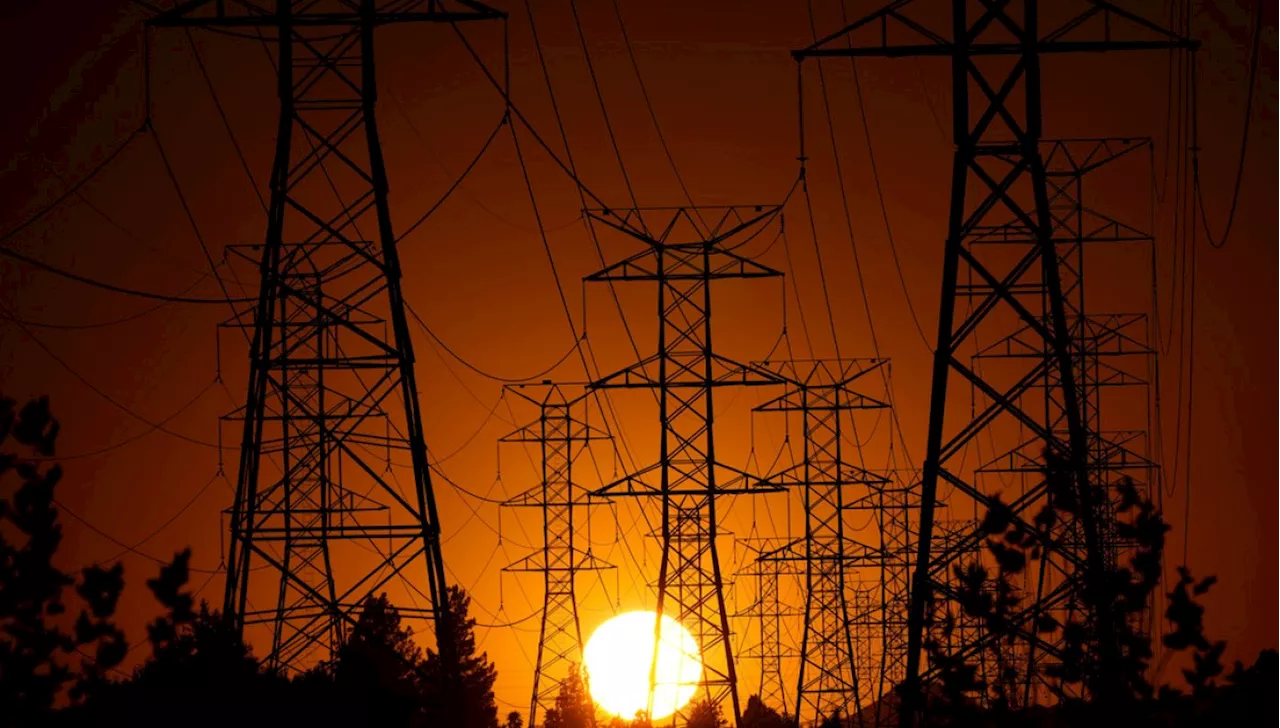
The green energy sector has faced significant setbacks this year, with a report from Cleanview revealing that 1,891 power projects have been canceled, accounting for a total generation capacity of approximately 266 gigawatts. This represents a critical loss, particularly as the demand for electricity continues to rise with advancements in technologies such as artificial intelligence.
According to Cleanview’s findings published on Tuesday, projects primarily focused on renewable energy sources—wind, solar, and battery storage—were the hardest hit, making up an alarming 93% of the cancellations. Over the next five years, developers had planned to construct numerous utility-scale solar farms and offshore wind projects, which are now no longer viable. These cancellations could exacerbate the challenges utilities face in meeting escalating electricity demands.
The report highlights a concerning trend: while the U.S. government pushes for rapid technological advancement in AI, it simultaneously curtails the energy generation necessary to support this growth. Cleanview warns that this policy contradiction jeopardizes grid reliability, affordability, and America’s competitive edge in the global AI landscape.
Key Cancellations and Their Impacts
Among the canceled projects, more than 86 gigawatts of utility-scale solar capacity was lost, alongside approximately 79 gigawatts of battery storage and 54 gigawatts of wind energy projects. The cancellations stemmed not only from political decisions, particularly those influenced by former President Donald Trump, who has openly opposed the expansion of offshore wind and certain solar initiatives but also from local opposition to large-scale energy developments.
Cleanview specifically pointed to the cancellation of over $679 million in federal funding for offshore wind projects as a turning point. Furthermore, changes within the Department of the Interior have effectively halted work on projects already under construction, leading to substantial losses in key regions. For instance, New York ISO saw a reduction of 13.2 gigawatts of planned projects, while New England lost 11 gigawatts of wind capacity.
The report also emphasizes the economic implications of these cancellations. The cost of electricity for households may increase further, compounding the strain on consumers already facing rising living expenses. With peak energy demands projected to increase by at least 100 gigawatts by 2030, driven largely by data centers, the urgency for reliable energy sources has never been more pressing.
Local Opposition and Economic Challenges
While federal policies play a significant role in project cancellations, local opposition has also contributed to this trend. Cleanview identifies states like Louisiana and Missouri as having the highest interconnection costs, approximately $928,000 and $915,000 per megawatt, respectively. The financial burdens associated with connecting renewable projects to the grid, combined with slow transmission infrastructure development, have deterred many developers from continuing their initiatives.
The report further reveals that the cancellations extend beyond renewable energy. Over 4 gigawatts of gas power projects were also scrapped, primarily due to supply chain issues related to gas infrastructure, including delays in acquiring necessary equipment such as large gas turbines.
Looking ahead, the trend of project cancellations is expected to persist. With the benefits of the Inflation Reduction Act’s subsidies for wind and solar projects set to expire in the next two years, developers face growing pressure to meet critical construction milestones. The recent termination of federal tax credits through the One Big Beautiful Bill Act adds another layer of uncertainty for the renewable sector.
Cleanview has urged policymakers, including President Trump, Secretary of Energy Chris Wright, and Secretary of the Interior Doug Burgum, to align their energy policies with actionable steps that support the growth of renewable energy projects. To ensure energy affordability and meet future demand, comprehensive permitting reforms are necessary to address local opposition and facilitate the development of essential infrastructure.
As the country grapples with these challenges, the need for coherent energy policies that promote sustainable growth while balancing local concerns becomes increasingly vital for the future of energy generation in the United States.

New Framework Boosts Robot Learning, Enhances Object Interaction

Judge Grants Justice Department to Unseal Ghislaine Maxwell Records

Brokeback Mountain Turns 20: Reflecting on Love and Loss Now

Hundreds of Power Projects Canceled Amid Rising Demand for Energy

Brokeback Mountain: A Timeless Reflection on Love and Loss

Researchers Release Groundbreaking Exercise Guidelines for Lymphedema

Duluth’s Hillside Neighborhood Community Center Celebrates 50 Years

Miami Mayoral Election Becomes Referendum on Presidential Policies

AI System Aims to Combat Bovine Respiratory Disease in Calves

Urgent Update: Tom Aspinall’s Vision Deteriorates After UFC 321

University of Hawaiʻi Joins $25.6M AI Project to Enhance Disaster Monitoring

MIT Scientists Uncover Surprising Genomic Loops During Cell Division

AI Disruption: AWS Faces Threat as Startups Shift Cloud Focus

Time Crystals Revolutionize Quantum Computing Potential

Discover the Full Map of Pokémon Legends: Z-A’s Lumiose City

Parenthood Set to Depart Hulu: What Fans Need to Know

GOP Faces Backlash as Protests Surge Against Trump Policies

Honeywell Forecasts Record Business Jet Deliveries Over Next Decade
-
 Top Stories1 month ago
Urgent Update: Tom Aspinall’s Vision Deteriorates After UFC 321
-
Science1 month ago
University of Hawaiʻi Joins $25.6M AI Project to Enhance Disaster Monitoring
-
 Health2 months ago
MIT Scientists Uncover Surprising Genomic Loops During Cell Division
-
 Top Stories2 months ago
AI Disruption: AWS Faces Threat as Startups Shift Cloud Focus
-
 Science2 months ago
Time Crystals Revolutionize Quantum Computing Potential
-
 Entertainment2 months ago
Discover the Full Map of Pokémon Legends: Z-A’s Lumiose City
-
 Entertainment2 months ago
Parenthood Set to Depart Hulu: What Fans Need to Know
-
 Top Stories2 months ago
GOP Faces Backlash as Protests Surge Against Trump Policies
-
 World2 months ago
Honeywell Forecasts Record Business Jet Deliveries Over Next Decade
-

 Politics2 months ago
Judge Signals Dismissal of Chelsea Housing Case Citing AI Flaws
-

 Health2 months ago
Maine Insurers Cut Medicare Advantage Plans Amid Cost Pressures
-

 Sports2 months ago
Yoshinobu Yamamoto Shines in Game 2, Leading Dodgers to Victory