
Business
Major Layoffs at The Washington Post Signal Oversight Challenges

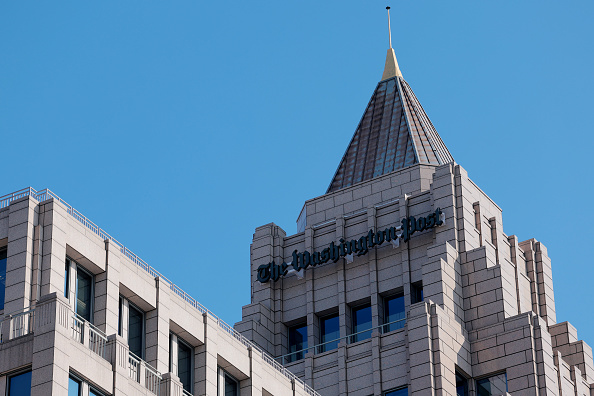
The Washington Post has announced significant layoffs, impacting its newsroom at a time when the media landscape is already under strain. This decision raises serious concerns about the future of investigative journalism and the ability of one of the nation’s leading newsrooms to hold power accountable.
The Post’s role in American journalism has been pivotal for decades. It has served as a crucial watchdog, especially over federal government actions. With fewer reporters and resources, the ability to sustain thorough oversight diminishes, which could have far-reaching implications for public knowledge and accountability.
Impact of Layoffs on Investigative Journalism
The layoffs at The Washington Post are not just a business decision; they represent a critical moment in the landscape of American journalism. The Post has played a significant role in landmark events like the Pentagon Papers case and the Watergate scandal, both of which underscored the importance of robust investigative journalism. These historic moments were the result of sustained efforts from a well-staffed newsroom capable of pursuing complex stories over time.
As the newsroom reduces in size, the capacity to conduct such in-depth reporting is compromised. Investigative journalism requires dedicated teams that can follow leads, attend hearings, and develop sources over extended periods. The reported cuts to international coverage further compound this issue. International reporting is essential for citizens to understand how foreign policies affect domestic issues such as migration, trade, and national security.
Consequences for Public Accountability
When a newsroom like The Post faces significant cuts, the immediate impact is a reduction in the number of journalists available to verify claims made by officials. This diminishes the institution’s ability to provide independent, fact-based reporting. Consequently, the public may find itself relying more on official narratives and less on critical oversight that challenges those narratives.
As noted by Wafa Unus, an associate professor of journalism at Fitchburg State University, the implications of these layoffs extend beyond the newsroom itself. A diminished reporting capacity translates to a weakened ability to document how federal power is exercised and justified. This shift affects not only what the public knows but also what it can question and hold to account.
The long-term effects of such layoffs can create a cyclical problem. With fewer resources to conduct investigations, newsrooms may struggle to produce the quality of work that engages the public. This could lead to a disengaged audience, further reducing the pressure on institutions to maintain transparency and accountability.
The Washington Post’s layoffs are a matter of public consequence, highlighting a significant challenge for democracy. The overall health of journalistic institutions is crucial for maintaining an informed public. As the landscape shifts, it is essential to pay attention to which organizations can still conduct independent journalism free from corporate or political interference, and what resources they need to continue this vital work.
The future of investigative journalism hangs in the balance as The Washington Post navigates these changes, leaving many to wonder how much longer robust oversight will be possible in an ever-shrinking media environment.

Clearwater Project Tunnel Update: Conditions Stable After Breach

Torrey Pines Soars to Victory Over La Costa Canyon, 3-1

Researchers Develop Method to Predict Glacier Surges and Ecosystem Changes

Chicago Mayor’s Immigration Order Faces Critical Backlash Today

Toheeb Jimoh Discusses His Role in Industry and Season Four Spoilers

Ocasio-Cortez and New York Democrats Endorse Hochul for Reelection

HBO Max Welcomes Iconic Comedy Series “Schitt’s Creek” on February 7

Mother Sues Tesla After Son’s Tragic Death in Burning Car

Researchers Discover Method to Resensitize Chemo-Resistant Cancer Cells

University of Hawaiʻi Joins $25.6M AI Project to Enhance Disaster Monitoring

Joleen Chaney, Beloved Journalist, Passes Leaving Lasting Legacy

Urgent Update: Tom Aspinall’s Vision Deteriorates After UFC 321

Major Grant Enhances Cancer Care and Research in Hawaiʻi

MIT Scientists Uncover Surprising Genomic Loops During Cell Division

Trulioo Introduces KYA to Revolutionize Digital Verification

AI Disruption: AWS Faces Threat as Startups Shift Cloud Focus

Discover the Full Map of Pokémon Legends: Z-A’s Lumiose City

Time Crystals Revolutionize Quantum Computing Potential
-
Science3 months ago
University of Hawaiʻi Joins $25.6M AI Project to Enhance Disaster Monitoring
-
 Top Stories3 months ago
Joleen Chaney, Beloved Journalist, Passes Leaving Lasting Legacy
-
 Top Stories3 months ago
Urgent Update: Tom Aspinall’s Vision Deteriorates After UFC 321
-
 Health2 months ago
Major Grant Enhances Cancer Care and Research in Hawaiʻi
-
 Health4 months ago
MIT Scientists Uncover Surprising Genomic Loops During Cell Division
-
 Business3 months ago
Trulioo Introduces KYA to Revolutionize Digital Verification
-
 Top Stories4 months ago
AI Disruption: AWS Faces Threat as Startups Shift Cloud Focus
-
 Entertainment4 months ago
Discover the Full Map of Pokémon Legends: Z-A’s Lumiose City
-
 Science4 months ago
Time Crystals Revolutionize Quantum Computing Potential
-

 World4 months ago
Honeywell Forecasts Record Business Jet Deliveries Over Next Decade
-

 Entertainment4 months ago
Parenthood Set to Depart Hulu: What Fans Need to Know
-

 Sports4 months ago
Mel Kiper Jr. Reveals Top 25 Prospects for the 2026 NFL Draft