
Health
Kennedy’s HHS Faces Criticism Over Health Messaging Changes

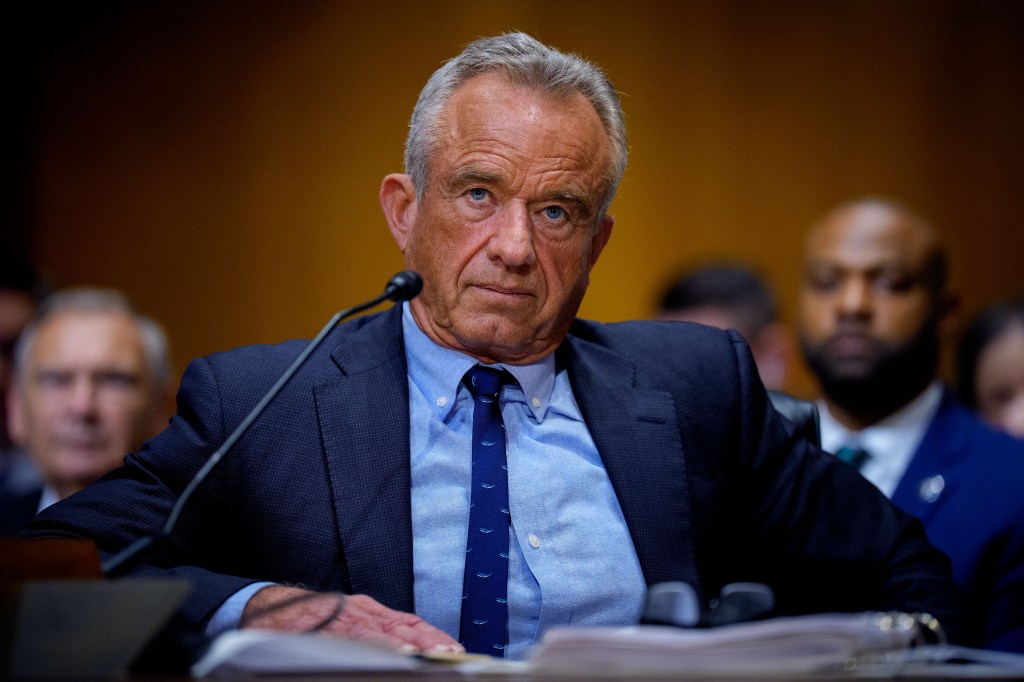
As the Secretary of Health and Human Services, Robert F. Kennedy Jr. has significantly influenced how the federal government communicates health information. Critics argue that his leadership style prioritizes personal branding over public health, leading to a shift in messaging that some former officials describe as politically driven rather than focused on well-being.
Kennedy asserts that he does not wish to impose his views on the American public. In May, he told a Democratic congressman, “I don’t think people should be taking medical advice from me.” However, his past statements suggest a contrasting approach. In a podcast from September 2024, he advocated for a more aggressive promotion of physical fitness, stating, “We need to establish an ethic that you’re not a good parent unless your kids are doing some kind of physical activity.”
The Department of Health and Human Services (HHS) is responsible for disseminating vital health information to the public. This includes reminders about vaccinations, alerts regarding food safety, and practical advice on health-related matters. Yet, under Kennedy’s leadership, initiatives aimed at promoting immunizations and preventive health measures have reportedly suffered.
Current and former employees of HHS express concern that the agency’s communications often highlight Kennedy’s agenda or personal projects. A recent survey revealed that trust in Kennedy as a medical adviser is low, with fewer than 30% of respondents in a poll by The Economist and YouGov indicating they trusted him “a lot” or “somewhat.”
Andrew Nixon, a spokesperson for HHS, noted in an email that “DEI is gone, thanks to the Trump administration,” referencing changes in diversity, equity, and inclusion initiatives. Additionally, some elected officials have publicly distanced themselves from Kennedy’s health recommendations. Senate Majority Leader John Thune stated that women should consult their doctors rather than rely on advice from Kennedy or any government bureaucrat.
Shifts in Health Campaign Strategies
The transition to Kennedy’s administration has brought substantial changes to public health messaging. Following his inauguration, political appointees halted many ongoing communications, disrupting everything from routine updates to collaborations with grant recipients. This freeze led to logistical issues, including the cancellation and subsequent rebooking of advertising campaigns, resulting in additional costs to taxpayers.
Data from iSpot.tv, a market research firm, indicates that at least four HHS vaccine advertisements ended shortly after Trump took office. Deb Houry, former chief medical officer at the CDC, testified in September that “flu campaigns were halted” during a particularly severe influenza season.
Instead of encouraging vaccination, HHS officials appeared to consider messaging that emphasized vaccine risks. Former CDC communications director Kevin Griffis described a shift towards promoting “informed choice.” Nixon has categorically denied these claims, yet the department has continued to disseminate messages that some interpret as anti-vaccine.
With a notable decline in pro-vaccine messaging, HHS has redirected its focus towards campaigns like “Take Back Your Health.” This initiative aims to encourage physical activity among Americans and is designed to utilize “viral” and “edgy” content. The agency has reportedly sought contractors to support this campaign, which reflects Kennedy’s emphasis on wearable health technologies.
Political Interference and Messaging Challenges
At the Food and Drug Administration (FDA), former employees have reported noticeable political interference in public communications. This includes strategic messaging changes and a reluctance to emphasize topics that do not align with the current administration’s agenda.
An example of this is “Operation Stork Speed,” which was launched to address infant formula shortages. Critics argue that it was branded to make it seem like a new initiative rather than a continuation of existing efforts. Former FDA communications director Marianna Naum expressed concern about the intention behind such messaging, indicating that it undermined the agency’s credibility.
The impact of staffing changes has also affected the FDA’s ability to disseminate crucial information. Layoffs have reduced personnel dedicated to food safety communications, resulting in fewer alerts about recalls and other public health warnings.
Data indicates that HHS public service campaigns garnered nearly 7.3 billion fewer impressions in the first half of 2025 compared to the same period in 2022. This decline has been most pronounced in vaccine-related messaging, raising alarms among public health advocates.
Kennedy’s recent report, “Make Our Children Healthy Again,” outlines plans for campaigns addressing issues like illegal vaping and food safety. The report suggests that HHS will engage with advocacy groups to amplify its messaging, reinforcing the idea that Kennedy’s leadership style is indeed political.
Many public health professionals, including former Alaska chief medical officer Anne Zink, express concern over the implications of Kennedy’s approach. Zink notes that patients often express confusion about health recommendations, which can lead to detrimental health behaviors. As she observes, “I increasingly see people say, ‘I just don’t know what to trust.’”
As HHS continues to navigate these changes, the focus on personal branding, political messaging, and shifting health priorities raises important questions about the future of public health communication in the United States. The effectiveness of these strategies remains to be seen, but the implications for public health could be significant.
KFF Health News serves as a vital source of in-depth journalism focused on health issues, highlighting the complexities and challenges facing the health sector today.

Urgent Alert: Holiday Packages to Rikers Likely to Go Missing

National Cookie Day: Get Free Cookies and BOGO Deals Now!

Lanes Reopen on I-290 After Fiery Crash Causes Major Disruption

Audit Exposes Flaws in South Carolina’s Charter School System

Beverly Salvatori Appointed New CEO of Global Tech Firm

Kennedy’s HHS Faces Criticism Over Health Messaging Changes

Shabbat Timings and Torah Portions for December 5-12, 2023

Scientists Launch LimbNET: A Revolutionary Tool for Limb Development Research

Aroma Joe’s Launches Festive Drinks and Holiday Promotions in CT

Urgent Update: Tom Aspinall’s Vision Deteriorates After UFC 321

University of Hawaiʻi Joins $25.6M AI Project to Enhance Disaster Monitoring

MIT Scientists Uncover Surprising Genomic Loops During Cell Division

AI Disruption: AWS Faces Threat as Startups Shift Cloud Focus

Time Crystals Revolutionize Quantum Computing Potential

Honeywell Forecasts Record Business Jet Deliveries Over Next Decade

Discover the Full Map of Pokémon Legends: Z-A’s Lumiose City

Judge Signals Dismissal of Chelsea Housing Case Citing AI Flaws

GOP Faces Backlash as Protests Surge Against Trump Policies
-
 Top Stories1 month ago
Urgent Update: Tom Aspinall’s Vision Deteriorates After UFC 321
-
Science1 month ago
University of Hawaiʻi Joins $25.6M AI Project to Enhance Disaster Monitoring
-
 Health2 months ago
MIT Scientists Uncover Surprising Genomic Loops During Cell Division
-
 Top Stories2 months ago
AI Disruption: AWS Faces Threat as Startups Shift Cloud Focus
-
 Science2 months ago
Time Crystals Revolutionize Quantum Computing Potential
-
 World2 months ago
Honeywell Forecasts Record Business Jet Deliveries Over Next Decade
-
 Entertainment2 months ago
Discover the Full Map of Pokémon Legends: Z-A’s Lumiose City
-
 Politics2 months ago
Judge Signals Dismissal of Chelsea Housing Case Citing AI Flaws
-
 Top Stories2 months ago
GOP Faces Backlash as Protests Surge Against Trump Policies
-

 Entertainment2 months ago
Parenthood Set to Depart Hulu: What Fans Need to Know
-

 Sports2 months ago
Yoshinobu Yamamoto Shines in Game 2, Leading Dodgers to Victory
-

 Health2 months ago
Maine Insurers Cut Medicare Advantage Plans Amid Cost Pressures