
Health
Understanding the Human Cost of Supporting First Responders

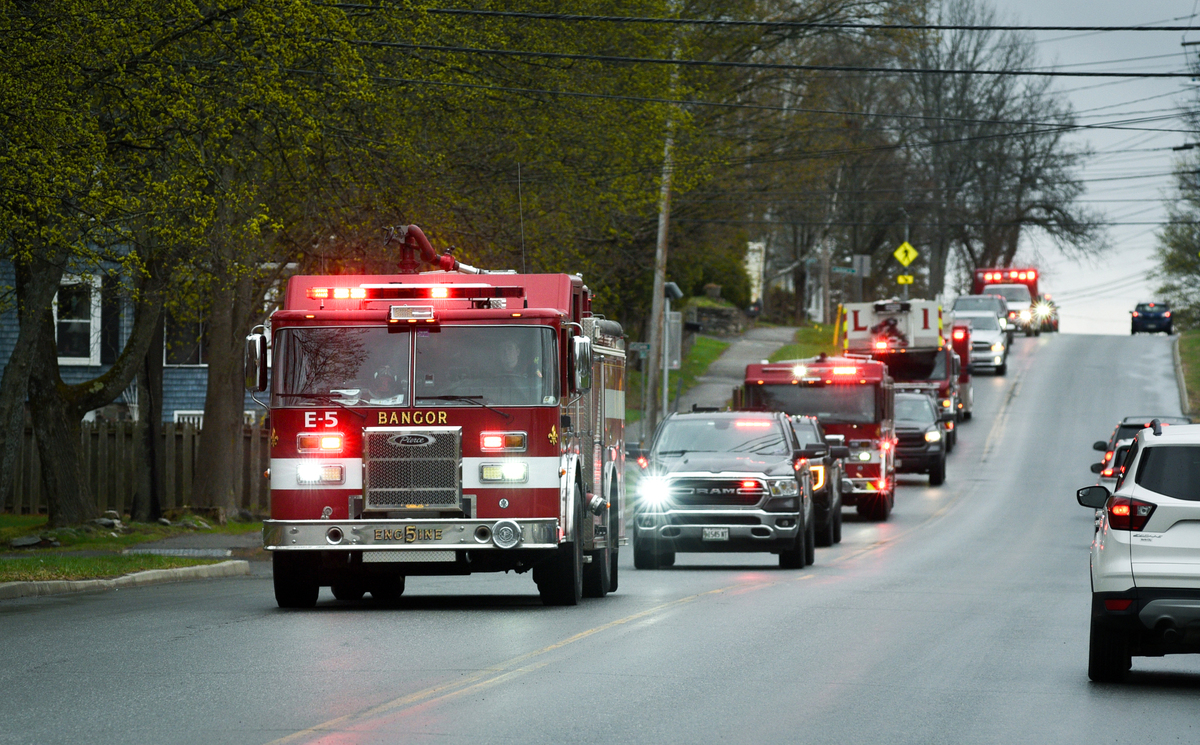
When emergency sirens echo through neighborhoods, most drivers instinctively pull over to clear the way. Yet, for first responders, this moment signifies a rush toward danger, not away from it. As they navigate through traffic to reach those in need, these individuals face not only physical hazards but also emotional challenges that deeply affect their lives.
First responders, including firefighters and emergency medical technicians, encounter traumatic scenes on a regular basis. They witness life-changing events such as fatal motor vehicle accidents, drug overdoses, and devastating house fires. Each incident leaves an imprint, often lingering long after the emergency has been resolved.
Taylor Church, a third-year student at the University of Maine, combines her studies in biology and chemistry with real-world experience as a firefighter and advanced emergency medical technician for Lebanon Fire-EMS and other local organizations. Church highlights a critical but often overlooked aspect of this profession: the psychological toll. She notes that the trauma experienced does not simply disappear after the emergency call ends.
Drivers sometimes express frustration at emergency scenes, showing impatience and even hostility. Church recalls incidents where individuals maneuvered dangerously close to traffic cones, putting both responders and patients at risk. “The anger at the inconvenience of someone else’s tragedy cuts deeper than most realize,” she states, emphasizing the need for greater public empathy.
Across the United States, first responders face alarming statistics related to mental health. They are five times more likely than the general population to suffer from mental health disorders such as depression and post-traumatic stress disorder (PTSD). In some departments, the number of suicides among personnel has exceeded line-of-duty deaths. For instance, the Bangor Fire Department experienced two suicides in just two years, a stark reminder of the hidden struggles they endure.
Despite the critical role they play in public safety, discussions about the mental health of first responders remain largely absent from broader conversations. While communities often focus on funding for new equipment and response times, the emotional well-being of these individuals is frequently neglected.
First responders are conditioned to suppress their instincts, enabling them to run toward emergencies when others flee. This culture of toughness can make it challenging for them to acknowledge their own mental health needs. Church emphasizes that this silence can lead to tragic outcomes, as many suffer in isolation until it is too late.
Promoting empathy does not require grand gestures; simple awareness can have a significant impact. Church encourages the public to consider the human element behind the uniform. When encountering a road blockage due to an emergency response, individuals should remember that those responding might be dealing with the aftermath of traumatic incidents.
“Why does the public so often meet responders with hostility instead of humanity?” Church asks. The frustration of drivers rushing to their destinations often overshadows the critical work being done by first responders. The public’s perception can diminish the value of their lives, prioritizing convenience over compassion.
The mental health of first responders is not just an issue for them alone; it affects everyone they serve. A tired or burned-out responder cannot provide the highest level of care. Conversely, a supported and acknowledged first responder is better equipped to handle the challenges of their role.
As awareness grows around the importance of mental health, the responsibility lies with the public to foster a culture of understanding. The next time you encounter flashing lights, consider taking a moment to breathe and reflect. Recognize that behind the uniform is someone who may have just witnessed the worst day of another person’s life.
In a world where empathy can make all the difference, a small act of kindness can help ensure that first responders return home safely after each shift, ready to serve their communities once again.

Next-Gen CAR-T Therapy Shows 70-100% Response in Leukemia Patients

Shanks’ Power Decline Revealed: Will He Ever Be Strong Again?

Amazon and Walmart Race for 30-Minute Delivery: Who Will Win?

Investors Anticipate Fed Rate Cut as Bitcoin Hovers Near $90.5K

Gwyneth Paltrow and Brad Falchuk: A Romantic Journey Unfolds

Running Enhances Dopamine and Coordination in Aging Mice

Gloria Siemers Passes Away at 79, Leaving Lasting Legacy

Nassau County Executive Bruce Blakeman to Enter Governor Race

Researchers Uncover How Cancer Cells Manipulate Timing Mechanisms

Urgent Update: Tom Aspinall’s Vision Deteriorates After UFC 321

University of Hawaiʻi Joins $25.6M AI Project to Enhance Disaster Monitoring

MIT Scientists Uncover Surprising Genomic Loops During Cell Division

AI Disruption: AWS Faces Threat as Startups Shift Cloud Focus

Time Crystals Revolutionize Quantum Computing Potential

Discover the Full Map of Pokémon Legends: Z-A’s Lumiose City

Parenthood Set to Depart Hulu: What Fans Need to Know

Honeywell Forecasts Record Business Jet Deliveries Over Next Decade

GOP Faces Backlash as Protests Surge Against Trump Policies
-
 Top Stories1 month ago
Urgent Update: Tom Aspinall’s Vision Deteriorates After UFC 321
-
Science1 month ago
University of Hawaiʻi Joins $25.6M AI Project to Enhance Disaster Monitoring
-
 Health2 months ago
MIT Scientists Uncover Surprising Genomic Loops During Cell Division
-
 Top Stories2 months ago
AI Disruption: AWS Faces Threat as Startups Shift Cloud Focus
-
 Science2 months ago
Time Crystals Revolutionize Quantum Computing Potential
-
 Entertainment2 months ago
Discover the Full Map of Pokémon Legends: Z-A’s Lumiose City
-
 Entertainment2 months ago
Parenthood Set to Depart Hulu: What Fans Need to Know
-
 World2 months ago
Honeywell Forecasts Record Business Jet Deliveries Over Next Decade
-
 Top Stories2 months ago
GOP Faces Backlash as Protests Surge Against Trump Policies
-

 Politics2 months ago
Judge Signals Dismissal of Chelsea Housing Case Citing AI Flaws
-

 Health2 months ago
Maine Insurers Cut Medicare Advantage Plans Amid Cost Pressures
-

 Sports2 months ago
Yoshinobu Yamamoto Shines in Game 2, Leading Dodgers to Victory