
Politics
Virginia Democrats Advance Redistricting Efforts Ahead of 2026

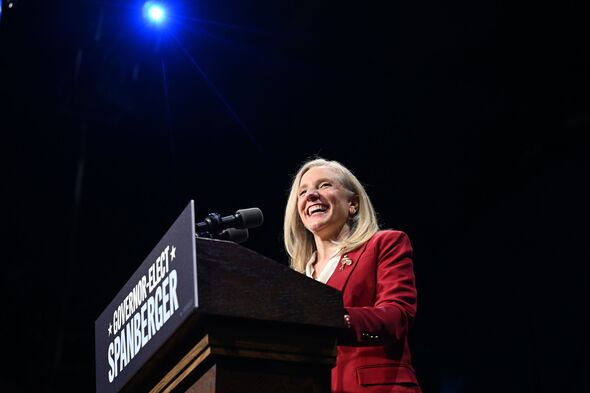
Democrats in Virginia are pushing forward with a constitutional amendment aimed at implementing a new congressional map for the upcoming elections in 2026. In October, the party utilized its narrow majorities in the House of Delegates and the state Senate to take the initial steps required to amend Virginia’s constitution. The proposed amendment would enable the Legislature to bypass the bipartisan commission responsible for drawing the state’s political maps.
Following the elections in November, Virginia witnessed the election of Abigail Spanberger as governor. Spanberger achieved a significant victory, defeating Republican Lt. Gov. Winsome Earle-Sears by a margin of 15 percentage points. This outcome also allowed House Speaker Don Scott to expand the Democratic majority in the House from 51–49 to a more commanding 64–36.
During a recent interview, Senator Mamie Locke (D–Hampton) expressed optimism about the direction of the Democratic party in Virginia. “What we were doing was not something that they saw as a negative. Democrats are on the right track in terms of where we are in our politics,” she stated.
In a discussion on WAMU’s The Politics Hour, Senate Majority Leader Scott Surovell emphasized that the Democrats aim to redraw congressional maps with the goal of flipping at least two seats currently held by Republicans. “There are two seats that are pretty obviously in play. After that, it will probably get pretty hard, but you know, anything’s possible,” Surovell commented.
As Democrats in the Virginia General Assembly prepare for potential redistricting challenges from Republican-led initiatives nationwide, there are no immediate promises for a new congressional map ahead of the federal midterms in 2026. Although Governor-elect Spanberger has not fully committed to approving new maps, her spokesperson, Connor Joseph, noted that she recognizes the growing concerns among Virginians regarding the integrity of elections, particularly in light of actions taken by the Trump Administration. Joseph highlighted Spanberger’s belief that the General Assembly must be ready to address these concerns if necessary.
The national landscape for redistricting remains complex. President Donald Trump has been advocating for redistricting efforts in states such as Texas, North Carolina, and Missouri. Despite these efforts, there is uncertainty regarding whether these initiatives will yield significant gains for Republicans in Congress. For example, Texas’s newly drawn map faces scrutiny for being an alleged racial gerrymander and is currently under review by the U.S. Supreme Court.
In Indiana, initial resistance among Republicans to redraw district lines has given way to a proposal that would eliminate the state’s two Democratic-held seats. Conversely, Democrats in California have responded by introducing a new map that counters some of these changes, following overwhelming voter approval of a redistricting measure in November.
Despite these developments, Democrats face challenges due to their minority control in state legislatures across the country, limiting their influence over congressional map drawing. Locke noted the lack of discussions regarding the situations in Texas and Indiana, stating, “We haven’t been able to actually sit down and talk about, ‘OK, now what?'”
The proposed constitutional amendment in Virginia would grant the General Assembly the authority to create new maps. In 2021, Locke was part of the Virginia Redistricting Commission, which ultimately did not produce a viable map, leading the Supreme Court of Virginia to intervene and finalize the maps used for elections starting in 2023. As the political landscape evolves, the implications of these redistricting efforts will be closely monitored in the lead-up to the 2026 elections.

Mercedes-Benz Launches New GLB EV and Hybrid Models for 2027

Health Care Costs Reach Pivotal Moment as Subsidy Debate Intensifies

UConn Women Retire Sue Bird’s Iconic No. 10 at Gampel Pavilion

Senator Mark Warner Criticizes Trump Administration’s Drug Policy

Rethinking A/B Testing: How to Speed Up Business Decisions

Steelers Overcome Ravens 27-22, Rodgers Shines in Key Victory

UConn Women Honor Sue Bird by Retiring No. 10 Jersey Today

Wegmans Recalls Unsalted Deluxe Mixed Nuts Over Salmonella Risk

New England Patriots’ Marcus Jones Excels in Film and Football

Urgent Update: Tom Aspinall’s Vision Deteriorates After UFC 321

University of Hawaiʻi Joins $25.6M AI Project to Enhance Disaster Monitoring

MIT Scientists Uncover Surprising Genomic Loops During Cell Division

AI Disruption: AWS Faces Threat as Startups Shift Cloud Focus

Time Crystals Revolutionize Quantum Computing Potential

Discover the Full Map of Pokémon Legends: Z-A’s Lumiose City

Parenthood Set to Depart Hulu: What Fans Need to Know

Honeywell Forecasts Record Business Jet Deliveries Over Next Decade

GOP Faces Backlash as Protests Surge Against Trump Policies
-
 Top Stories1 month ago
Urgent Update: Tom Aspinall’s Vision Deteriorates After UFC 321
-
Science1 month ago
University of Hawaiʻi Joins $25.6M AI Project to Enhance Disaster Monitoring
-
 Health2 months ago
MIT Scientists Uncover Surprising Genomic Loops During Cell Division
-
 Top Stories2 months ago
AI Disruption: AWS Faces Threat as Startups Shift Cloud Focus
-
 Science2 months ago
Time Crystals Revolutionize Quantum Computing Potential
-
 Entertainment2 months ago
Discover the Full Map of Pokémon Legends: Z-A’s Lumiose City
-
 Entertainment2 months ago
Parenthood Set to Depart Hulu: What Fans Need to Know
-
 World2 months ago
Honeywell Forecasts Record Business Jet Deliveries Over Next Decade
-
 Top Stories2 months ago
GOP Faces Backlash as Protests Surge Against Trump Policies
-

 Politics2 months ago
Judge Signals Dismissal of Chelsea Housing Case Citing AI Flaws
-

 Health2 months ago
Maine Insurers Cut Medicare Advantage Plans Amid Cost Pressures
-

 Sports2 months ago
Yoshinobu Yamamoto Shines in Game 2, Leading Dodgers to Victory