
Science
UMass Chan’s PhD Student Admissions Plummet Amid Funding Cuts

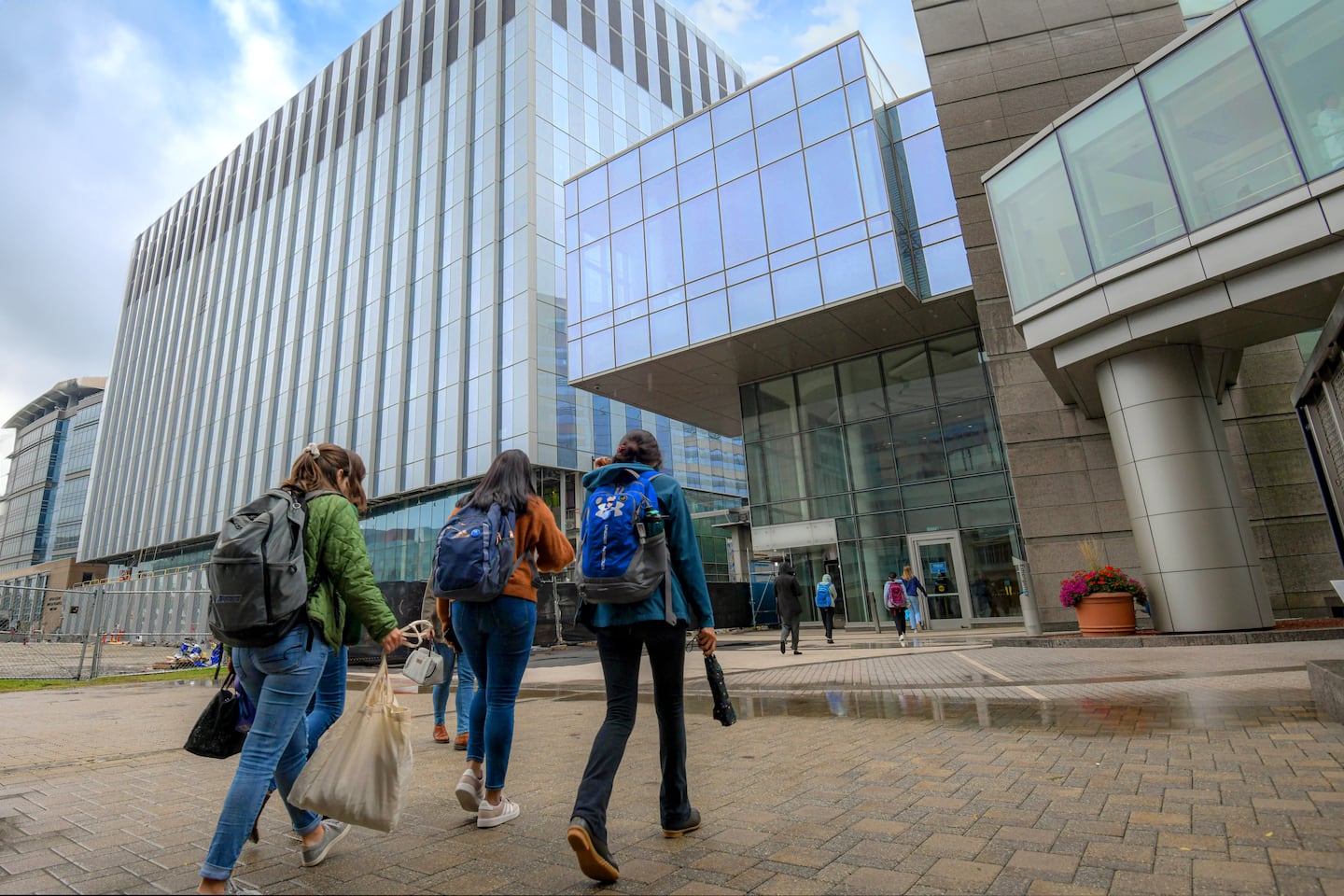
The number of PhD students admitted to UMass Chan Medical School has sharply declined, raising concerns about the future of scientific research and innovation. In the previous academic year, UMass Chan welcomed 73 PhD candidates in vital areas such as cancer biology, immunology, and neuroscience. This year, the school has admitted only 13 PhD students, all of whom were already conducting research within UMass labs. This significant drop highlights a potential crisis for the future of talent in the scientific and academic workforce.
Michael Nietzel, president emeritus of Missouri State University and an expert on doctoral student enrollment, emphasized the implications of this trend, stating, “It’s your future talent in science, engineering, and for the academic workforce.” If the admissions trends at UMass Chan reflect a broader pattern at other institutions, the consequences could be severe for both the academic community and the economy of Massachusetts. A strong, educated workforce is crucial for maintaining economic advantages, but restricting opportunities for emerging researchers may drive many talented individuals to pursue their ambitions elsewhere.
Initially, UMass Chan had extended offers to between 60 and 80 biomedical PhD students for the 2025 academic year. However, the school retracted nearly all of these offers due to uncertainties surrounding federal funding cuts. The upcoming year will serve as a crucial indicator of the impact of these cuts on graduate admissions across the country.
On March 15, 2024, Congress approved a spending bill that rejected proposed cuts to the National Institutes of Health (NIH) by the Trump administration. Although this decision may provide some relief, the long-term effects on individual institutions remain uncertain. Michael Collins, Chancellor of UMass Chan Medical School, expressed cautious optimism, indicating that next year’s PhD class is expected to exceed this year’s numbers, though it will still fall short of typical enrollment levels due to a reduction in federal grant funding. In fiscal 2025, UMass Chan received 345 NIH awards, the lowest number in five years, totaling $190.4 million. This figure represents a slight decrease of approximately $3 million or 1.6 percent from fiscal 2024, but a shift in grant distribution has rendered $13.2 million unusable this year.
The recent legislative measures have moderated, but not eliminated, the funding challenges faced by institutions. University officials are concerned that ongoing NIH policy changes will lead to further declines in federal funding. Collins noted, “If fewer labs are funded, there are fewer opportunities for graduate students. I’m not happy with it. I hope we can get to a point of more steady funding, but I don’t see it in the next short period of time.”
The impact of funding cuts on doctoral student enrollment is not isolated to UMass Chan. According to the National Student Clearinghouse Research Center, there was a national decrease of 2,122 doctoral students enrolled in fall 2025 compared to fall 2024, marking a 0.3 percent decline—the first significant drop in doctoral enrollment since 2020. This decline is largely attributed to a loss of nearly 10,000 international students, although specific figures for doctoral programs were not provided.
In the Boston area, the trends in doctoral enrollment vary among institutions. Harvard University’s Graduate School of Arts and Sciences reported 4,061 doctoral students in fall 2025, down from 4,166 the previous year. The Harvard Crimson indicated that the Faculty of Arts and Sciences plans to admit PhD students at “significantly reduced levels” for the 2026-2027 academic year due to funding pressures. Conversely, the Massachusetts Institute of Technology (MIT) saw an increase, reporting 4,107 doctoral students, up from 4,083, although the institution admitted 96 fewer graduate students overall compared to the previous year. MIT President Sally Kornbluth remarked last year that “having to turn away superb young talent is a striking loss” for the institution.
In a regional context, Brown University has announced plans to reduce its PhD student enrollment by 20 percent next year to manage costs, as reported by the Brown Daily Herald. The university has paused PhD admissions in several departments, including French, German, and Italian studies, classics, Egyptology, and anthropology.
While it may not be detrimental for funding cuts to compel universities to review and potentially streamline their programs, the situation raises questions about the strategic planning of admissions. Many institutions have historically produced more doctoral graduates in fields with limited job prospects, contributing to the stereotype of unemployed humanities PhDs. Professor Richard Larson from MIT highlighted that federal legislation eliminating mandatory retirement ages for professors in 1994 has exacerbated the issue of oversupply in academia. He noted, “We’re producing more PhD students than there are openings for them.”
Nevertheless, this oversupply is not consistent across all fields. The challenge lies in whether universities can effectively reduce admissions in disciplines that lack demand, rather than enacting broad cuts that impact science and engineering programs with viable career pathways. Such decisions can be politically sensitive, making it difficult for university administrators to target specific programs for reductions.
Professor Phillip Levine from Wellesley College emphasized the need for institutions to make difficult choices, as limited opportunities for doctoral candidates can drive talented individuals to seek careers abroad. In contrast, the Canadian government recently unveiled a $1.7 billion investment over twelve years aimed at attracting international researchers, which includes $133.6 million dedicated to recruiting doctoral and post-doctoral researchers.
While the ultimate solution lies in reversing the current funding cuts, American institutions must act proactively to retain talent. Reductions in doctoral programs that support essential research or high-demand fields could have lasting repercussions, and it may take years for the United States to recover from such losses. The editorial perspective reflects the views of the Boston Globe Editorial Board.

Clearwater Project Tunnel Update: Conditions Stable After Breach

Torrey Pines Soars to Victory Over La Costa Canyon, 3-1

Researchers Develop Method to Predict Glacier Surges and Ecosystem Changes

Chicago Mayor’s Immigration Order Faces Critical Backlash Today

Toheeb Jimoh Discusses His Role in Industry and Season Four Spoilers

Ocasio-Cortez and New York Democrats Endorse Hochul for Reelection

HBO Max Welcomes Iconic Comedy Series “Schitt’s Creek” on February 7

Mother Sues Tesla After Son’s Tragic Death in Burning Car

Researchers Discover Method to Resensitize Chemo-Resistant Cancer Cells

University of Hawaiʻi Joins $25.6M AI Project to Enhance Disaster Monitoring

Joleen Chaney, Beloved Journalist, Passes Leaving Lasting Legacy

Urgent Update: Tom Aspinall’s Vision Deteriorates After UFC 321

Major Grant Enhances Cancer Care and Research in Hawaiʻi

MIT Scientists Uncover Surprising Genomic Loops During Cell Division

Trulioo Introduces KYA to Revolutionize Digital Verification

AI Disruption: AWS Faces Threat as Startups Shift Cloud Focus

Discover the Full Map of Pokémon Legends: Z-A’s Lumiose City

Time Crystals Revolutionize Quantum Computing Potential
-
Science3 months ago
University of Hawaiʻi Joins $25.6M AI Project to Enhance Disaster Monitoring
-
 Top Stories3 months ago
Joleen Chaney, Beloved Journalist, Passes Leaving Lasting Legacy
-
 Top Stories3 months ago
Urgent Update: Tom Aspinall’s Vision Deteriorates After UFC 321
-
 Health2 months ago
Major Grant Enhances Cancer Care and Research in Hawaiʻi
-
 Health4 months ago
MIT Scientists Uncover Surprising Genomic Loops During Cell Division
-
 Business3 months ago
Trulioo Introduces KYA to Revolutionize Digital Verification
-
 Top Stories4 months ago
AI Disruption: AWS Faces Threat as Startups Shift Cloud Focus
-
 Entertainment4 months ago
Discover the Full Map of Pokémon Legends: Z-A’s Lumiose City
-
 Science4 months ago
Time Crystals Revolutionize Quantum Computing Potential
-

 World4 months ago
Honeywell Forecasts Record Business Jet Deliveries Over Next Decade
-

 Entertainment4 months ago
Parenthood Set to Depart Hulu: What Fans Need to Know
-

 Sports4 months ago
Mel Kiper Jr. Reveals Top 25 Prospects for the 2026 NFL Draft