
Sports
Michael Jordan’s Race Team Takes On NASCAR in Landmark Trial

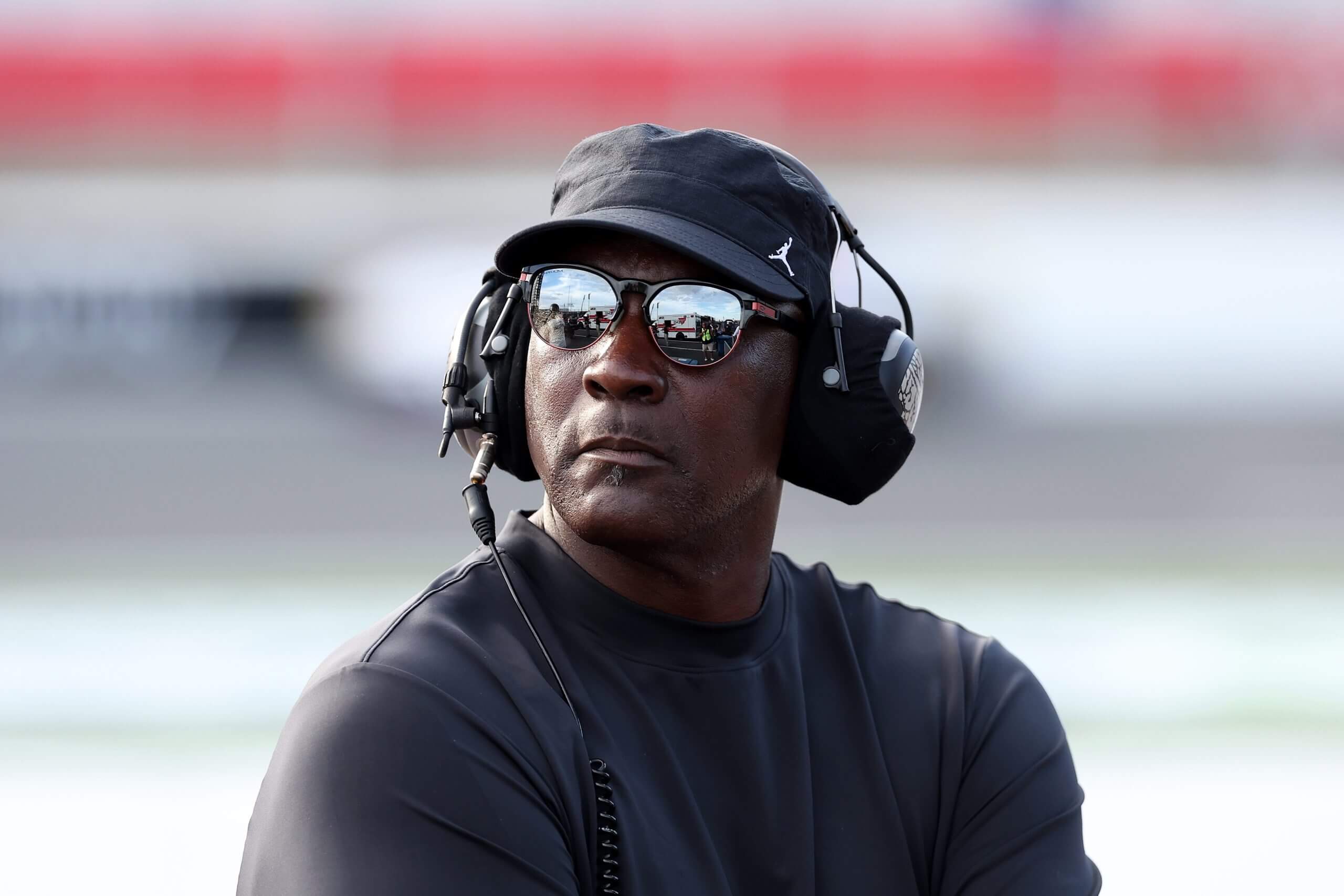
A federal antitrust trial involving NASCAR commenced on Monday, October 16, 2023, in Charlotte, North Carolina. The case centers on a lawsuit filed by two racing organizations, including 23XI Racing, which is co-owned by basketball icon Michael Jordan and three-time Daytona 500 winner Denny Hamlin. The teams are alleging that NASCAR has abused its market dominance in a manner that violates antitrust laws.
The plaintiffs, 23XI Racing and Front Row Motorsports, owned by Bob Jenkins, claim that NASCAR has engaged in “monopolistic” practices. They argue that the governing body of stock car racing has utilized its power to exclude competition and control key aspects of the racing industry. In response, NASCAR and its co-defendant, Jim France, the CEO and a member of NASCAR’s founding family, assert that their practices are legitimate and arise from a business dispute surrounding the franchise-like “charter system.”
The presiding judge, Kenneth D. Bell, has already determined that NASCAR possesses a monopoly over what is defined as “premier” stock car racing. The trial is expected to last more than two weeks, during which a six-person jury will evaluate whether NASCAR has unlawfully exploited this power, resulting in economic harm to the race teams.
The stakes are high for the plaintiffs. If they lose the case, they may face significant financial difficulties, potentially leading to closures. Without charters, they would struggle to compete due to disparities in race payouts. In a declaration, Curtis Polk, co-owner of 23XI, estimated a potential revenue loss of $24 million if their team’s cars lacked charters. Conversely, a ruling against NASCAR could fundamentally alter the landscape of stock car racing. Judge Bell has indicated that remedies for antitrust violations could include forcing NASCAR to divest its racetracks or dismantling the existing charter system, which could ultimately challenge the France family’s control over the sport.
The legal arguments have evolved. Initially, the teams were pursuing claims under two sections of the Sherman Antitrust Act, while NASCAR countered with allegations of collusion against the teams. However, Judge Bell dismissed NASCAR’s counterclaim, indicating that the teams’ negotiation strategies were irrelevant to the case. The jury’s focus will now be on whether NASCAR has unlawfully abused its monopoly power.
The plaintiffs argue that NASCAR has engaged in exclusionary practices to maintain its monopoly. They contend that NASCAR has acquired racetracks under agreements that prevent other racing series from using those venues. Additionally, they allege that NASCAR has restricted teams from utilizing their Cup Series cars in other competitions and acquired the ARCA series to eliminate potential rivalries.
NASCAR’s defense rests on the argument that its structure is distinct from other major sports leagues, as it does not operate under a traditional franchise model. Instead, teams acquire limited-term charters, which guarantee access to races and financial benefits. NASCAR claims that its growth and increased payouts from a new media rights deal in 2024 demonstrate that it operates fairly within the market.
This legal clash is rooted in a history of contentious negotiations regarding the charter agreement, which underwent significant discussions over the past three years. The tensions escalated when the teams sought permanent charters, a demand NASCAR was unwilling to meet. This impasse led to the unprecedented lawsuit, marking a significant moment in the history of NASCAR.
Efforts to settle the dispute have proven fruitless. After a court-ordered arbitration session last August failed to yield results, both parties continued to hold firm in their positions. Although discussions resumed in October, no agreement was reached, and tensions have only intensified. Text messages between NASCAR executives, including disparaging remarks about team owners, have further fueled the public’s perception of NASCAR, complicating the possibility of a resolution.
Financial disclosures reveal a complex picture. NASCAR reported a profit of $102.6 million on revenues of $1.7 billion in the previous year. However, documents indicate that member distributions, primarily to the France Family Trust, exceed $100 million annually. In contrast, many Cup Series teams, including 23XI, reported losses, with an average loss of more than $2 million per car last year.
As this landmark trial unfolds, the implications for NASCAR and its teams are profound. The outcome could reshape the future of stock car racing, influence team operations, and alter the financial dynamics of the sport.

Fed Chair Powell to Speak Tonight; No Monetary Policy Insights Expected

NSW Government Orders All Pokies Off After 4 AM Starting 2026

Trump Administration Ties Global Health Aid to Abortion Data Sharing

Congress Faces Uncertainty as Trump Questions Health Subsidies

Groundbreaking Research Explores ‘Covert Consciousness’ in Patients

Michael Jordan’s Race Team Takes On NASCAR in Landmark Trial

Chicago Remembers Deadly Our Lady of the Angels Fire, 65 Years Later

Columbus Utility Rates Set to Rise by Up to 18% in 2026

Homemade Ding Dong Cake Recipe Takes Dessert to New Heights

Urgent Update: Tom Aspinall’s Vision Deteriorates After UFC 321

MIT Scientists Uncover Surprising Genomic Loops During Cell Division

University of Hawaiʻi Joins $25.6M AI Project to Enhance Disaster Monitoring

AI Disruption: AWS Faces Threat as Startups Shift Cloud Focus

Time Crystals Revolutionize Quantum Computing Potential

Honeywell Forecasts Record Business Jet Deliveries Over Next Decade

Discover the Full Map of Pokémon Legends: Z-A’s Lumiose City

GOP Faces Backlash as Protests Surge Against Trump Policies

Parenthood Set to Depart Hulu: What Fans Need to Know
-
 Top Stories1 month ago
Urgent Update: Tom Aspinall’s Vision Deteriorates After UFC 321
-
 Health2 months ago
MIT Scientists Uncover Surprising Genomic Loops During Cell Division
-
Science4 weeks ago
University of Hawaiʻi Joins $25.6M AI Project to Enhance Disaster Monitoring
-
 Top Stories1 month ago
AI Disruption: AWS Faces Threat as Startups Shift Cloud Focus
-
 Science2 months ago
Time Crystals Revolutionize Quantum Computing Potential
-
 World2 months ago
Honeywell Forecasts Record Business Jet Deliveries Over Next Decade
-
 Entertainment2 months ago
Discover the Full Map of Pokémon Legends: Z-A’s Lumiose City
-
 Top Stories2 months ago
GOP Faces Backlash as Protests Surge Against Trump Policies
-
 Entertainment2 months ago
Parenthood Set to Depart Hulu: What Fans Need to Know
-

 Politics2 months ago
Judge Signals Dismissal of Chelsea Housing Case Citing AI Flaws
-

 Sports2 months ago
Yoshinobu Yamamoto Shines in Game 2, Leading Dodgers to Victory
-

 Health2 months ago
Maine Insurers Cut Medicare Advantage Plans Amid Cost Pressures