
Top Stories
AI Bubble Debate Heats Up as Business Leaders Weigh Risks

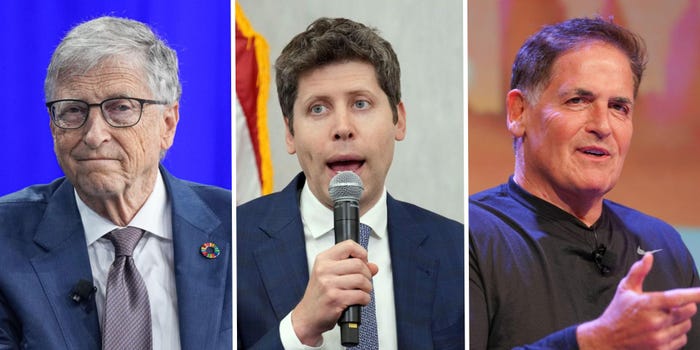
UPDATE: The debate over whether the AI market is in a bubble escalates as prominent business leaders, including Sam Altman, Bill Gates, and Mark Cuban, voice starkly different opinions. This discussion comes amid a flurry of investments and technological advancements that are reshaping industries worldwide.
Just announced comments from Altman, the CEO of OpenAI, have reignited concerns about the sustainability of AI’s rapid growth. “Are we in a phase where investors as a whole are overexcited about AI? My opinion is yes,” Altman stated, highlighting the potential risks of overvaluation. He believes the hype surrounding AI could lead to significant financial losses if the market corrects.
Bill Gates, co-founder of Microsoft, echoes Altman’s concerns but draws a parallel to the historical dot-com bubble. Speaking on October 25, Gates remarked, “There are a ton of these investments that will be dead ends,” acknowledging the frenzy surrounding AI while still recognizing its transformative potential. “AI remains the biggest technical thing ever in my lifetime,” he emphasized.
In contrast, billionaire investor Mark Cuban offers a different perspective. In a podcast earlier this month, Cuban dismissed comparisons to the dot-com bubble, stating, “We’re not seeing funky AI companies just go public,” suggesting that the current AI landscape is more grounded in reality than past bubbles.
While Cuban remains skeptical about a bubble, other tech leaders support the notion. Jensen Huang, CEO of Nvidia, which recently achieved a $5 trillion market cap, insists there is no bubble, framing the current phase as a natural evolution of computing. “We’re going through a natural transition… AI has become good enough,” Huang noted, emphasizing the growing demand for AI-driven technologies.
Meta’s Mark Zuckerberg also weighed in, acknowledging the possibility of a bubble but suggesting that continued advancements in AI could mitigate a potential collapse. “If the models keep on growing in capability, then maybe there is no collapse,” he said during a podcast in September.
OpenAI chairman Bret Taylor aligns more closely with Gates and Altman, asserting, “I think we’re also in a bubble, and a lot of people will lose a lot of money.” He likened the current situation to the early days of the internet, suggesting that some AI ideas may be ahead of their time.
Amazon founder Jeff Bezos called the current state an “industrial bubble,” cautioning that investors may struggle to differentiate between promising and unworthy projects amidst the excitement. “The good ideas and the bad ideas… investors have a hard time distinguishing,” he commented during a conference in Italy.
Former Google CEO Eric Schmidt expressed skepticism about the bubble narrative, emphasizing that the current technological developments are indicative of a new industrial structure rather than speculative hype. He affirmed the strong demand for hardware to support AI advancements.
Amid these varying opinions, Pat Gelsinger, former Intel CEO, acknowledged the hype but believes the true benefits of AI are still on the horizon. “Are we in an AI bubble? Of course. But businesses are yet to really start materially benefiting from it,” he stated.
With these discussions heating up, the future of AI investment remains uncertain. As leaders in technology and investment continue to share their insights, the question of whether a bubble exists looms large. What happens next could reshape the trajectory of AI and its role in the global economy.
Stay tuned for more updates as this story develops.

Broomfield Police Urgently Seek Toy Donations for Local Children

Thanksgiving Leftovers Risk: Turkey in Fridge Only Lasts 3 Days

Connecticut Police Respond to 475 Crashes, 2 Fatal, Over Thanksgiving

Trump Issues Ultimatum to Maduro as Venezuela Closes Airspace

Microsoft Struggles to Fix Windows 11 Amid Ongoing User Frustration

Bottineau Man, 88, Dies in Central North Dakota Crash

Macaque Monkeys Tap to the Beat, Challenging Musical Learning Theories

Organizing Committee Prepares for 2034 Olympics at Quarterly Meeting

Kino Lorber Acquires Argentine Film ‘The Currents’ for 2026 Release

Urgent Update: Tom Aspinall’s Vision Deteriorates After UFC 321

MIT Scientists Uncover Surprising Genomic Loops During Cell Division

University of Hawaiʻi Joins $25.6M AI Project to Enhance Disaster Monitoring

AI Disruption: AWS Faces Threat as Startups Shift Cloud Focus

Time Crystals Revolutionize Quantum Computing Potential

Honeywell Forecasts Record Business Jet Deliveries Over Next Decade

Discover the Full Map of Pokémon Legends: Z-A’s Lumiose City

GOP Faces Backlash as Protests Surge Against Trump Policies

Parenthood Set to Depart Hulu: What Fans Need to Know
-
 Top Stories1 month ago
Urgent Update: Tom Aspinall’s Vision Deteriorates After UFC 321
-
 Health2 months ago
MIT Scientists Uncover Surprising Genomic Loops During Cell Division
-
Science4 weeks ago
University of Hawaiʻi Joins $25.6M AI Project to Enhance Disaster Monitoring
-
 Top Stories2 months ago
AI Disruption: AWS Faces Threat as Startups Shift Cloud Focus
-
 Science2 months ago
Time Crystals Revolutionize Quantum Computing Potential
-
 World2 months ago
Honeywell Forecasts Record Business Jet Deliveries Over Next Decade
-
 Entertainment2 months ago
Discover the Full Map of Pokémon Legends: Z-A’s Lumiose City
-
 Top Stories2 months ago
GOP Faces Backlash as Protests Surge Against Trump Policies
-
 Entertainment2 months ago
Parenthood Set to Depart Hulu: What Fans Need to Know
-

 Politics2 months ago
Judge Signals Dismissal of Chelsea Housing Case Citing AI Flaws
-

 Sports2 months ago
Yoshinobu Yamamoto Shines in Game 2, Leading Dodgers to Victory
-

 Health2 months ago
Maine Insurers Cut Medicare Advantage Plans Amid Cost Pressures