
Top Stories
Congress Members’ Salaries Frozen at $174,000 for Another Year

UPDATE: Members of Congress will see their salaries remain frozen at $174,000 for another year, following President Donald Trump‘s recent signing of a government funding bill. This decision, which impacts lawmakers’ pay for the entirety of the fiscal year ending September 30, 2024, comes as a direct result of a provision that blocks any cost-of-living adjustments.
The bill, designed to reopen the government, keeps funding intact until January 30, 2024, but does not afford lawmakers the same benefits most federal employees receive annually. This marks the continuation of a pay freeze that has persisted since 2009, raising concerns about the long-term implications for congressional representation.
The implications of this pay freeze are significant. Lawmakers have faced public backlash over potential salary increases, especially after the recent government shutdown that left many federal employees without pay. The optics of a pay raise during such turmoil would be disastrous for elected officials. As Republican Rep. Andrew Clyde of Georgia noted, “I would like to see how well that would go over if we did that to all federal employees.”
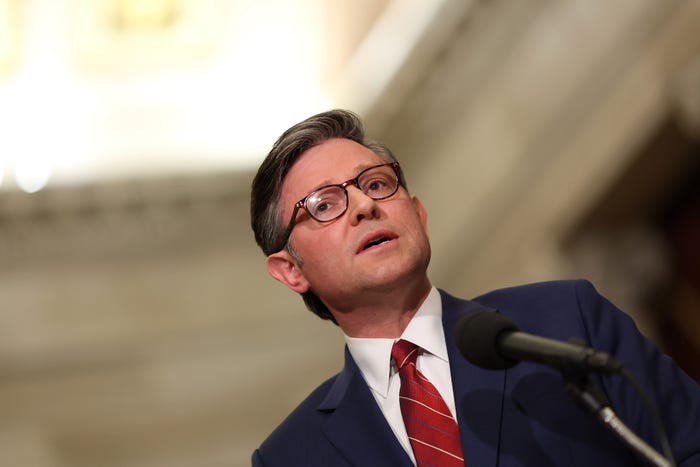
This pay freeze has fueled a growing debate among lawmakers about the adequacy of congressional salaries. House Speaker Mike Johnson, earning $223,500 as Speaker, expressed empathy for those advocating for a salary increase, acknowledging that the stagnant pay could deter qualified candidates from running for office. “Look, you know, the salary of Congress has been frozen since 2009,” Johnson stated in May.
On the other side of the aisle, Democratic Rep. Alexandria Ocasio-Cortez reinforced this sentiment, arguing that to attract working-class representatives who do not rely on wealth, Congress must adjust its compensation structure. “If we want working-class people who don’t rely on independent wealth to represent people in Congress, we have to make it work,” she emphasized.
This ongoing pay freeze has significant consequences for congressional dynamics. Had cost-of-living adjustments not been blocked, lawmakers’ salaries would currently stand at approximately $221,600, according to the Congressional Research Service. The increasing cost of living, particularly in Washington, D.C., poses additional challenges for representatives who must maintain two residences.
Last year, Congress nearly approved a modest pay increase, which would have allowed for a raise of up to $6,600. However, the proposal faced significant opposition, notably from tech billionaire Elon Musk, who criticized the bill as giving Congress members an unwarranted raise. His intervention played a crucial role in preventing the increase from taking effect.
As the debate continues, the implications of this salary freeze will likely resonate throughout the next election cycle. The question remains: how will this impact the qualifications and motivations of those who choose to run for Congress? As lawmakers grapple with these pressing financial issues, the public is left wondering who will step up to represent them effectively.
In the coming months, watch for further discussions on congressional compensation and potential reforms as the 2024 elections draw near.

Broomfield Police Urgently Seek Toy Donations for Local Children

Thanksgiving Leftovers Risk: Turkey in Fridge Only Lasts 3 Days

Connecticut Police Respond to 475 Crashes, 2 Fatal, Over Thanksgiving

Trump Issues Ultimatum to Maduro as Venezuela Closes Airspace

Microsoft Struggles to Fix Windows 11 Amid Ongoing User Frustration

Bottineau Man, 88, Dies in Central North Dakota Crash

Macaque Monkeys Tap to the Beat, Challenging Musical Learning Theories

Organizing Committee Prepares for 2034 Olympics at Quarterly Meeting

Kino Lorber Acquires Argentine Film ‘The Currents’ for 2026 Release

Urgent Update: Tom Aspinall’s Vision Deteriorates After UFC 321

MIT Scientists Uncover Surprising Genomic Loops During Cell Division

University of Hawaiʻi Joins $25.6M AI Project to Enhance Disaster Monitoring

AI Disruption: AWS Faces Threat as Startups Shift Cloud Focus

Time Crystals Revolutionize Quantum Computing Potential

Honeywell Forecasts Record Business Jet Deliveries Over Next Decade

Discover the Full Map of Pokémon Legends: Z-A’s Lumiose City

GOP Faces Backlash as Protests Surge Against Trump Policies

Parenthood Set to Depart Hulu: What Fans Need to Know
-
 Top Stories1 month ago
Urgent Update: Tom Aspinall’s Vision Deteriorates After UFC 321
-
 Health2 months ago
MIT Scientists Uncover Surprising Genomic Loops During Cell Division
-
Science4 weeks ago
University of Hawaiʻi Joins $25.6M AI Project to Enhance Disaster Monitoring
-
 Top Stories2 months ago
AI Disruption: AWS Faces Threat as Startups Shift Cloud Focus
-
 Science2 months ago
Time Crystals Revolutionize Quantum Computing Potential
-
 World2 months ago
Honeywell Forecasts Record Business Jet Deliveries Over Next Decade
-
 Entertainment2 months ago
Discover the Full Map of Pokémon Legends: Z-A’s Lumiose City
-
 Top Stories2 months ago
GOP Faces Backlash as Protests Surge Against Trump Policies
-
 Entertainment2 months ago
Parenthood Set to Depart Hulu: What Fans Need to Know
-

 Politics2 months ago
Judge Signals Dismissal of Chelsea Housing Case Citing AI Flaws
-

 Sports2 months ago
Yoshinobu Yamamoto Shines in Game 2, Leading Dodgers to Victory
-

 Health2 months ago
Maine Insurers Cut Medicare Advantage Plans Amid Cost Pressures