
Top Stories
Trump’s Influence Shifts Speaker of the House Role, Experts Warn

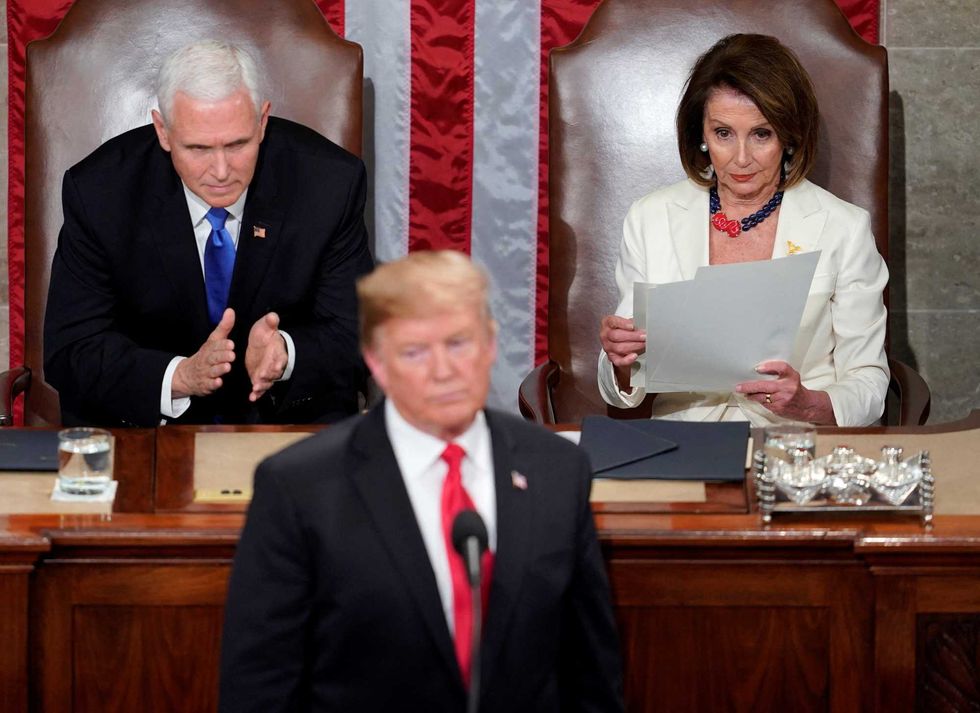
UPDATE: The role of Speaker of the House is undergoing a seismic shift, with implications for American governance as Mike Johnson, the current Speaker, aligns closely with former President Donald Trump. This transformation is raising alarms among political experts about the erosion of congressional authority, a trend that could redefine U.S. politics.
Just announced by political analysts, Johnson’s leadership style signals a departure from the nonpartisan vision laid out during the drafting of the U.S. Constitution in 1787. The framers intended for the Speaker to serve as a neutral moderator, but under Johnson, the position is increasingly seen as a party-centric role, prioritizing loyalty to Trump over traditional legislative responsibilities.
As Congress faces urgent national challenges, the implications of this shift are profound. Historically, the Speaker’s role was to facilitate coalition-building and legislative action. However, Johnson’s recent decisions—like keeping Congress out of session for an unprecedented eight weeks during a government shutdown—have limited the House’s ability to conduct business, including essential committee meetings and oversight.
Political experts emphasize that this break from legislative duty hampers Congress’s power, allowing executive branch decisions to dominate. As 2023 progresses, the decision to sideline Congress raises troubling questions about accountability and governance. Without regular sessions, crucial policy debates and financial appropriations are stalled, leading to a reliance on unelected officials and judges to set domestic and foreign policy.
The historical context further underscores the gravity of the situation. In the early 19th century, Speaker Henry Clay used his position to advocate for significant policies, while modern Speakers like Nancy Pelosi and Newt Gingrich transformed the role into one of proactive party leadership, navigating critical legislation like the Affordable Care Act and the Interstate Highway System. Yet, Johnson’s approach could undermine these hard-won advancements.
Experts also point to a troubling pattern: previous Speakers, such as John Boehner and Kevin McCarthy, faced backlash and were ousted by their own parties for attempting to work across the aisle. Johnson’s alignment with Trump may echo these challenges, potentially leading to internal conflicts as he strives to balance party loyalty with the broader responsibilities of Congress.
In a rapidly changing political landscape, the Speaker’s role has become more than managing legislative flow; it now involves navigating complex party dynamics and external pressures. With Congress’s ability to legislate weakened, citizens and House members alike are left feeling the impact of reduced oversight and a lack of accountability.
As political analysts watch closely, the consequences of these developments are far-reaching. The centralization of power within the Speaker’s office raises critical questions about the future of congressional authority. Experts urge constituents to remain vigilant, as the implications of Johnson’s leadership style could resonate well beyond the current political climate.
What happens next? With Congress returning to session and pressing issues on the agenda, all eyes will be on Johnson’s ability to unify his party while protecting the integrity of the House. The coming weeks will be crucial as lawmakers grapple with restoring their legislative responsibilities and ensuring that the voice of the People’s House is not silenced.
Stay tuned for updates as this story develops, as the political landscape continues to shift under the weight of unprecedented leadership changes.

Vigil Held for Stabbed Social Worker at San Francisco Hospital

Parents Seek Creative Ways to Celebrate Son’s 40th Birthday

Researchers Develop Innovative Dry-Process for Battery Electrodes

Vanderbilt Football Prepares for ReliaQuest Bowl Showdown

Firefighter Dies as Wildfires Devastate Australia’s Landscape

Investors Eye 12 AI Stocks Amid Market Volatility Concerns

ABC’s Matt Gutman Joins CBS News Amid Major Anchor Changes

Transform Your Flat Room NOW: Top Designer Reveals Key Touches

SED Initta and Intel Intensify Partnership for AI Retail Revolution

Urgent Update: Tom Aspinall’s Vision Deteriorates After UFC 321

University of Hawaiʻi Joins $25.6M AI Project to Enhance Disaster Monitoring

MIT Scientists Uncover Surprising Genomic Loops During Cell Division

AI Disruption: AWS Faces Threat as Startups Shift Cloud Focus

Time Crystals Revolutionize Quantum Computing Potential

Discover the Full Map of Pokémon Legends: Z-A’s Lumiose City

Parenthood Set to Depart Hulu: What Fans Need to Know

GOP Faces Backlash as Protests Surge Against Trump Policies

Honeywell Forecasts Record Business Jet Deliveries Over Next Decade
-
 Top Stories1 month ago
Urgent Update: Tom Aspinall’s Vision Deteriorates After UFC 321
-
Science1 month ago
University of Hawaiʻi Joins $25.6M AI Project to Enhance Disaster Monitoring
-
 Health2 months ago
MIT Scientists Uncover Surprising Genomic Loops During Cell Division
-
 Top Stories2 months ago
AI Disruption: AWS Faces Threat as Startups Shift Cloud Focus
-
 Science2 months ago
Time Crystals Revolutionize Quantum Computing Potential
-
 Entertainment2 months ago
Discover the Full Map of Pokémon Legends: Z-A’s Lumiose City
-
 Entertainment2 months ago
Parenthood Set to Depart Hulu: What Fans Need to Know
-
 Top Stories2 months ago
GOP Faces Backlash as Protests Surge Against Trump Policies
-
 World2 months ago
Honeywell Forecasts Record Business Jet Deliveries Over Next Decade
-

 Politics2 months ago
Judge Signals Dismissal of Chelsea Housing Case Citing AI Flaws
-

 Health2 months ago
Maine Insurers Cut Medicare Advantage Plans Amid Cost Pressures
-

 Sports2 months ago
Yoshinobu Yamamoto Shines in Game 2, Leading Dodgers to Victory