
Top Stories
Urgent Update: JFK’s “Death Car” Reveals New Secrets Before Anniversary

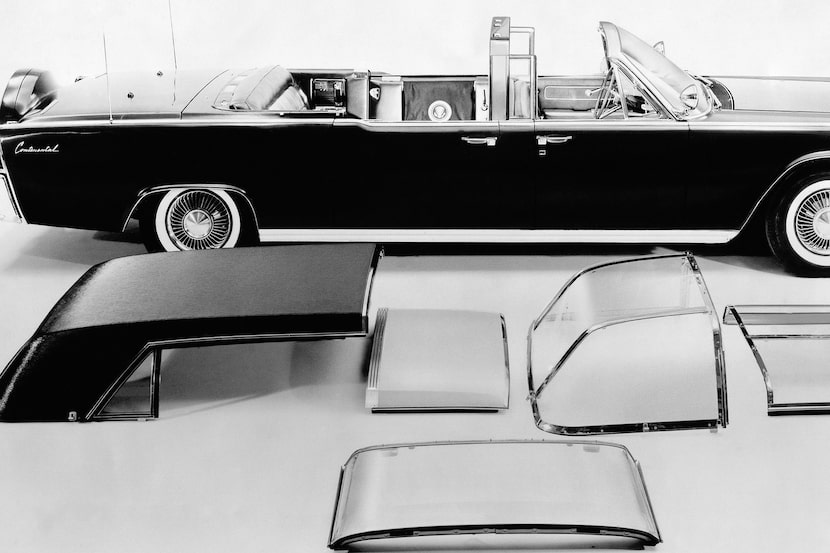
UPDATE: As the anniversary of President John F. Kennedy‘s assassination approaches on November 22, 1963, new revelations about the infamous “Death Car” are captivating historians and the public alike. The modified 1961 Lincoln Continental limousine, forever linked to that tragic day in Dallas, Texas, is raising fresh questions and intrigue surrounding its history and the events that unfolded.
New reports confirm that the vehicle, originally a $7,347 stock model, underwent an astonishing transformation costing over $200,000 in modifications by elite custom coachbuilder Hess and Eisenhardt. This included a unique design featuring rear-hinged “suicide” doors, a six-piece roof system made of clear plastic, and a spacious interior designed to enhance visibility for its occupants.
What’s most shocking is the car’s lack of protective armor. According to late historian Gary Mack, despite its high-tech features, the car was essentially an “expensive, fancy limousine,” offering little in terms of safety on that fateful day. It was hastily refurbished under the project name “Quick Fix” after the assassination, with the goal of delivering a new vehicle for President Lyndon B. Johnson as quickly as possible.
With an estimated final price tag of $500,000, the revamped limousine included two radiophones, an AM-FM radio, and an air conditioning system capable of producing 3 cubic tons of conditioned air. These features were cutting-edge for the time but did little to shield the president from the tragedy.
One of the most peculiar accounts surrounding the car involves a mysterious figure spotted at Parkland Hospital. Witnesses reported a man in a suit requesting a bucket of water and towels, presumably to clean the vehicle after the shooting. This unidentified figure has only added to the myriad of unanswered questions surrounding that day. Mack notes that photographs taken after the assassination show no evidence of cleaning within the car, heightening the intrigue.
Another major mystery relates to the radio transmissions from that day. All vehicles in the motorcade were connected to a radio network monitored by the Secret Service. However, the tapes of these communications have mysteriously vanished. Mack emphasizes their potential significance, as they could include crucial audio evidence from the assassination.
The fascination with JFK’s Lincoln continues to this day, notably at The Henry Ford museum, where the vehicle remains a top exhibit. Each year on the anniversary, visitors often leave flowers near the car, reflecting on its haunting legacy.
As we edge closer to the significant date, the renewed interest in JFK’s Lincoln raises vital questions about the events of that day and the lingering doubts that continue to captivate the public. The ongoing search for answers underscores the profound impact this moment in history still holds, resonating with generations who seek to unravel the complexities surrounding President Kennedy’s assassination.
Stay tuned for further updates as new information may emerge regarding the “Death Car” and its pivotal role in American history.

Trump Administration Ties Global Health Aid to Abortion Data Sharing

Congress Faces Uncertainty as Trump Questions Health Subsidies

Groundbreaking Research Explores ‘Covert Consciousness’ in Patients

Michael Jordan’s Race Team Takes On NASCAR in Landmark Trial

Chicago Remembers Deadly Our Lady of the Angels Fire, 65 Years Later

Columbus Utility Rates Set to Rise by Up to 18% in 2026

Homemade Ding Dong Cake Recipe Takes Dessert to New Heights

Eurozone Manufacturing PMI Plummets to 49.6, Signals Contraction

Im Si Wan’s New Photos Spark Heated Debate Online

Urgent Update: Tom Aspinall’s Vision Deteriorates After UFC 321

MIT Scientists Uncover Surprising Genomic Loops During Cell Division

University of Hawaiʻi Joins $25.6M AI Project to Enhance Disaster Monitoring

AI Disruption: AWS Faces Threat as Startups Shift Cloud Focus

Time Crystals Revolutionize Quantum Computing Potential

Honeywell Forecasts Record Business Jet Deliveries Over Next Decade

Discover the Full Map of Pokémon Legends: Z-A’s Lumiose City

GOP Faces Backlash as Protests Surge Against Trump Policies

Parenthood Set to Depart Hulu: What Fans Need to Know
-
 Top Stories1 month ago
Urgent Update: Tom Aspinall’s Vision Deteriorates After UFC 321
-
 Health2 months ago
MIT Scientists Uncover Surprising Genomic Loops During Cell Division
-
Science4 weeks ago
University of Hawaiʻi Joins $25.6M AI Project to Enhance Disaster Monitoring
-
 Top Stories1 month ago
AI Disruption: AWS Faces Threat as Startups Shift Cloud Focus
-
 Science2 months ago
Time Crystals Revolutionize Quantum Computing Potential
-
 World2 months ago
Honeywell Forecasts Record Business Jet Deliveries Over Next Decade
-
 Entertainment2 months ago
Discover the Full Map of Pokémon Legends: Z-A’s Lumiose City
-
 Top Stories2 months ago
GOP Faces Backlash as Protests Surge Against Trump Policies
-
 Entertainment2 months ago
Parenthood Set to Depart Hulu: What Fans Need to Know
-

 Politics2 months ago
Judge Signals Dismissal of Chelsea Housing Case Citing AI Flaws
-

 Sports2 months ago
Yoshinobu Yamamoto Shines in Game 2, Leading Dodgers to Victory
-

 Health2 months ago
Maine Insurers Cut Medicare Advantage Plans Amid Cost Pressures