
World
Electric Vehicles Fall Short in Australia Road Tests, Tesla Leads

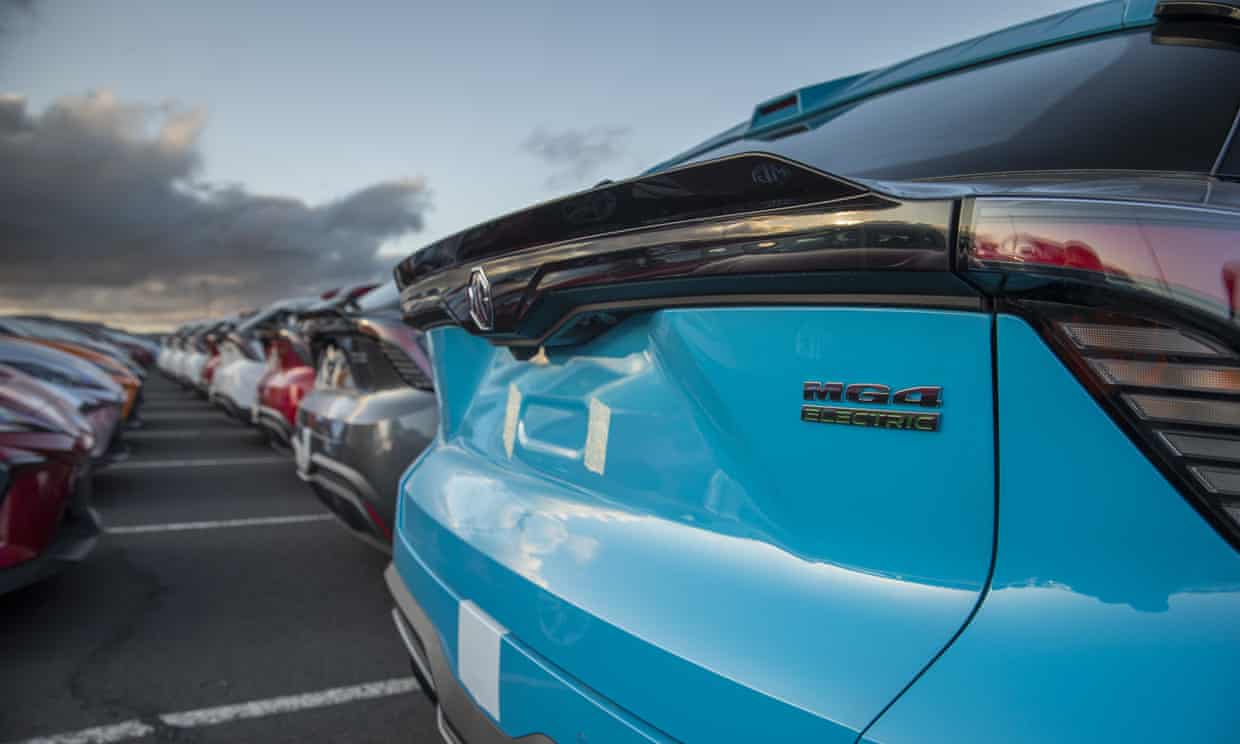
Independent road tests in Australia have revealed that electric vehicles (EVs) are not achieving the range promised by manufacturers. The Australian Automobile Association (AAA) conducted these evaluations, which showed that all tested models failed to meet their advertised distances. The results were published on March 15, 2024, as part of the AAA’s ongoing $14 million Real-World Testing Program.
The findings highlight significant discrepancies between claimed and actual performance. In the latest tests, the MG4 electric hatchback recorded the most disappointing result, falling short by over 124 kilometers from its advertised range of 405 kilometers. This represents a shortfall of approximately 31%. The Kia EV3 and Smart #1 also underperformed, missing their targets by 67 kilometers and 53 kilometers, respectively.
On the other hand, Tesla emerged as the top performer in these evaluations. Its latest Model Y SUV was only 16 kilometers shy of its claimed range of 466 kilometers on a single charge. This indicates that Tesla is closer to living up to its advertised performance compared to its competitors.
Testing Methodology and Previous Findings
The AAA’s analysis involved road tests on a 93-kilometer track in and around Geelong, Victoria, incorporating a mix of urban, rural, and motorway conditions. This testing approach aims to provide a realistic assessment of EV capabilities. The current results follow a previous round of evaluations where all five models tested also failed to meet their promised range. In addition, an earlier study involving 131 internal combustion and hybrid vehicles revealed that 76% consumed more fuel than advertised.
Michael Bradley, managing director of the AAA, emphasized the importance of accurate representations of electric vehicle performance. “These results give consumers an independent indication of real-world battery range, which means they now know which cars perform as advertised and which do not,” Bradley stated.
Impact on Consumers and Future Testing
The AAA’s initiative, which is funded by the federal government, aims to build consumer confidence in the EV market. By providing detailed information about real-world performance, the association hopes to alleviate concerns regarding range anxiety, allowing more individuals to consider switching to electric vehicles.
Since its launch in 2023, the vehicle-testing program has evaluated 140 vehicles out of a targeted 200. The findings thus far indicate a troubling trend where most vehicles consume more energy or fuel than claimed. This effort was initiated in response to the 2015 Volkswagen emissions scandal, where the automaker was found to have manipulated software to pass emissions tests in laboratories.
As the demand for electric vehicles continues to grow, understanding the gap between laboratory claims and real-world performance will be crucial for consumers. The AAA’s ongoing research is set to play a significant role in shaping the future landscape of the automotive industry in Australia and beyond.

Recovery Café Longmont Launches Urgent Search for New Leader

Tua Tagovailoa Acknowledges Key Mistake in Dolphins’ Loss

Democrats Unveil Photos from Jeffrey Epstein’s Private Island

New Algorithm Accelerates Language Model Responses, Wins Award

Colorado State Football Signs 21 Players on Early Signing Day

Electric Vehicles Fall Short in Australia Road Tests, Tesla Leads

Plaid Enhances Financial Services with AI-Driven Transaction Categories

‘IT: Welcome to Derry’ Episode 6 Shakes Viewers with Shocking Cliffhanger

Fatal San Ramon Tesla Crash Victim Identified as Alix Sparks

Urgent Update: Tom Aspinall’s Vision Deteriorates After UFC 321

MIT Scientists Uncover Surprising Genomic Loops During Cell Division

University of Hawaiʻi Joins $25.6M AI Project to Enhance Disaster Monitoring

AI Disruption: AWS Faces Threat as Startups Shift Cloud Focus

Time Crystals Revolutionize Quantum Computing Potential

Honeywell Forecasts Record Business Jet Deliveries Over Next Decade

Discover the Full Map of Pokémon Legends: Z-A’s Lumiose City

GOP Faces Backlash as Protests Surge Against Trump Policies

Judge Signals Dismissal of Chelsea Housing Case Citing AI Flaws
-
 Top Stories1 month ago
Urgent Update: Tom Aspinall’s Vision Deteriorates After UFC 321
-
 Health2 months ago
MIT Scientists Uncover Surprising Genomic Loops During Cell Division
-
Science1 month ago
University of Hawaiʻi Joins $25.6M AI Project to Enhance Disaster Monitoring
-
 Top Stories2 months ago
AI Disruption: AWS Faces Threat as Startups Shift Cloud Focus
-
 Science2 months ago
Time Crystals Revolutionize Quantum Computing Potential
-
 Entertainment2 months ago
Discover the Full Map of Pokémon Legends: Z-A’s Lumiose City
-
 World2 months ago
Honeywell Forecasts Record Business Jet Deliveries Over Next Decade
-
 Top Stories2 months ago
GOP Faces Backlash as Protests Surge Against Trump Policies
-
 Politics2 months ago
Judge Signals Dismissal of Chelsea Housing Case Citing AI Flaws
-

 Entertainment2 months ago
Parenthood Set to Depart Hulu: What Fans Need to Know
-

 Sports2 months ago
Yoshinobu Yamamoto Shines in Game 2, Leading Dodgers to Victory
-

 Health2 months ago
Maine Insurers Cut Medicare Advantage Plans Amid Cost Pressures