
World
Navy’s Friendly Fire Incident: USS Gettysburg Downed Own Jet

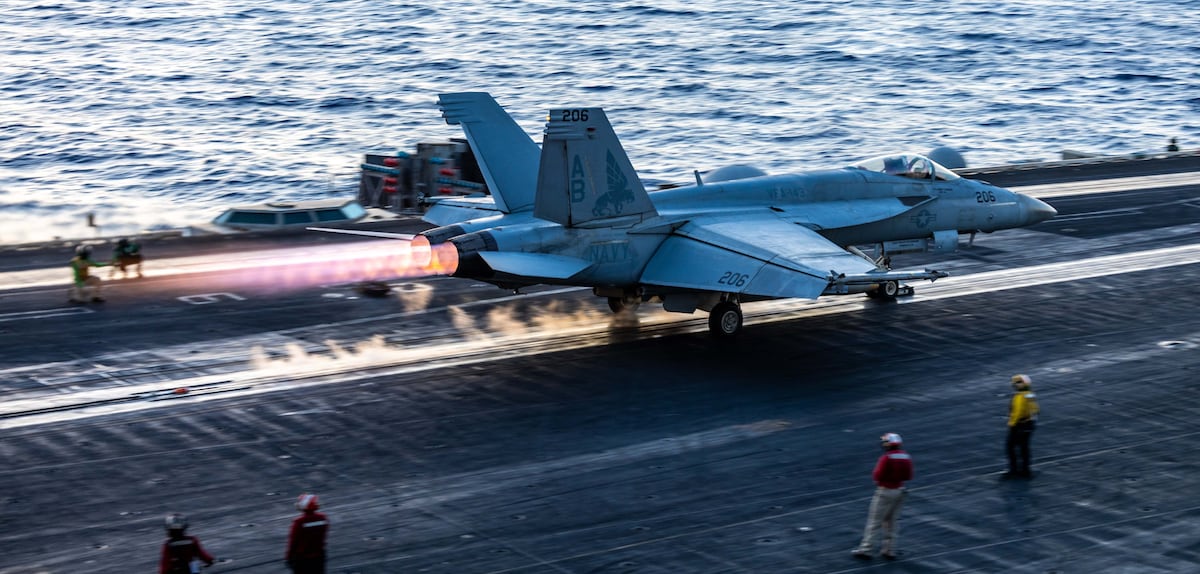
In a tragic incident on December 21, 2024, the USS Gettysburg, a guided-missile cruiser, mistakenly shot down an F/A-18 Super Hornet from the nearby USS Harry S. Truman. This event unfolded in less than five minutes and was marked by a series of critical miscommunications and equipment failures, according to a command investigation released this month. The 152-page report detailed how a combination of rushed training and inadequate systems led to a situation that was not only avoidable but fraught with consequences.
The investigation revealed that at 23:25 Zulu time, while the Truman was conducting flight operations in the Red Sea, the Gettysburg fired two SM-2 surface-to-air missiles at the two Super Hornets, resulting in one direct hit that forced the pilot to eject. A third Super Hornet was also targeted but not engaged. The report emphasized a significant lapse in situational awareness by the Gettysburg’s commanding officer, Capt. Justin Hodges, and his command team, which ultimately proved disastrous.
Communication Breakdown and Consequences
The investigation, overseen by Rear Adm. Kavon Hakimzadeh, highlighted the critical moment when the commanding officer of the Truman’s Carrier Strike Group 8 was informed of “blue tracks” on radar, previously misidentified as hostile missiles. This realization prompted a chilling call over the communication system: “Stop shooting at us.” Yet, despite the growing awareness of a potential friendly fire incident, no orders were issued to halt engagement for nearly five minutes.
During this time, the pilots of the Super Hornet that was hit were tracking the Gettysburg and initially believed the cruiser was targeting a drone. Once they recognized the missile’s trajectory, they decided to eject. One pilot, identified by the call sign “Fig,” later described the experience as “the most violent 5 seconds of anything I’ve ever experienced,” detailing the chaos that ensued as he ejected from the aircraft.
The second Super Hornet narrowly escaped the missile strike as the crew executed evasive maneuvers. They reported feeling the missile pass closely by their aircraft, leading to a tense moment where they believed they might have to eject as well. Fortunately, the missile missed, exploding in the water nearby.
Investigative Findings and Future Implications
The investigation pointed to a pattern of miscommunication and oversight that contributed to the incident. Key systems, including the Link 16 military communication network and the Identification Friend or Foe (IFF) system, had been experiencing failures leading up to the event. Despite the pressing operational environment, these issues remained unresolved, leading to a situation where friendly aircraft were misidentified as threats.
The USS Truman had recently arrived in the Red Sea, joining a highly dynamic operational theater following increased hostilities in the region. The investigation revealed that Houthi forces had attempted to engage U.S. Navy assets over 200 times since the escalation of conflict in October 2023.
In the aftermath of the incident, Capt. Hodges was relieved of his command in January 2025, although details regarding further accountability measures have not been disclosed. Vice Adm. George M. Wikoff, commander of U.S. Naval Forces Europe and Africa, expressed the need for introspection within the Navy to enhance combat effectiveness. He acknowledged a failure to properly assess risks associated with material readiness and strike group proficiency.
The lessons from this incident are meant to serve as a stark reminder to Navy units. The investigation recommended dissemination of the report to various commands to instigate policy and operational changes. The Navy recognizes that preventing similar mishaps in the future is imperative for operational safety and effectiveness.
The incident stands as a cautionary tale reflecting the complexities of modern naval operations and the critical importance of clear communication and situational awareness in high-stakes environments.

San Jose Home Sells for $1.39 Million in Competitive Market

Foreign Policy Expert Predicts Dire Future for Trump Post-Midterms

New York Governor Hochul Ousts Cannabis Officials Amid Tensions

Broadway’s “Marjorie Prime” Revival Explores AI’s Dark Future

Accused Oak Fire Arsonist Released with Ankle Monitor Today

NFTA Launches New $57 Million DL&W Metro Station in Buffalo

Residents Face Urgent Eviction After Judge Denies Move-Out Delay

Holiday Season Alert: Top Cannabis Products for Festive Fun

DOJ Unveils Second Amendment Section to Strengthen Gun Rights

Urgent Update: Tom Aspinall’s Vision Deteriorates After UFC 321

University of Hawaiʻi Joins $25.6M AI Project to Enhance Disaster Monitoring

MIT Scientists Uncover Surprising Genomic Loops During Cell Division

AI Disruption: AWS Faces Threat as Startups Shift Cloud Focus

Time Crystals Revolutionize Quantum Computing Potential

Discover the Full Map of Pokémon Legends: Z-A’s Lumiose City

Parenthood Set to Depart Hulu: What Fans Need to Know

Honeywell Forecasts Record Business Jet Deliveries Over Next Decade

GOP Faces Backlash as Protests Surge Against Trump Policies
-
 Top Stories1 month ago
Urgent Update: Tom Aspinall’s Vision Deteriorates After UFC 321
-
Science1 month ago
University of Hawaiʻi Joins $25.6M AI Project to Enhance Disaster Monitoring
-
 Health2 months ago
MIT Scientists Uncover Surprising Genomic Loops During Cell Division
-
 Top Stories2 months ago
AI Disruption: AWS Faces Threat as Startups Shift Cloud Focus
-
 Science2 months ago
Time Crystals Revolutionize Quantum Computing Potential
-
 Entertainment2 months ago
Discover the Full Map of Pokémon Legends: Z-A’s Lumiose City
-
 Entertainment2 months ago
Parenthood Set to Depart Hulu: What Fans Need to Know
-
 World2 months ago
Honeywell Forecasts Record Business Jet Deliveries Over Next Decade
-
 Top Stories2 months ago
GOP Faces Backlash as Protests Surge Against Trump Policies
-

 Politics2 months ago
Judge Signals Dismissal of Chelsea Housing Case Citing AI Flaws
-

 Health2 months ago
Maine Insurers Cut Medicare Advantage Plans Amid Cost Pressures
-

 Sports2 months ago
Yoshinobu Yamamoto Shines in Game 2, Leading Dodgers to Victory