
Top Stories
Turkey Heists of the Past: A Thanksgiving Threat Resurfaces

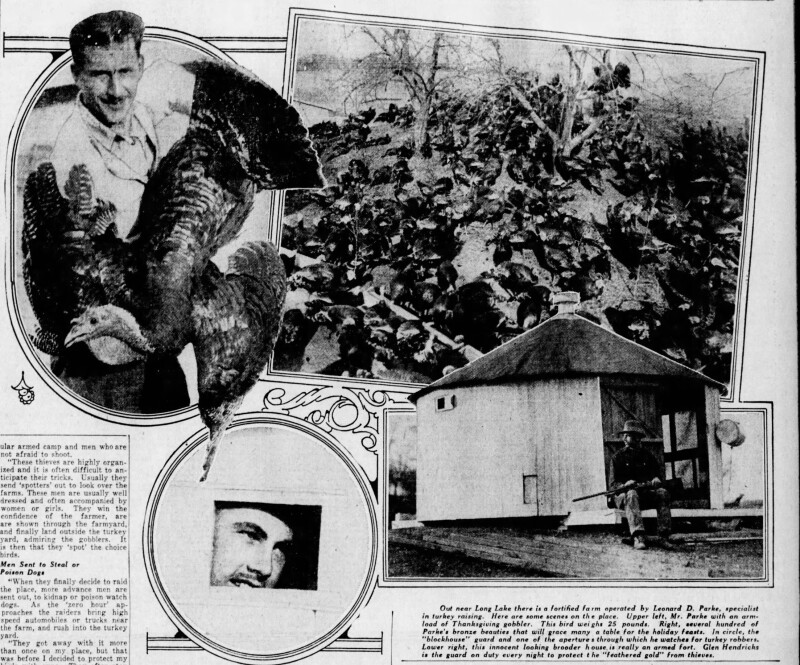
URGENT UPDATE: As Thanksgiving approaches, the historical menace of turkey thieves is back in the spotlight, evoking memories of a time when farm families faced peril as they prepared for the holiday feast. New reports highlight how, for decades, families in Fargo, Minnesota, and surrounding areas endured financial losses due to rampant turkey thefts, turning their holiday preparations into a battleground.
In the early 1900s, warnings rang out every Thanksgiving season: “Turkey thieves are abroad in the land,” as reported by The People’s Press in 1911. Farmers routinely awoke to find their prized turkeys missing, with some incidents escalating into dangerous confrontations. A report from the Claremont News documented one such showdown in 1924, where gunfire rang out at the Charlie Darknell farm in Ripley as farmers attempted to protect their livestock.
Why does this matter today? The specter of turkey bandits not only serves as a reminder of the challenges faced by farmers but also taps into the emotional resonance of Thanksgiving—a time traditionally associated with family and gratitude. The threat of losing a family’s holiday centerpiece was not just a nuisance; it could jeopardize their finances.
Farmers fought back against these thieves, employing various methods to secure their flocks. In 1895, a Minnesota legislator proposed a $50 bounty—equivalent to nearly $2,000 today—for capturing poultry thieves, marking the severity of the issue. During the Great Depression, thefts became so rampant that police urged farmers to report every incident in an effort to connect the dots and curb the crime wave.
Farmers’ ingenuity shone through in their attempts to thwart thefts. Arthur Neumeyer from Dassell, Minnesota, marked his turkeys to deter thieves, while others fortified their farms with armed guards and elaborate security systems. A farmer’s desperate measures included a fortified farm in 1930, where armed men and barbed wire were employed to safeguard Thanksgiving turkeys.
Despite the serious nature of these thefts, some local sheriffs showed unexpected compassion. In 1933, a sheriff in Sisseton, South Dakota, chose to pay for stolen turkeys out of his own pocket, reasoning that the county would be better off than imprisoning the hungry thieves who confessed to the crimes out of desperation. This act of kindness highlights the complex human emotions surrounding the holiday.
However, the community’s fury towards turkey thieves was palpable. Editorials from the era expressed little sympathy for those caught stealing. The Grand Forks Herald once declared, “The turkey thief has no friends, and he ought to have none,” emphasizing the severe social stigma attached to such crimes.
The consequences for turkey theft were harsh. In 1929, a South Dakota judge sentenced a turkey thief to eight years in prison, with local newspapers praising the decision as a necessary form of justice. Yet, even amidst the harsh realities, there were voices advocating for a more humane approach to justice.
As we prepare for another Thanksgiving, the echoes of turkey thefts from the past serve as a stark reminder of the lengths families went to protect their livelihoods. While turkey heists may have faded with the shift toward larger poultry operations, the spirit of community and resilience remains strong. This Thanksgiving, as you enjoy your feast, remember those who fought not just for their dinner, but for their place in the agricultural landscape of America.
Stay tuned for updates as more stories about Thanksgiving traditions and their historical significance emerge. This holiday season, let’s embrace the spirit of gratitude and community, reflecting on how far we’ve come since the days of the “turkey bandits.”

Knicks Dominate Raptors 116-94, Extend Home Winning Streak

Hallmark’s ‘Christmas at the Catnip Café’ Premieres Tonight

Woman Arrested for Threatening U-Haul Worker with Baton

Japan’s PM Takaichi Vows Urgent Fiscal Management Amid Rate Trends

Bitcoin Plummets Below $88K Amid Tether Concerns and Warnings

Tottenville Falls Short in PSAL 4A Title Game Against Erasmus

Shark Teeth Study Reveals Urgent Clues to Prevent Extinction

Church Members Rally Together After Thanksgiving Fire Devastation

U.S. Investment in Canadian Energy Firms Surges Despite Low Oil Prices

Urgent Update: Tom Aspinall’s Vision Deteriorates After UFC 321

MIT Scientists Uncover Surprising Genomic Loops During Cell Division

University of Hawaiʻi Joins $25.6M AI Project to Enhance Disaster Monitoring

AI Disruption: AWS Faces Threat as Startups Shift Cloud Focus

Time Crystals Revolutionize Quantum Computing Potential

Honeywell Forecasts Record Business Jet Deliveries Over Next Decade

Discover the Full Map of Pokémon Legends: Z-A’s Lumiose City

Parenthood Set to Depart Hulu: What Fans Need to Know

GOP Faces Backlash as Protests Surge Against Trump Policies
-
 Top Stories1 month ago
Urgent Update: Tom Aspinall’s Vision Deteriorates After UFC 321
-
 Health1 month ago
MIT Scientists Uncover Surprising Genomic Loops During Cell Division
-
Science4 weeks ago
University of Hawaiʻi Joins $25.6M AI Project to Enhance Disaster Monitoring
-
 Top Stories1 month ago
AI Disruption: AWS Faces Threat as Startups Shift Cloud Focus
-
 Science2 months ago
Time Crystals Revolutionize Quantum Computing Potential
-
 World2 months ago
Honeywell Forecasts Record Business Jet Deliveries Over Next Decade
-
 Entertainment1 month ago
Discover the Full Map of Pokémon Legends: Z-A’s Lumiose City
-
 Entertainment2 months ago
Parenthood Set to Depart Hulu: What Fans Need to Know
-
 Top Stories2 months ago
GOP Faces Backlash as Protests Surge Against Trump Policies
-

 Politics2 months ago
Judge Signals Dismissal of Chelsea Housing Case Citing AI Flaws
-

 Sports2 months ago
Yoshinobu Yamamoto Shines in Game 2, Leading Dodgers to Victory
-

 Health2 months ago
Maine Insurers Cut Medicare Advantage Plans Amid Cost Pressures