
Science
Scientists Sequence 1,000 Butterfly and Moth Genomes to Study Evolution

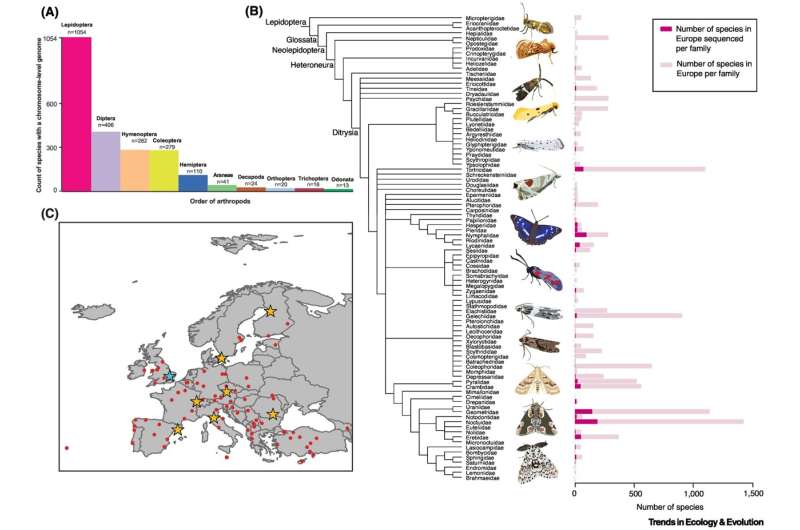
Researchers at the Wellcome Sanger Institute in Cambridge, UK, have achieved a significant milestone by sequencing the genomes of 1,000 species of butterflies and moths. This effort is part of Project Psyche, an international initiative aimed at sequencing all 11,665 species of Lepidoptera in Europe. The findings, published on November 30, 2025, in the journal Trends in Ecology & Evolution, pave the way for a deeper understanding of evolution and biodiversity conservation in the UK and beyond.
Butterflies and moths, collectively known as Lepidoptera, play crucial roles in ecosystems worldwide. They comprise approximately 10% of all known eukaryotic species and are vital pollinators. Additionally, they serve as herbivores and prey within the food chain. Some Lepidoptera species are considered pests, affecting agriculture and forestry. Their sensitivity to environmental changes makes them indicators of biodiversity and climate health, allowing declines in their populations to signal broader ecological issues.
Understanding Evolution Through Genomic Sequencing
The research team, which includes taxonomists, policymakers, and citizen scientists, aims to integrate genomic data into conservation strategies. By analyzing the genomes of various butterfly and moth species, scientists can better understand factors affecting species resilience and population declines. For instance, a recent study examined over 200 genomes, revealing that their chromosomes have remained largely unchanged over millions of years. Such insights can help identify genetic factors that contribute to the survival or extinction of specific species.
Dr. Saad Arif, who led the research on the Black-veined White butterfly (Aporia crataegi) at Oxford Brookes University, highlighted the importance of high-quality reference genomes in modern research. “The availability of high-quality reference genomes makes it feasible to examine the genomic footprints of decline in extinct species,” he noted.
The ongoing decline in insect populations is alarming, with some studies indicating a 65% decrease in flying insects in the UK since 2021. Understanding the evolution of resilient species through genomic studies may provide insights into protecting other vulnerable species. One example is a project in Czechia leveraging reference genomes from Project Psyche to enhance biodiversity monitoring.
The Broader Impact of Project Psyche
All 1,000 genomes produced to date are publicly accessible, fueling a variety of research initiatives aimed at deepening our understanding of Lepidoptera evolution. For example, the genomes have helped scientists investigate why certain species, like the Black-veined White butterfly, disappeared from Britain in the 1920s. By comparing genetic data from museum specimens, researchers uncovered clues that could aid in managing at-risk species.
“Working collaboratively on Project Psyche is vital,” stated Dr. Charlotte Wright. “Due to the vast diversity of butterflies and moths, local expertise is essential for accurate identification, as many species appear identical without microscopic examination.”
Dr. Joana Meier emphasized the significance of genomic data in biodiversity management and policy. “Using these reference genomes, researchers can study genetic diversity, population structure, and connectivity across Europe, which is critical for effective conservation efforts,” she explained.
Professor Mark Blaxter praised the advancements in genomic sequencing over recent years. “The genomes produced for Project Psyche are of extraordinarily high quality, showcasing how engaged researchers and new technologies are transforming our understanding of the natural world,” he remarked. “Darwin would be pleased that his ‘endless forms’ are receiving the attention they deserve.”
Project Psyche represents a vital step towards integrating genomic knowledge into conservation practices, fostering a deeper understanding of the evolutionary relationships among butterflies and moths in Europe. This research not only contributes to the scientific community but also plays a crucial role in protecting global biodiversity.

Philadelphia Parks Launch Free Earth Month Events Starting April 1

Bradford’s Fish Fry Fridays Serve Community with Delicious Dinners

Trump Faces Growing Challenges Amid Rising Tensions with Iran

Scientists Probe the Universe’s Missing Topological Defects

Samsung Galaxy Watch 9 to Feature Larger 435mAh Battery

UConn Huskies Aim to Defend Title in 2026 NCAA Women’s Tournament

U.S. Littoral Combat Ships Dock in Malaysia Amid Regional Tensions

Healthy Choice Wellness Reports Quarterly Earnings, Shares Rise

Urgent News: Charles M. Payment Passes Away at 78 in Duluth

University of Hawaiʻi Joins $25.6M AI Project to Enhance Disaster Monitoring

Major Grant Enhances Cancer Care and Research in Hawaiʻi

Joleen Chaney, Beloved Journalist, Passes Leaving Lasting Legacy

San Francisco’s SFO to Welcome 16 Airlines with Nonstop Flights to Europe in 2026

Goldman Sachs Unveils 2026 Catalyst Playbook for Biotech Investors

Discover Top Business Smartphones for Professionals in 2026

Urgent Update: Tom Aspinall’s Vision Deteriorates After UFC 321

Texas Roadhouse Honors Veterans with Free Meal Vouchers

CD Projekt Red Confirms No Release for The Witcher 4 in 2026
-
Science9 months ago
University of Hawaiʻi Joins $25.6M AI Project to Enhance Disaster Monitoring
-
 Health8 months ago
Major Grant Enhances Cancer Care and Research in Hawaiʻi
-
 Top Stories9 months ago
Joleen Chaney, Beloved Journalist, Passes Leaving Lasting Legacy
-
 World7 months ago
San Francisco’s SFO to Welcome 16 Airlines with Nonstop Flights to Europe in 2026
-
 Business8 months ago
Goldman Sachs Unveils 2026 Catalyst Playbook for Biotech Investors
-
 Business7 months ago
Discover Top Business Smartphones for Professionals in 2026
-
 Top Stories9 months ago
Urgent Update: Tom Aspinall’s Vision Deteriorates After UFC 321
-
 Lifestyle9 months ago
Texas Roadhouse Honors Veterans with Free Meal Vouchers
-
 Entertainment8 months ago
CD Projekt Red Confirms No Release for The Witcher 4 in 2026
-

 Top Stories10 months ago
AI Disruption: AWS Faces Threat as Startups Shift Cloud Focus
-

 Health10 months ago
MIT Scientists Uncover Surprising Genomic Loops During Cell Division
-

 Entertainment10 months ago
Discover the Full Map of Pokémon Legends: Z-A’s Lumiose City