
World
Trump Administration Mandates Reapplication for 42 Million SNAP Recipients

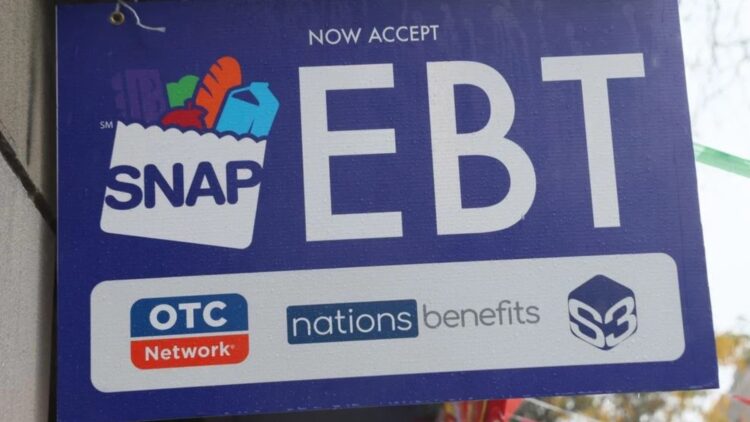
The Trump administration has announced that approximately 42 million U.S. households receiving benefits from the Supplemental Nutrition Assistance Program (SNAP) will now be required to reapply for their food subsidies. This decision follows the recent federal government shutdown that lasted 43 days, during which SNAP benefits were temporarily halted, leaving many vulnerable individuals without access to essential food resources.
Brooke Rollins, Secretary of Agriculture, outlined this new requirement in an interview, emphasizing that the goal is to reduce instances of fraud within the program. Despite the administration’s focus on fraud prevention, the Congressional Research Service (CRS) has reported that intentional fraud in SNAP is “rare.” Most overpayments are attributed to administrative errors rather than deceitful actions by recipients.
Potential Impact on Vulnerable Households
Rollins stated that the reapplication process is aimed at ensuring that taxpayer-funded benefits are accurately distributed to those in need. She indicated that the government would require states to update sensitive information regarding SNAP beneficiaries, including Social Security numbers and employment history. This requirement has raised concerns among advocates for low-income families, many of whom rely on SNAP for their daily sustenance.
The USDA’s Food and Nutrition Service has outlined specific instances of fraud, including when recipients knowingly misrepresent their eligibility, retailers exchanging benefits for cash, and criminals stealing Electronic Benefit Transfer (EBT) cards. Currently, beneficiaries are already required to verify their information every six months, but the proposed changes may significantly increase the burden on households.
Rollins has cited alarming figures, claiming that 186,000 deceased individuals are still recorded as receiving SNAP benefits, which she suggests underscores the need for stricter oversight. Critics, however, argue that the administration’s focus on these statistics may overshadow the genuine needs of those relying on the program.
Administrative Changes and Legislative Context
The reapplication mandate is part of a broader effort by the Trump administration to cut federal spending, which includes a notable reduction of $186 billion in SNAP funding through the enactment of the One Big Beautiful Bill Act. This act also introduced new work requirements and adjusted eligibility criteria for SNAP recipients.
In an interview on Fox News, Trump defended the administration’s approach to the program, stating, “SNAP is supposed to be for when you’re down and out.” He expressed concern that the number of beneficiaries has exceeded what he considers reasonable, implying that some individuals may choose not to work because they can rely on SNAP benefits instead.
As the situation develops, the uncertainty surrounding the future of SNAP and its impact on millions of Americans raises significant questions about food security and support for low-income households. Without further clarification from the USDA regarding the implementation of these new requirements, many families are left anxious about their ability to access essential food resources.

Ole Miss Prepares for New Era After Kiffin’s Departure

Costco Challenges Trump Administration’s Tariffs in Court

Nano Banana Claims Top Spot as AI Image Editor of 2025

Cara Buono Explores Karen Wheeler’s Transformation in ‘Stranger Things’

Trump’s Sleep Issues Spark Health Concerns During Cabinet Meeting

Exploring AJ Soprano’s Evolving Bedroom: A Cultural Journey

73-Year-Old Woman Killed in Maryland Dump Truck Collision

Urgent: Chicago Faces Housing Crisis as Trump’s Policies Shift Funds

Sigourney Weaver Questions Oscar’s Fate in New Ghostbusters Update

Urgent Update: Tom Aspinall’s Vision Deteriorates After UFC 321

MIT Scientists Uncover Surprising Genomic Loops During Cell Division

University of Hawaiʻi Joins $25.6M AI Project to Enhance Disaster Monitoring

AI Disruption: AWS Faces Threat as Startups Shift Cloud Focus

Time Crystals Revolutionize Quantum Computing Potential

Honeywell Forecasts Record Business Jet Deliveries Over Next Decade

Discover the Full Map of Pokémon Legends: Z-A’s Lumiose City

GOP Faces Backlash as Protests Surge Against Trump Policies

Parenthood Set to Depart Hulu: What Fans Need to Know
-
 Top Stories1 month ago
Urgent Update: Tom Aspinall’s Vision Deteriorates After UFC 321
-
 Health2 months ago
MIT Scientists Uncover Surprising Genomic Loops During Cell Division
-
Science1 month ago
University of Hawaiʻi Joins $25.6M AI Project to Enhance Disaster Monitoring
-
 Top Stories2 months ago
AI Disruption: AWS Faces Threat as Startups Shift Cloud Focus
-
 Science2 months ago
Time Crystals Revolutionize Quantum Computing Potential
-
 World2 months ago
Honeywell Forecasts Record Business Jet Deliveries Over Next Decade
-
 Entertainment2 months ago
Discover the Full Map of Pokémon Legends: Z-A’s Lumiose City
-
 Top Stories2 months ago
GOP Faces Backlash as Protests Surge Against Trump Policies
-
 Entertainment2 months ago
Parenthood Set to Depart Hulu: What Fans Need to Know
-

 Politics2 months ago
Judge Signals Dismissal of Chelsea Housing Case Citing AI Flaws
-

 Sports2 months ago
Yoshinobu Yamamoto Shines in Game 2, Leading Dodgers to Victory
-

 Health2 months ago
Maine Insurers Cut Medicare Advantage Plans Amid Cost Pressures