
Top Stories
NASA Awards $24.8 Million for Moon Mission Instruments Today

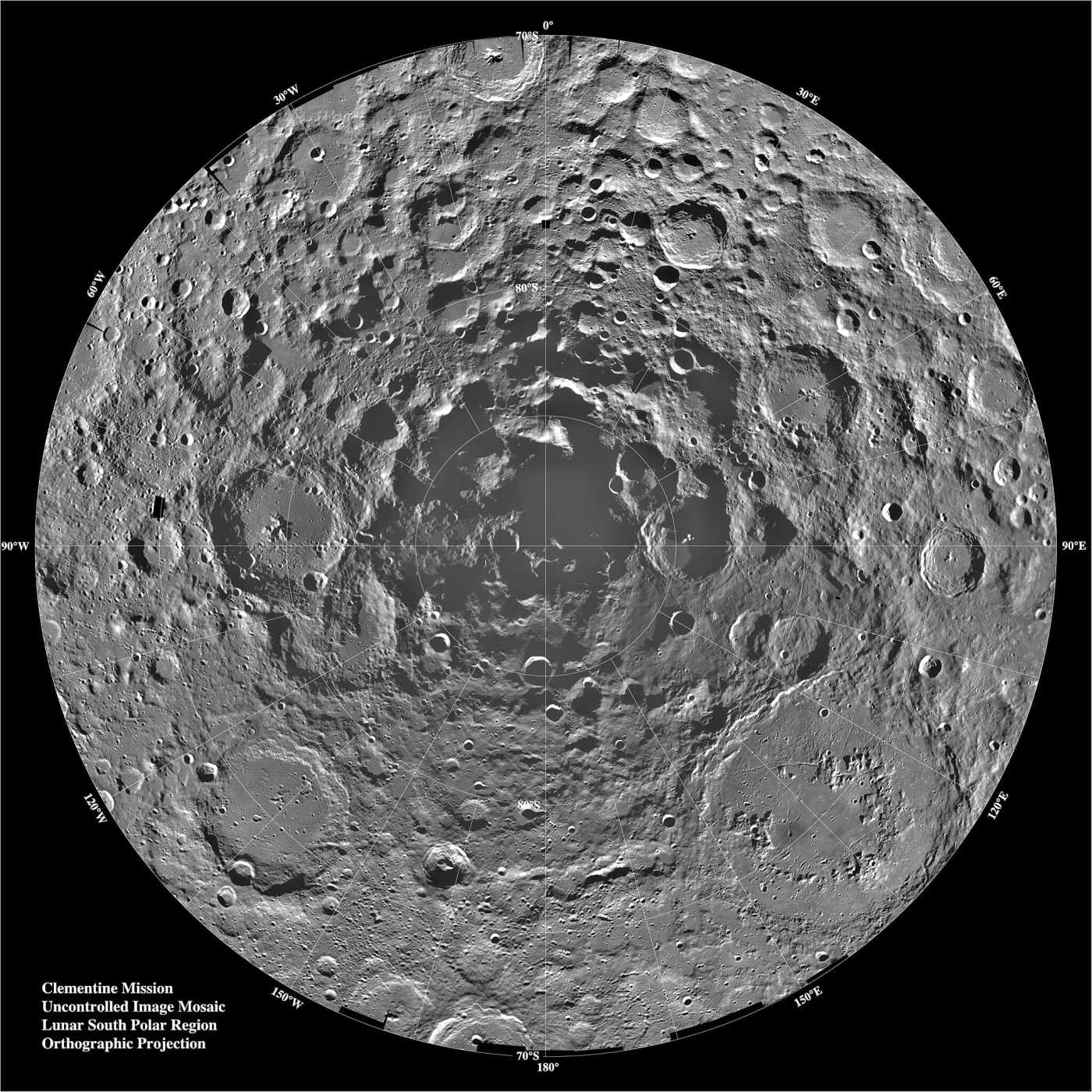
BREAKING: NASA has just announced a groundbreaking partnership with the University of Colorado Boulder, awarding them $24.8 million to develop two critical instruments for the upcoming Artemis IV mission, set to launch in 2028 to the moon’s south pole. This urgent mission aims to advance our understanding of the lunar environment and enhance future exploration efforts.
The selected instruments, collectively known as the DUst and plaSma environmenT survEyoR, or DUSTER, will be mounted on a small rover. They are designed to investigate the moon’s dust and plasma environments—two crucial components that pose risks to both human health and exploration equipment. The abrasive dust that clings to everything it contacts and the charged particles found in the plasma environment can severely impact astronaut safety.
“We need to develop a complete picture of the dust and plasma environment at the lunar south pole and how it varies over time and location to ensure astronaut safety and the operation of exploration equipment,” stated Xu Wang, a senior researcher at the Laboratory for Atmospheric and Space Physics and principal investigator of the DUSTER project. This statement underscores the urgent nature of the research, which aims to inform mitigation strategies for safe long-term human presence on the moon.
DUSTER comprises two key instruments: the Electrostatic Dust Analyzer, which will gather data on dust particles emanating from the lunar surface, and the RElaxation SOunder and differentiaL VoltagE instrument, tasked with measuring the average electron density just above the moon’s surface. These investigations are essential as NASA prepares for the next steps in lunar exploration, including planned human missions to Mars.
NASA’s Artemis program is not just about exploring the moon; it’s about laying the groundwork for sustainable human habitation beyond Earth. The Artemis IV mission is set to debut humanity’s first lunar space station, marking a significant leap forward in space exploration.
As NASA continues to develop this critical mission, the research from CU Boulder will play a vital role in shaping the future of human exploration on the moon and beyond. Stay tuned for more updates on this exciting venture as it unfolds.
This partnership not only represents a significant financial commitment but also highlights the collaborative effort between leading research institutions and national space agencies to push the boundaries of human exploration. The knowledge and technologies developed through DUSTER could ultimately pave the way for a new era of space travel, where humans can thrive on other celestial bodies.
For further updates, keep an eye on NASA’s official channels and continue to follow the developments in this exciting mission.

US Consumer Credit Falls Short: October at $9.18 Billion

Sea Smoke Envelops Lake Superior Amid Record-Breaking Cold

Urgent Update: Social Security Survivor Benefits Clarified Now

Waymo Faces Urgent NHTSA Investigation Over School Bus Violations

Parents Outraged as Education Secretary Bans Entry to School Meeting

New Method Cuts Costs to Produce Copper-64 for Medical Imaging

CDC Panel Votes 8-3 to Limit Newborn Hepatitis B Vaccination

Jaxson Dart and Marissa Ayers Confirm Relationship at Giants Game

Science Communicator Alba Moreno Demystifies Nuclear Energy

Urgent Update: Tom Aspinall’s Vision Deteriorates After UFC 321

University of Hawaiʻi Joins $25.6M AI Project to Enhance Disaster Monitoring

MIT Scientists Uncover Surprising Genomic Loops During Cell Division

AI Disruption: AWS Faces Threat as Startups Shift Cloud Focus

Time Crystals Revolutionize Quantum Computing Potential

Parenthood Set to Depart Hulu: What Fans Need to Know

GOP Faces Backlash as Protests Surge Against Trump Policies

Discover the Full Map of Pokémon Legends: Z-A’s Lumiose City

Honeywell Forecasts Record Business Jet Deliveries Over Next Decade
-
 Top Stories1 month ago
Urgent Update: Tom Aspinall’s Vision Deteriorates After UFC 321
-
Science1 month ago
University of Hawaiʻi Joins $25.6M AI Project to Enhance Disaster Monitoring
-
 Health2 months ago
MIT Scientists Uncover Surprising Genomic Loops During Cell Division
-
 Top Stories2 months ago
AI Disruption: AWS Faces Threat as Startups Shift Cloud Focus
-
 Science2 months ago
Time Crystals Revolutionize Quantum Computing Potential
-
 Entertainment2 months ago
Parenthood Set to Depart Hulu: What Fans Need to Know
-
 Top Stories2 months ago
GOP Faces Backlash as Protests Surge Against Trump Policies
-
 Entertainment2 months ago
Discover the Full Map of Pokémon Legends: Z-A’s Lumiose City
-
 World2 months ago
Honeywell Forecasts Record Business Jet Deliveries Over Next Decade
-

 Politics2 months ago
Judge Signals Dismissal of Chelsea Housing Case Citing AI Flaws
-

 Health2 months ago
Maine Insurers Cut Medicare Advantage Plans Amid Cost Pressures
-

 Sports2 months ago
Yoshinobu Yamamoto Shines in Game 2, Leading Dodgers to Victory