
Science
Researchers Develop Innovative Glucose Battery Using Riboflavin

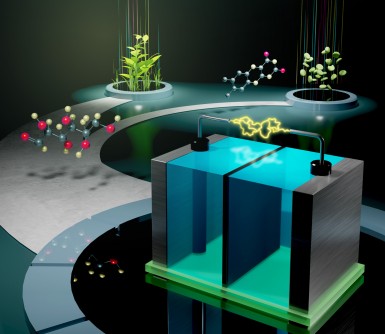
Researchers have created a prototype battery that harnesses the power of vitamin B2, also known as riboflavin, and glucose. This innovative approach, detailed in a recent study published in ACS Energy Letters, mimics the human body’s method of breaking down glucose for energy by utilizing enzymes.
Leading the research, Jong-Hwa Shon and his team incorporated riboflavin into a flow cell battery. The riboflavin acts as a mediator, facilitating the transfer of electrons between the battery’s electrodes and the glucose electrolyte, thereby generating electricity from the energy stored in the sugar.
Potential for Cost-Effective Energy Storage
Shon emphasizes the advantages of this technology, stating, “Riboflavin and glucose flow cells can generate electricity from naturally derived energy sources.” He highlights that the use of non-toxic, inexpensive, and abundant components represents a promising pathway toward more affordable residential energy storage solutions.
The flow cell battery operates by storing electrochemical energy in two electrolytes that circulate through the system. This process converts stored chemical energy into electrical energy through reactions occurring in the electrolyte and at the electrodes. With glucose being a common component in most plants, it stands out as a potential low-cost and abundant electrolyte for energy generation.
Current glucose fuel cell prototypes rely on noble metal catalysts to break down sugar molecules, but these models often yield limited power and face challenges in scaling for industrial applications. Riboflavin presents a viable alternative to metal catalysts due to its stability in the basic pH environment required by glucose flow cells.
Advancements and Future Research Directions
For their prototype, the research team utilized carbon materials for both the positive and negative electrodes. The electrolyte around the negative electrode contained an active form of riboflavin and glucose, while the positive electrode’s electrolyte included either potassium ferricyanide or oxygen, akin to conventional fuel cells.
The researchers observed that the cell featuring potassium ferricyanide allowed for precise measurements of riboflavin’s catalytic activity, achieving a power density comparable to existing flow cell batteries that use vanadium. Conversely, the version with oxygen, while a more cost-effective option, exhibited slower electrode reactions, likely due to the breakdown of riboflavin when exposed to light. Nonetheless, it still demonstrated improved power density compared to earlier models.
Looking ahead, the team plans to enhance the power density of the glucose flow cell using oxygen by mitigating light reactions with riboflavin and refining the overall design of the cell. Their research received support from the Energy Storage Research Alliance, an initiative funded by the U.S. Department of Energy, as well as the Energy Storage Materials Initiative at the Pacific Northwest National Laboratory.
The abstract of this significant study will be available on October 15, 2023, at 08:00 Eastern Time on the ACS website.
The American Chemical Society (ACS) is a nonprofit organization established by the U.S. Congress, dedicated to advancing chemistry and its practitioners for the benefit of people and the planet. As a global leader in promoting excellence in science education and facilitating access to chemistry-related research, ACS plays a vital role in the scientific community.

Philadelphia Parks Launch Free Earth Month Events Starting April 1

Bradford’s Fish Fry Fridays Serve Community with Delicious Dinners

Trump Faces Growing Challenges Amid Rising Tensions with Iran

Scientists Probe the Universe’s Missing Topological Defects

Samsung Galaxy Watch 9 to Feature Larger 435mAh Battery

UConn Huskies Aim to Defend Title in 2026 NCAA Women’s Tournament

U.S. Littoral Combat Ships Dock in Malaysia Amid Regional Tensions

Healthy Choice Wellness Reports Quarterly Earnings, Shares Rise

Urgent News: Charles M. Payment Passes Away at 78 in Duluth

University of Hawaiʻi Joins $25.6M AI Project to Enhance Disaster Monitoring

Major Grant Enhances Cancer Care and Research in Hawaiʻi

Joleen Chaney, Beloved Journalist, Passes Leaving Lasting Legacy

San Francisco’s SFO to Welcome 16 Airlines with Nonstop Flights to Europe in 2026

Goldman Sachs Unveils 2026 Catalyst Playbook for Biotech Investors

Discover Top Business Smartphones for Professionals in 2026

Urgent Update: Tom Aspinall’s Vision Deteriorates After UFC 321

Texas Roadhouse Honors Veterans with Free Meal Vouchers

CD Projekt Red Confirms No Release for The Witcher 4 in 2026
-
Science9 months ago
University of Hawaiʻi Joins $25.6M AI Project to Enhance Disaster Monitoring
-
 Health8 months ago
Major Grant Enhances Cancer Care and Research in Hawaiʻi
-
 Top Stories9 months ago
Joleen Chaney, Beloved Journalist, Passes Leaving Lasting Legacy
-
 World7 months ago
San Francisco’s SFO to Welcome 16 Airlines with Nonstop Flights to Europe in 2026
-
 Business8 months ago
Goldman Sachs Unveils 2026 Catalyst Playbook for Biotech Investors
-
 Business7 months ago
Discover Top Business Smartphones for Professionals in 2026
-
 Top Stories9 months ago
Urgent Update: Tom Aspinall’s Vision Deteriorates After UFC 321
-
 Lifestyle9 months ago
Texas Roadhouse Honors Veterans with Free Meal Vouchers
-
 Entertainment8 months ago
CD Projekt Red Confirms No Release for The Witcher 4 in 2026
-

 Top Stories10 months ago
AI Disruption: AWS Faces Threat as Startups Shift Cloud Focus
-

 Health10 months ago
MIT Scientists Uncover Surprising Genomic Loops During Cell Division
-

 Entertainment10 months ago
Discover the Full Map of Pokémon Legends: Z-A’s Lumiose City