
Business
Food Pantries Brace for Impact Amid Ongoing Government Shutdown

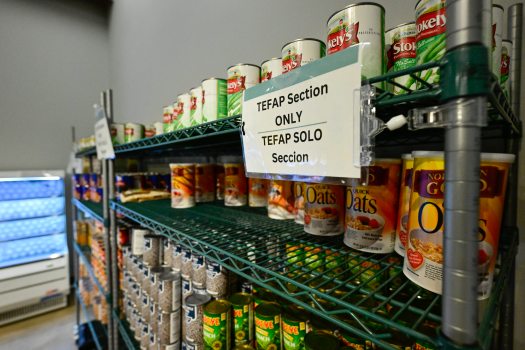
The ongoing federal government shutdown is poised to significantly affect food pantries across Boulder County, raising concerns about their ability to meet increasing demands. As the shutdown continues, local organizations are calling for enhanced community support to ensure they can provide essential food services to those in need.
At Harvest of Hope, a food pantry located on Pearl Street in Boulder, the atmosphere reflects a growing unease. Executive Director Chad Molter highlighted that the pantry has already served over 6,000 individuals in 2025, compared to fewer than 5,000 last year. With food assistance programs facing potential cuts, he is particularly worried about the future. He stated, “I have these dreams of us being in a better place than we are. I know it takes a lot to move the needle. We’re downstream from a lot of things happening that we can’t control.”
As of now, Harvest of Hope has received approximately 20% of its more than 1.2 million pounds of food from the Food Emergency Assistance Program (TEFAP), equating to over 240,000 pounds. The U.S. Department of Agriculture (USDA) manages TEFAP, but its operations are currently halted due to the shutdown. Requests submitted by October 31 are expected to be filled; however, any orders made after that date may face delays or remain unfulfilled, exacerbating food insecurity in the community.
Growing Demand for Food Assistance
The impact of the shutdown is not isolated to Harvest of Hope. The Emergency Family Assistance Association (EFAA), which supports families in Boulder, is also experiencing an uptick in need. Ellen Ross, the organization’s Director of Development and Communications, reported that EFAA distributed 124 million pounds of food last year to over 2,200 households. She noted that while EFAA does not rely on TEFAP as heavily as Harvest of Hope, the organization is concerned about the variety of food available through this program.
Ross emphasized, “We’re obviously anticipating an increase if the government shutdown continues, and with the nature of SNAP cuts.” The Supplemental Nutrition Assistance Program, which many families depend on, is also under threat from proposed budget cuts tied to federal legislation.
In Longmont, the OUR Center, which serves the St. Vrain Valley School District, is bracing for a similar surge. Executive Director Marc Cowell indicated that the center could see up to a 25% increase in food market visits next month if the shutdown persists. Currently, the center averages over 700 visits monthly, but Cowell warned that an influx could strain their resources, potentially leading to difficult decisions regarding food distribution.
Community Efforts and Support
Despite the challenges, food pantries are committed to remaining operational. Kim Da Silva, Chief Executive Officer of Community Food Share, noted that the nonprofit is prepared to support individuals, particularly federal employees and military personnel, who may find themselves in need due to the shutdown. She stated, “Even as our resources and those of our partners are stretched, Community Food Share will remain fully operational and continue to support our network so we can meet the community’s needs together.”
The current environment has led to a call for increased community involvement, with organizations urging residents to contribute food or monetary donations. Molter explained that many individuals relying on Harvest of Hope have transitioned from seeing it as a supplementary resource to treating it as a primary source of food. “The folks that we serve, by and large, they’re working as hard as they can to make ends meet,” he said. “So, to put them in a situation where they’re facing future anxiety over not knowing what is going to happen to basic needs programs, it’s hard.”
With the approaching holiday season, food pantries are preparing for higher demand and are actively seeking support from the community. Those interested in assisting can visit the websites of Harvest of Hope at hopepantry.org and EFAA at efaa.org for more information on how to contribute.
As the situation develops, the resilience of these organizations will be tested, highlighting the critical role they play in ensuring food security for vulnerable populations in Boulder County.

Philadelphia Parks Launch Free Earth Month Events Starting April 1

Bradford’s Fish Fry Fridays Serve Community with Delicious Dinners

Trump Faces Growing Challenges Amid Rising Tensions with Iran

Scientists Probe the Universe’s Missing Topological Defects

Samsung Galaxy Watch 9 to Feature Larger 435mAh Battery

UConn Huskies Aim to Defend Title in 2026 NCAA Women’s Tournament

U.S. Littoral Combat Ships Dock in Malaysia Amid Regional Tensions

Healthy Choice Wellness Reports Quarterly Earnings, Shares Rise

Urgent News: Charles M. Payment Passes Away at 78 in Duluth

University of Hawaiʻi Joins $25.6M AI Project to Enhance Disaster Monitoring

Major Grant Enhances Cancer Care and Research in Hawaiʻi

Joleen Chaney, Beloved Journalist, Passes Leaving Lasting Legacy

San Francisco’s SFO to Welcome 16 Airlines with Nonstop Flights to Europe in 2026

Goldman Sachs Unveils 2026 Catalyst Playbook for Biotech Investors

Discover Top Business Smartphones for Professionals in 2026

Urgent Update: Tom Aspinall’s Vision Deteriorates After UFC 321

Texas Roadhouse Honors Veterans with Free Meal Vouchers

CD Projekt Red Confirms No Release for The Witcher 4 in 2026
-
Science9 months ago
University of Hawaiʻi Joins $25.6M AI Project to Enhance Disaster Monitoring
-
 Health8 months ago
Major Grant Enhances Cancer Care and Research in Hawaiʻi
-
 Top Stories9 months ago
Joleen Chaney, Beloved Journalist, Passes Leaving Lasting Legacy
-
 World7 months ago
San Francisco’s SFO to Welcome 16 Airlines with Nonstop Flights to Europe in 2026
-
 Business8 months ago
Goldman Sachs Unveils 2026 Catalyst Playbook for Biotech Investors
-
 Business7 months ago
Discover Top Business Smartphones for Professionals in 2026
-
 Top Stories9 months ago
Urgent Update: Tom Aspinall’s Vision Deteriorates After UFC 321
-
 Lifestyle9 months ago
Texas Roadhouse Honors Veterans with Free Meal Vouchers
-
 Entertainment8 months ago
CD Projekt Red Confirms No Release for The Witcher 4 in 2026
-

 Top Stories10 months ago
AI Disruption: AWS Faces Threat as Startups Shift Cloud Focus
-

 Health10 months ago
MIT Scientists Uncover Surprising Genomic Loops During Cell Division
-

 Entertainment10 months ago
Discover the Full Map of Pokémon Legends: Z-A’s Lumiose City