
Top Stories
California Faculty Sue CSU Over Personal Info Handed to Trump Admin

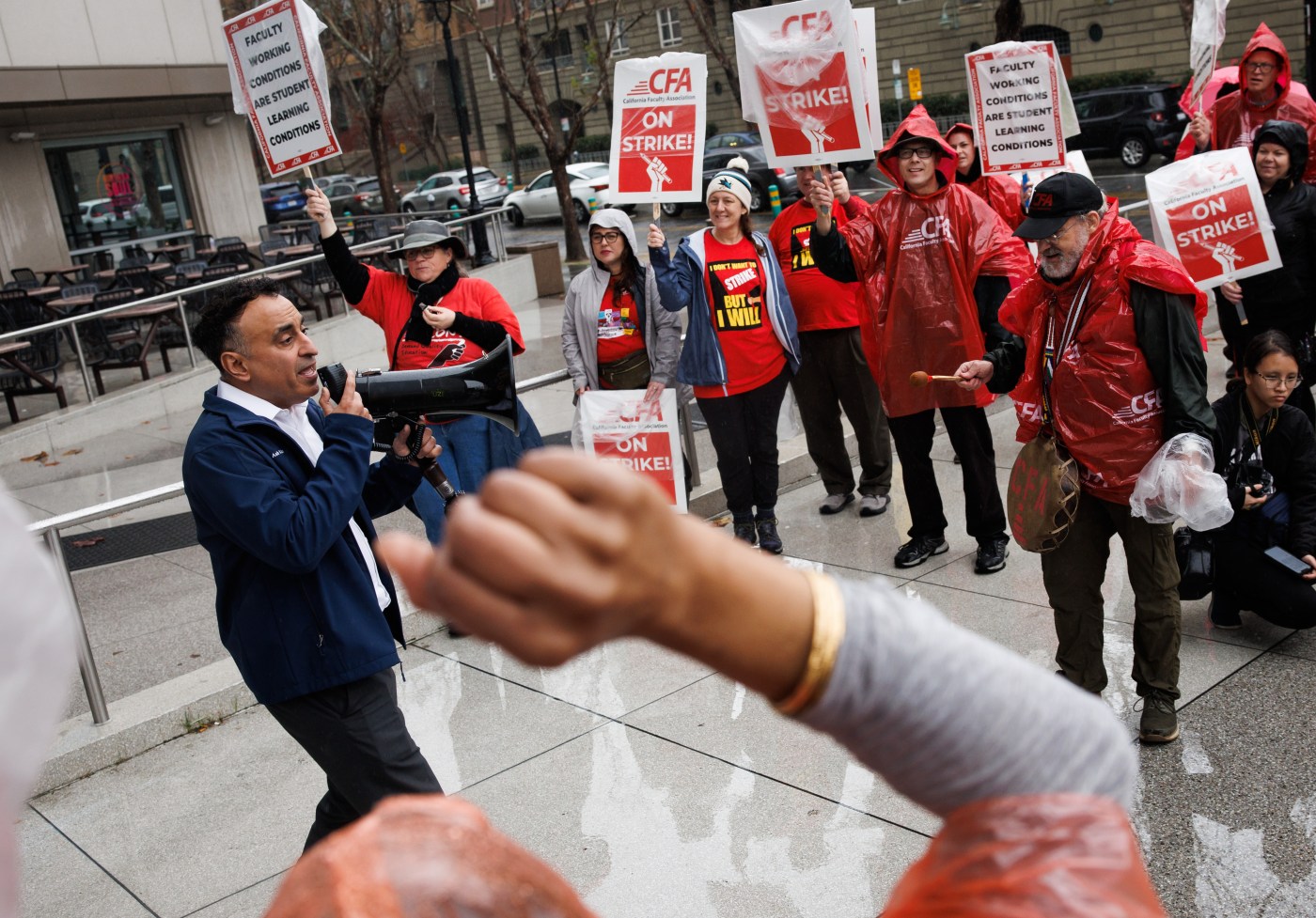
BREAKING: The California Faculty Association has launched a lawsuit against the California State University (CSU) system, claiming the university unlawfully disclosed the personal contact information of 2,600 Los Angeles campus employees to the Trump administration. This urgent legal action comes in response to a federal investigation into alleged antisemitism on campus, raising significant concerns about faculty privacy rights.
The lawsuit, filed last week, demands a court order to prevent CSU from disclosing any personal information of faculty members without prior notice, allowing them the opportunity to object. CSU Los Angeles officials confirmed that they complied with a subpoena from the Trump administration, which required the release of personal phone numbers and email addresses as part of an investigation by the U.S. Equal Employment Opportunity Commission.
“The CSU leadership is out of step with most Californians,” stated Margarita Berta-Ávila, President of the California Faculty Association and professor at Sacramento State. “While California is leading the nation in our efforts to fight targeting and harassment, CSU capitulated without a fight to the Trump Administration’s witch hunt of faculty.”
The controversy escalates amid heightened scrutiny over university responses to antisemitism complaints, particularly following student protests against Israel’s military actions in Gaza after the October 7, 2023 attacks by Hamas. CSU Los Angeles had previously hosted a Gaza Solidarity Encampment, which reportedly led to a discrimination complaint in 2024.
CSU officials stated they are aware of the lawsuit and share concerns about employee privacy. However, they maintain a legal obligation to comply with federal subpoenas to avoid potential court enforcement and sanctions. “As a public institution, the CSU must comply with such subpoenas while striving to limit disclosures to only what is required by law,” a CSU spokesperson emphasized.
Under the subpoena, CSU LA was required to disclose not just names and contact information but also other personal details such as gender, race/ethnicity, position title, and work site. CSU representatives asserted that they took steps to protect faculty privacy, filing a formal petition to modify the subpoena and successfully narrowing the requested information to minimal requirements.
This lawsuit follows a similar incident at the University of California, where hundreds of faculty and student names were released to the Trump administration, igniting widespread outrage and calls for accountability. California Governor Gavin Newsom has expressed his concerns about the implications for academic freedom and privacy, asserting that he will scrutinize CSU’s actions regarding the turnover of faculty data.
In a recent press conference, Newsom highlighted the state’s ongoing investigation into the data release at UC, describing the situation as “extortion” and vowing to protect the University of California system from undue federal pressure. This legal battle at CSU underscores broader tensions over academic freedom and the treatment of educators in the current political climate.
WHAT’S NEXT: As this lawsuit develops, it will be critical to monitor CSU’s response and any potential repercussions from the federal government. The implications for faculty privacy and academic autonomy could resonate throughout the state and beyond, making this a pivotal moment for educators across the nation.
Stay tuned for updates as more information emerges regarding this significant legal challenge.

Philadelphia Parks Launch Free Earth Month Events Starting April 1

Bradford’s Fish Fry Fridays Serve Community with Delicious Dinners

Trump Faces Growing Challenges Amid Rising Tensions with Iran

Scientists Probe the Universe’s Missing Topological Defects

Samsung Galaxy Watch 9 to Feature Larger 435mAh Battery

UConn Huskies Aim to Defend Title in 2026 NCAA Women’s Tournament

U.S. Littoral Combat Ships Dock in Malaysia Amid Regional Tensions

Healthy Choice Wellness Reports Quarterly Earnings, Shares Rise

Urgent News: Charles M. Payment Passes Away at 78 in Duluth

University of Hawaiʻi Joins $25.6M AI Project to Enhance Disaster Monitoring

Major Grant Enhances Cancer Care and Research in Hawaiʻi

Joleen Chaney, Beloved Journalist, Passes Leaving Lasting Legacy

San Francisco’s SFO to Welcome 16 Airlines with Nonstop Flights to Europe in 2026

Goldman Sachs Unveils 2026 Catalyst Playbook for Biotech Investors

Discover Top Business Smartphones for Professionals in 2026

Urgent Update: Tom Aspinall’s Vision Deteriorates After UFC 321

Texas Roadhouse Honors Veterans with Free Meal Vouchers

CD Projekt Red Confirms No Release for The Witcher 4 in 2026
-
Science9 months ago
University of Hawaiʻi Joins $25.6M AI Project to Enhance Disaster Monitoring
-
 Health8 months ago
Major Grant Enhances Cancer Care and Research in Hawaiʻi
-
 Top Stories9 months ago
Joleen Chaney, Beloved Journalist, Passes Leaving Lasting Legacy
-
 World7 months ago
San Francisco’s SFO to Welcome 16 Airlines with Nonstop Flights to Europe in 2026
-
 Business8 months ago
Goldman Sachs Unveils 2026 Catalyst Playbook for Biotech Investors
-
 Business8 months ago
Discover Top Business Smartphones for Professionals in 2026
-
 Top Stories9 months ago
Urgent Update: Tom Aspinall’s Vision Deteriorates After UFC 321
-
 Lifestyle9 months ago
Texas Roadhouse Honors Veterans with Free Meal Vouchers
-
 Entertainment8 months ago
CD Projekt Red Confirms No Release for The Witcher 4 in 2026
-

 Top Stories10 months ago
AI Disruption: AWS Faces Threat as Startups Shift Cloud Focus
-

 Health10 months ago
MIT Scientists Uncover Surprising Genomic Loops During Cell Division
-

 Entertainment10 months ago
Discover the Full Map of Pokémon Legends: Z-A’s Lumiose City