
Science
China Celebrates 600th Long March Rocket Launch with New Satellites

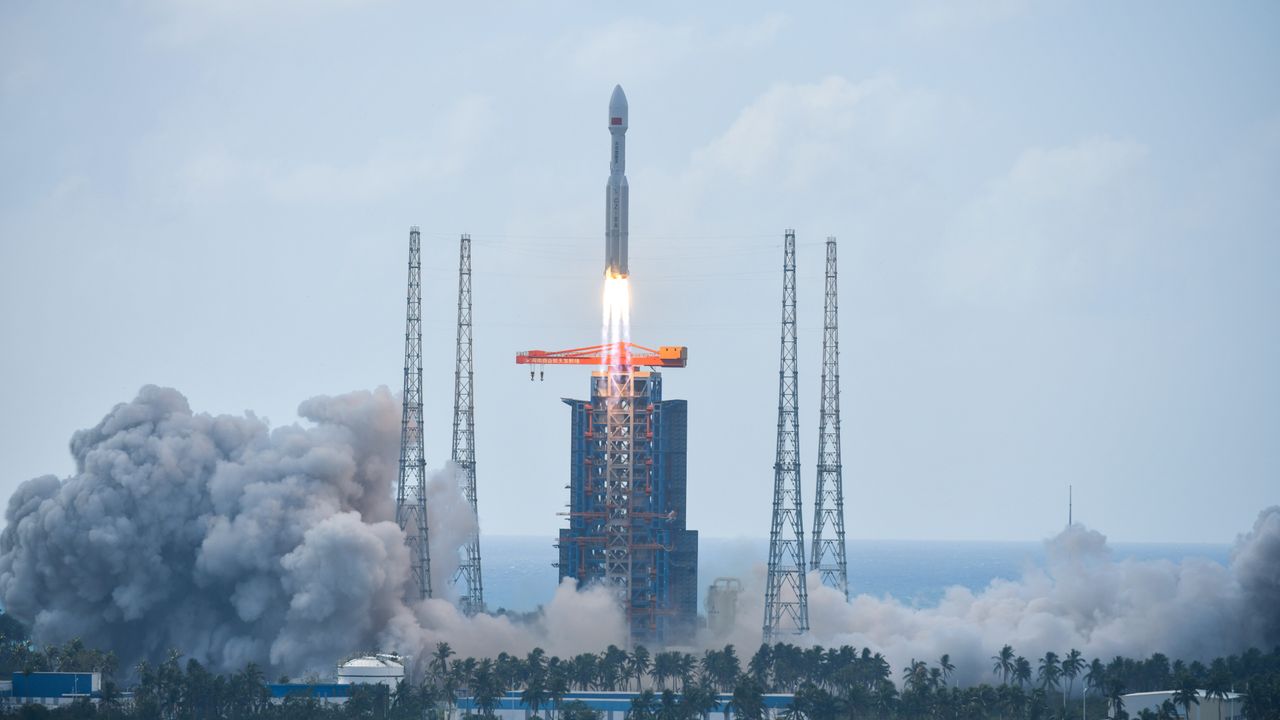
China marked a significant milestone on October 15, 2025, with the launch of its 600th Long March rocket mission. The Long March 8A lifted off from the Wenchang Space Launch Center in Hainan at 9:33 p.m. EDT (01:33 GMT, 09:33 a.m. local time on October 16). This mission successfully deployed a batch of satellites for the Guowang broadband network, underscoring the country’s rapidly advancing space capabilities.
The Long March rocket family has a storied history, dating back to its first launch on April 24, 1970, when the Long March 1 successfully placed China’s first satellite, Dong Fang Hong 1, into orbit. Over the past 55 years, China has developed more than 20 variants of the Long March rockets, with 16 currently active. According to reports from China Daily, the launch cadence has notably increased, reflecting China’s commitment to expanding its space exploration and satellite deployment programs.
The journey to 600 launches has accelerated dramatically. The first 100 launches took 37 years to achieve, but the subsequent milestones were reached in much shorter timeframes: the second hundred in 7.5 years, the third in just over four years, and the fourth in two years and nine months. The most recent 100 launches were completed in only one year and ten months, showcasing a remarkable uptick in activity. Overall, the fleet boasts a success rate of approximately 97%.
While the Long March family is a major player in global launch capabilities, it does not hold the record for the most launches. That title belongs to the Soviet/Russian Soyuz rocket family, which has completed over 1,700 missions since its debut in November 1966. Other notable rocket families, including the Soviet Union’s Kosmos series and the American Atlas series, have also reached the 600-launch milestone. Meanwhile, SpaceX is rapidly approaching this figure with its Falcon rocket line, which has conducted over 570 flights, including 130 Falcon 9 launches in 2025 alone.
The Guowang network, also known as the “national network,” is poised to become a significant player in the global broadband landscape. Operated by the state-run company China Satnet, the network aims to establish a constellation of about 13,000 satellites in low Earth orbit (LEO). The recent launch delivered the 12th batch of Guowang satellites, with each group consisting of eight to ten spacecraft.
China’s ambitions in satellite internet infrastructure mirror those of SpaceX’s Starlink megaconstellation, which currently has over 8,600 operational satellites and continues to expand. Another Chinese initiative, Qianfan, or “Thousand Sails,” plans to launch a similar number of satellites, further intensifying the competitive landscape in global satellite communications.
As China continues to invest in its space program and satellite networks, the implications for both domestic and international communications are significant. The successful launch of the Long March 8A marks not just a milestone for China’s space endeavors but also a pivotal moment in the evolution of global internet access through satellite technology.

Bitcoin Plummets Below $88K Amid Tether Concerns and Warnings

Tottenville Falls Short in PSAL 4A Title Game Against Erasmus

Shark Teeth Study Reveals Urgent Clues to Prevent Extinction

Church Members Rally Together After Thanksgiving Fire Devastation

U.S. Investment in Canadian Energy Firms Surges Despite Low Oil Prices

Nick Jonas Unveils New Solo Album ‘Sunday Best’ Set for February Release

Researchers Urge Label Changes for Low-Alcohol Drinks to Aid Pregnant Women

Wedding Cookie Table Community Aims for World’s Largest Cookie Exchange

Mayor Appoints Alan Wong as New Supervisor for District 4

Urgent Update: Tom Aspinall’s Vision Deteriorates After UFC 321

MIT Scientists Uncover Surprising Genomic Loops During Cell Division

University of Hawaiʻi Joins $25.6M AI Project to Enhance Disaster Monitoring

AI Disruption: AWS Faces Threat as Startups Shift Cloud Focus

Time Crystals Revolutionize Quantum Computing Potential

Honeywell Forecasts Record Business Jet Deliveries Over Next Decade

Discover the Full Map of Pokémon Legends: Z-A’s Lumiose City

GOP Faces Backlash as Protests Surge Against Trump Policies

Parenthood Set to Depart Hulu: What Fans Need to Know
-
 Top Stories1 month ago
Urgent Update: Tom Aspinall’s Vision Deteriorates After UFC 321
-
 Health1 month ago
MIT Scientists Uncover Surprising Genomic Loops During Cell Division
-
Science4 weeks ago
University of Hawaiʻi Joins $25.6M AI Project to Enhance Disaster Monitoring
-
 Top Stories1 month ago
AI Disruption: AWS Faces Threat as Startups Shift Cloud Focus
-
 Science2 months ago
Time Crystals Revolutionize Quantum Computing Potential
-
 World2 months ago
Honeywell Forecasts Record Business Jet Deliveries Over Next Decade
-
 Entertainment1 month ago
Discover the Full Map of Pokémon Legends: Z-A’s Lumiose City
-
 Top Stories2 months ago
GOP Faces Backlash as Protests Surge Against Trump Policies
-
 Entertainment2 months ago
Parenthood Set to Depart Hulu: What Fans Need to Know
-

 Politics2 months ago
Judge Signals Dismissal of Chelsea Housing Case Citing AI Flaws
-

 Sports2 months ago
Yoshinobu Yamamoto Shines in Game 2, Leading Dodgers to Victory
-

 Health2 months ago
Maine Insurers Cut Medicare Advantage Plans Amid Cost Pressures