
World
Nordic Military Leaders Demand Proven Weapons from Suppliers

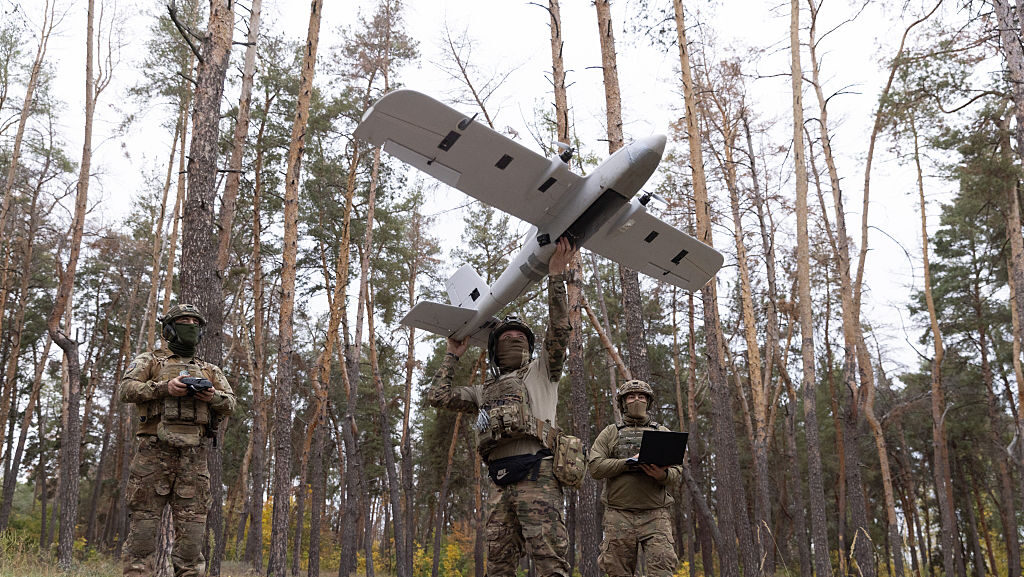
In a significant shift in procurement strategy, Nordic military leaders are emphasizing the necessity for weapon systems to demonstrate operational success in the ongoing conflict in Ukraine. During a recent panel discussion at the AUSA (Association of the United States Army) event in Belfast, officials highlighted that suppliers must provide evidence of their products’ effectiveness in real combat situations.
Maj. Gen. Peter Harling Boysen, the chief of the Royal Danish Army, stated, “For new supply chains and new technologies, I’m never going to buy anything that hasn’t worked in Ukraine.” This approach reflects a growing trend among military leaders who are prioritizing proven technologies to enhance their defense capabilities.
Demand for Tested Technologies
Both Boysen and Lt. Gen. Pasi Välimäki, Commander of the Finnish Army, expressed the need for suppliers to demonstrate that their products have been effectively utilized in Ukraine. Välimäki noted that while some products showcased at AUSA may look impressive, systems that have proven their functionality in combat are far more persuasive to military buyers. He indicated, “That’s the secret,” referring to the requirement for evidence of effectiveness.
Välimäki pointed out the urgency of acquiring mature platforms, given his two-year window for signing new equipment contracts. He affirmed, “You’re either in or you’re out,” emphasizing the decisive nature of their procurement strategy.
Aivars Puriņš, Latvia’s state secretary, echoed these sentiments, urging manufacturers to test new technologies in scenarios as close to deployed situations as possible. He remarked on the need to avoid past mistakes where advanced technologies failed to perform as expected in Ukraine. To support this effort, Latvia is developing a drone test range and has established a drone competency center in Riga, aimed at enhancing the operational capabilities of the Latvian National Armed Forces.
Innovation in Drone Technology
The drone competency center is designed to facilitate the development and integration of drone technologies tailored to military needs. According to a statement from the Latvian Ministry of Defense, its core mission includes ensuring the continuity of drone system supplies during crises and fostering collaboration with local companies.
Norway is also advancing its drone capabilities. Maj. Gen. Lars Lervik, chief of the Norwegian Army, announced a new drone program that will coordinate the army’s initiatives and support efforts in Ukraine. The country plans to invest 1.5 billion Norwegian Krone (approximately $1.49 million) over the next decade to enhance its drone capabilities. Lervik stated that the intent is not only to improve value in acquisitions but also to drive overall innovation across the army.
Significant developments include the testing of drone swarm technology, exemplified by the Six Robotics Valkyrie autonomous drones designed for intelligence, surveillance, and reconnaissance. Lervik expressed his ambition to integrate various drone types into coordinated swarms, emphasizing the need for adaptable solutions across the military.
As tensions escalate with Russian drone incursions in Europe, the Nordic countries are intensifying their defense strategies. Boysen highlighted the importance of responding to these threats, advocating for the downing of unauthorized drones to send a clear message to Moscow regarding the unacceptable nature of such activities.
Procurement Challenges and Future Prospects
In addition to drone technology, Norway is facing delays in its long-range precision fires acquisition. Lervik stated that the preferred contractor selection process, initially expected to conclude in summer 2023, has been postponed due to various procurement challenges and the need for necessary information from potential vendors.
He expressed hope that by Christmas, recommendations could be made to the government, with provisional contract awards anticipated for early 2026. Leading contenders in this procurement include Lockheed Martin’s HIMARS and South Korea’s Hanwha Aerospace K239 Chunmoo Multiple Launch Rocket System.
Furthermore, Norway is considering acquiring up to 80 BAE Systems CV90 infantry fighting vehicles, designed to the advanced MkIV standard. This potential purchase is part of a collaborative effort with Estonia, Finland, Lithuania, the Netherlands, and Sweden, with contract discussions expected to progress early next year.
The Nordic military leaders’ focus on operationally proven technologies marks a pivotal moment in defense procurement, aligning military needs with real-world efficacy to enhance national and regional security.

Tottenville Falls Short in PSAL 4A Title Game Against Erasmus

Shark Teeth Study Reveals Urgent Clues to Prevent Extinction

Church Members Rally Together After Thanksgiving Fire Devastation

U.S. Investment in Canadian Energy Firms Surges Despite Low Oil Prices

Nick Jonas Unveils New Solo Album ‘Sunday Best’ Set for February Release

Researchers Urge Label Changes for Low-Alcohol Drinks to Aid Pregnant Women

Wedding Cookie Table Community Aims for World’s Largest Cookie Exchange

Mayor Appoints Alan Wong as New Supervisor for District 4

UK Report Reveals Growing Role of AI in University Research Assessments

Urgent Update: Tom Aspinall’s Vision Deteriorates After UFC 321

MIT Scientists Uncover Surprising Genomic Loops During Cell Division

University of Hawaiʻi Joins $25.6M AI Project to Enhance Disaster Monitoring

AI Disruption: AWS Faces Threat as Startups Shift Cloud Focus

Time Crystals Revolutionize Quantum Computing Potential

Honeywell Forecasts Record Business Jet Deliveries Over Next Decade

Discover the Full Map of Pokémon Legends: Z-A’s Lumiose City

GOP Faces Backlash as Protests Surge Against Trump Policies

Parenthood Set to Depart Hulu: What Fans Need to Know
-
 Top Stories1 month ago
Urgent Update: Tom Aspinall’s Vision Deteriorates After UFC 321
-
 Health1 month ago
MIT Scientists Uncover Surprising Genomic Loops During Cell Division
-
Science4 weeks ago
University of Hawaiʻi Joins $25.6M AI Project to Enhance Disaster Monitoring
-
 Top Stories1 month ago
AI Disruption: AWS Faces Threat as Startups Shift Cloud Focus
-
 Science2 months ago
Time Crystals Revolutionize Quantum Computing Potential
-
 World2 months ago
Honeywell Forecasts Record Business Jet Deliveries Over Next Decade
-
 Entertainment1 month ago
Discover the Full Map of Pokémon Legends: Z-A’s Lumiose City
-
 Top Stories2 months ago
GOP Faces Backlash as Protests Surge Against Trump Policies
-
 Entertainment2 months ago
Parenthood Set to Depart Hulu: What Fans Need to Know
-

 Politics2 months ago
Judge Signals Dismissal of Chelsea Housing Case Citing AI Flaws
-

 Sports2 months ago
Yoshinobu Yamamoto Shines in Game 2, Leading Dodgers to Victory
-

 Health2 months ago
Maine Insurers Cut Medicare Advantage Plans Amid Cost Pressures