
World
Troops Embrace Reptilian Symbols for Strength and Identity

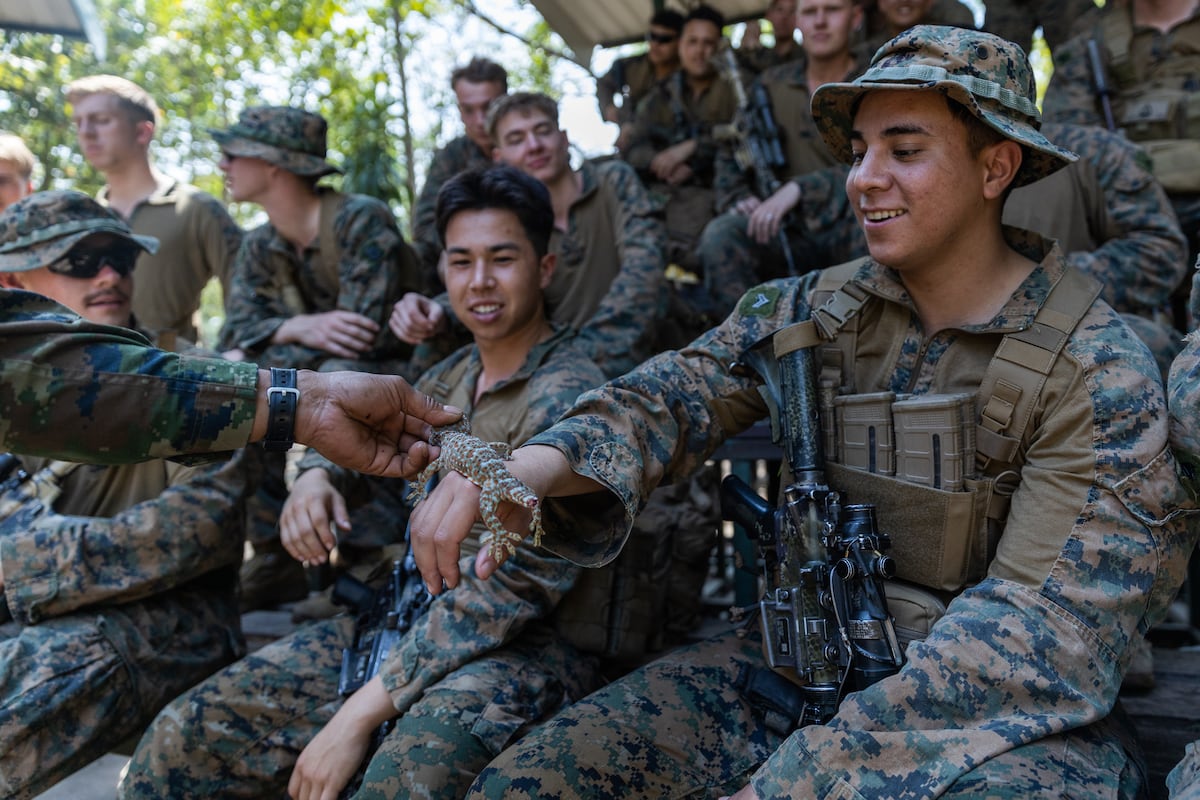
Tuesday, October 17, 2023, marks National Reptile Awareness Day, a day dedicated to recognizing the significant role reptiles have played in human history. This appreciation is evident within the U.S. military, where reptiles serve not just as mascots but as enduring symbols of the qualities valued by service members. From cobras to alligators, these creatures appear on patches, aircraft, and unit logos across various branches, encapsulating traits such as patience, precision, and power.
Reptiles resonate with military personnel due to their primal toughness. For instance, a cobra strikes without warning, while an alligator remains still until it seizes the right moment. This instinctual control parallels military training, where patience is crucial. A sniper may hold their breath for hours, just as an alligator can remain submerged, waiting to ambush its prey. Both scenarios underscore discipline and timing over chaos, key principles in military operations.
Historical Significance of Reptilian Nicknames
The connection between reptiles and military identity has roots that stretch back generations. During World War II, the U.S. 158th Infantry Regiment adopted the nickname “Bushmasters,” named after the venomous snake encountered in the jungles of Panama and the Pacific. This name emerged from necessity and survival, as soldiers faced the snake frequently, and it became a symbol of resilience. Today, the Bushmaster remains an integral part of the regiment’s heritage, its image coiled prominently on their insignia.
Moreover, reptiles thrive in the same environments where American forces have engaged in combat for over a century, including deserts, swamps, and jungles. This shared toughness has made reptiles natural emblems for military units. In Iraq and Afghanistan, for example, Marines in amphibious assault units often referred to themselves as “Gators.” This nickname reflected their versatile capabilities, allowing them to transition seamlessly between land and water, much like the animal itself.
The 75th Field Artillery Regiment has made this connection official, with its distinctive unit insignia featuring a gold lizard on a red shield. Approved in 1923, this design honors the regiment’s origins in Alabama, once dubbed the “Lizard State.” The lizard symbolizes quickness and survival, qualities that define the artillerymen who have served under its banner.
The Practical Side of Reptilian Call Signs
From a practical perspective, reptilian call signs and nicknames also enhance communication. On radio channels, concise names like “Cobra One” or “Viper Six” cut through static and confusion. Their sharp consonants convey aggression and decisiveness, making them memorable. These names evolve into a unit’s folklore, spoken with pride by generations of soldiers, many of whom never met.
The connection between reptiles and aviation became established during the Vietnam War, with the introduction of the Bell AH-1 “Cobra” helicopter in 1967. Its sleek design and lethal capabilities made the name apt. The helicopter’s reputation for speed and firepower reinforced the cobra as a symbol of American air dominance, a tradition that continues with the modernized AH-1Z “Viper.”
Reptile imagery extends to the Army’s heraldic traditions as well. The 3rd Armored Cavalry Regiment once used the motto “Brave Rifles, Scales of the Dragon,” combining reptilian symbolism with mythology to convey unity and strength. Additionally, the Marine Corps’ Amphibious Assault Schools in California are informally referred to as “the Gator School,” a nod to their amphibious heritage and connection to World War II landings.
Reptiles have held military significance around the globe for millennia. In ancient Egypt, crocodiles symbolized power and protection, with the crocodile god Sobek invoked for military success. This instinct to channel the strength of reptiles persists in modern American military insignia and mottos.
The term “cold-blooded” has also evolved within military vernacular, signifying the ability to operate without emotion. This descriptor reflects the focused discipline required to execute missions despite challenges such as fear, fatigue, or doubt. It embodies control, similar to how an alligator patiently awaits its moment to strike.
When observing a call sign like “Cobra One” or a gator emblem on a uniform, one witnesses more than mere branding. This is the culmination of decades of storytelling, mythology, and tradition. Reptiles have survived as one of the earth’s most resilient species, adapting and dominating in silence. It is no surprise that service members, trained to embody these same qualities, find a reflection of themselves in these formidable creatures.
From the jungles of the Pacific to the deserts of Iraq, and from the cockpits of attack helicopters to the beaches of Camp Pendleton, reptiles remain a significant symbol within the military. They embody readiness, resilience, and survival. When a young soldier earns a patch featuring a gator’s jaw or a coiled snake, they are joining a lineage steeped in decades of service and tradition.

Hallmark’s ‘Christmas at the Catnip Café’ Premieres Tonight

Woman Arrested for Threatening U-Haul Worker with Baton

Japan’s PM Takaichi Vows Urgent Fiscal Management Amid Rate Trends

Bitcoin Plummets Below $88K Amid Tether Concerns and Warnings

Tottenville Falls Short in PSAL 4A Title Game Against Erasmus

Shark Teeth Study Reveals Urgent Clues to Prevent Extinction

Church Members Rally Together After Thanksgiving Fire Devastation

U.S. Investment in Canadian Energy Firms Surges Despite Low Oil Prices

Nick Jonas Unveils New Solo Album ‘Sunday Best’ Set for February Release

Urgent Update: Tom Aspinall’s Vision Deteriorates After UFC 321

MIT Scientists Uncover Surprising Genomic Loops During Cell Division

University of Hawaiʻi Joins $25.6M AI Project to Enhance Disaster Monitoring

AI Disruption: AWS Faces Threat as Startups Shift Cloud Focus

Time Crystals Revolutionize Quantum Computing Potential

Honeywell Forecasts Record Business Jet Deliveries Over Next Decade

Discover the Full Map of Pokémon Legends: Z-A’s Lumiose City

GOP Faces Backlash as Protests Surge Against Trump Policies

Parenthood Set to Depart Hulu: What Fans Need to Know
-
 Top Stories1 month ago
Urgent Update: Tom Aspinall’s Vision Deteriorates After UFC 321
-
 Health1 month ago
MIT Scientists Uncover Surprising Genomic Loops During Cell Division
-
Science4 weeks ago
University of Hawaiʻi Joins $25.6M AI Project to Enhance Disaster Monitoring
-
 Top Stories1 month ago
AI Disruption: AWS Faces Threat as Startups Shift Cloud Focus
-
 Science2 months ago
Time Crystals Revolutionize Quantum Computing Potential
-
 World2 months ago
Honeywell Forecasts Record Business Jet Deliveries Over Next Decade
-
 Entertainment1 month ago
Discover the Full Map of Pokémon Legends: Z-A’s Lumiose City
-
 Top Stories2 months ago
GOP Faces Backlash as Protests Surge Against Trump Policies
-
 Entertainment2 months ago
Parenthood Set to Depart Hulu: What Fans Need to Know
-

 Politics2 months ago
Judge Signals Dismissal of Chelsea Housing Case Citing AI Flaws
-

 Sports2 months ago
Yoshinobu Yamamoto Shines in Game 2, Leading Dodgers to Victory
-

 Health2 months ago
Maine Insurers Cut Medicare Advantage Plans Amid Cost Pressures