
Science
Researchers Uncover Vulnerabilities of Shield Tunnels Under Surcharge

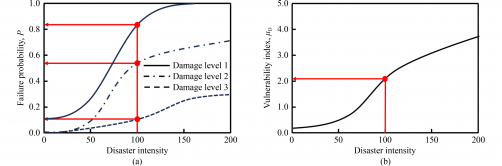
In an important advancement in urban underground engineering, a team from Tongji University has conducted a comprehensive analysis of shield tunnels under surcharge loading. Their research highlights the significant risks posed by accidental surcharge, a man-made hazard that can severely compromise the structural integrity of metro systems. This study is particularly relevant for cities relying on underground transit, where safety is paramount.
The research, titled “Vulnerability Analysis of Shield Tunnels Under Surcharge Loading,” addresses a notable gap in existing studies, which have primarily focused on seismic threats. The team identified that current analyses often rely on singular damage indicators, leading to potentially misleading outcomes. Additionally, many studies fail to incorporate the uncertainties associated with soil parameters and tunnel burial depths, hindering their practical application.
Innovative Assessment Framework Developed
To tackle these challenges, the research team established a new vulnerability assessment framework. This framework evaluates the damage state of shield tunnels subjected to sudden extreme surcharges, taking into account both soil variability and the depth at which tunnels are buried. Using ABAQUS, a two-dimensional numerical model was created to simulate shield tunnels in soft soil under surcharge conditions, with results verified through field monitoring data.
The researchers defined several damage indices, focusing on joint opening at key locations—Joint 1 at the tunnel crown, Joint 2 at the springline, and Joint 3 at the invert—alongside horizontal convergence. Each of these indices was classified into distinct damage states, ranging from none to collapse. The team then employed Monte Carlo calculations to generate fragility curves, which estimate the probability of exceeding specific damage states, and vulnerability curves, which reflect expected damage levels. The accuracy of these curves was ensured by fitting logistic functions for fragility curves and hyperbolic tangent functions for vulnerability curves, achieving a fitting accuracy with R² values near 1.
Key Findings and Real-World Application
The study’s extensive analysis of tunnels at various depths—shallow (8 m), moderately deep (16 m), and deep (30 m)—yielded critical insights. Notably, Joint 2 exhibited the highest likelihood of failure under the same surcharge conditions. The data revealed that moderately deep tunnels show increased vulnerability when surcharge levels exceed 50 kPa, while deep tunnels, despite facing greater soil and water pressure, are less affected by surcharge increases. Furthermore, the vulnerability index based on horizontal convergence was found to be more indicative of potential damage than that of Joint 1 as surcharge levels rise.
The practical implications of this research were demonstrated through its application to a real-world scenario involving the Shanghai Metro Line 2. The framework enabled rapid identification of high-risk sections, specifically ring numbers 350–390 and 550–590. Based on the assessed vulnerability levels, the team recommended targeted measures, such as grouting and the installation of bonded AFRP or steel plates, to enhance structural safety.
The findings of this vital research, authored by Zhongkai Huang, Hongwei Huang, Nianchen Zeng, and Xianda Shen, underscore the importance of comprehensive vulnerability assessments in urban infrastructure. The full text of the paper is available at: https://doi.org/10.1007/s11709-025-1193-4.

Philadelphia Parks Launch Free Earth Month Events Starting April 1

Bradford’s Fish Fry Fridays Serve Community with Delicious Dinners

Trump Faces Growing Challenges Amid Rising Tensions with Iran

Scientists Probe the Universe’s Missing Topological Defects

Samsung Galaxy Watch 9 to Feature Larger 435mAh Battery

UConn Huskies Aim to Defend Title in 2026 NCAA Women’s Tournament

U.S. Littoral Combat Ships Dock in Malaysia Amid Regional Tensions

Healthy Choice Wellness Reports Quarterly Earnings, Shares Rise

Urgent News: Charles M. Payment Passes Away at 78 in Duluth

University of Hawaiʻi Joins $25.6M AI Project to Enhance Disaster Monitoring

Major Grant Enhances Cancer Care and Research in Hawaiʻi

Joleen Chaney, Beloved Journalist, Passes Leaving Lasting Legacy

San Francisco’s SFO to Welcome 16 Airlines with Nonstop Flights to Europe in 2026

Goldman Sachs Unveils 2026 Catalyst Playbook for Biotech Investors

Discover Top Business Smartphones for Professionals in 2026

Urgent Update: Tom Aspinall’s Vision Deteriorates After UFC 321

Texas Roadhouse Honors Veterans with Free Meal Vouchers

CD Projekt Red Confirms No Release for The Witcher 4 in 2026
-
Science9 months ago
University of Hawaiʻi Joins $25.6M AI Project to Enhance Disaster Monitoring
-
 Health8 months ago
Major Grant Enhances Cancer Care and Research in Hawaiʻi
-
 Top Stories9 months ago
Joleen Chaney, Beloved Journalist, Passes Leaving Lasting Legacy
-
 World7 months ago
San Francisco’s SFO to Welcome 16 Airlines with Nonstop Flights to Europe in 2026
-
 Business8 months ago
Goldman Sachs Unveils 2026 Catalyst Playbook for Biotech Investors
-
 Business7 months ago
Discover Top Business Smartphones for Professionals in 2026
-
 Top Stories9 months ago
Urgent Update: Tom Aspinall’s Vision Deteriorates After UFC 321
-
 Lifestyle9 months ago
Texas Roadhouse Honors Veterans with Free Meal Vouchers
-
 Entertainment8 months ago
CD Projekt Red Confirms No Release for The Witcher 4 in 2026
-

 Top Stories10 months ago
AI Disruption: AWS Faces Threat as Startups Shift Cloud Focus
-

 Health10 months ago
MIT Scientists Uncover Surprising Genomic Loops During Cell Division
-

 Entertainment10 months ago
Discover the Full Map of Pokémon Legends: Z-A’s Lumiose City