
Science
NUS Researchers Uncover DNA Switch in Tropical Butterflies

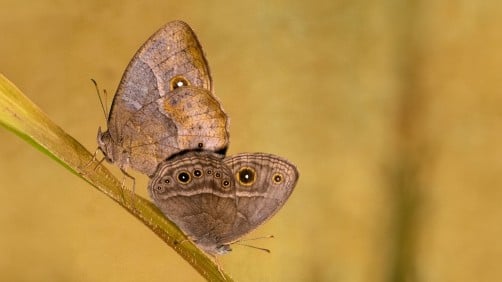
Scientists from the National University of Singapore (NUS) have revealed a significant discovery regarding tropical butterflies and their ability to adapt to seasonal changes. A study published on October 24, 2025, in the journal Nature Ecology & Evolution, identifies a simple DNA switch that enables these butterflies to modify the size of their wing eyespots according to fluctuations in temperature throughout the year.
This research sheds light on the concept of environmental sensitivity and how it evolves. Insects often display remarkable adaptability to their environments, with some species exhibiting seasonal changes in coloration and patterns. The phenomenon known as plasticity is crucial for survival, yet its genetic foundations have largely remained enigmatic.
Key Findings on Seasonal Adaptation
The research team, led by Professor Antónia Monteiro from NUS’s Department of Biological Sciences, focused on the African butterfly, Bicyclus anynana. This species is particularly notable for its striking differences between wet and dry seasons. In the wet season, these butterflies develop larger eyespots, while smaller eyespots are prevalent during the dry season. This adaptation enhances their survival in varying environmental conditions.
Previous studies indicated that the temperature during the caterpillar stage directly influences these size changes. The pronounced temperature response observed in the satyrid group of butterflies, characterized by their brown wings adorned with distinctive eyespots, sets them apart from other insects.
In the recent study, the researchers identified a critical gene known as Antennapedia (Antp), which governs the development of eyespots in satyrid butterflies. They discovered that the activity of this gene fluctuates based on the temperatures experienced during the butterflies’ development. When the team disrupted the activity of the Antp gene in two different satyrid species, they noted a significant reduction in eyespot size, particularly when raised in warmer conditions, thereby confirming the gene’s role in seasonal size adaptation.
Implications for Evolution and Conservation
Furthermore, the researchers uncovered a previously unknown DNA switch, referred to as a “promoter,” exclusive to satyrid butterflies. This switch activates the Antp gene specifically in the central cells of the eyespots. When the switch was disabled, the butterflies exhibited diminished capabilities to adjust their eyespot size in response to temperature changes. This finding suggests that the genetic switch is integral to the evolution of seasonal flexibility in these species.
Dr. Tian Shen, the first author of the study, highlighted the significance of their findings: “It is striking that a simple genetic switch can underlie complex environmental sensitivity across a broad group of insects. These findings open the door to future research into the roles such switches play in shaping adaptations and provide insights that could inform conservation efforts in a changing climate.”
The research not only advances the understanding of butterfly adaptability but also indicates potential applications in conservation strategies as climate change continues to impact ecosystems worldwide. With insects playing crucial roles in their environments, understanding their genetic adaptations could be key to preserving biodiversity.

Hallmark’s ‘Christmas at the Catnip Café’ Premieres Tonight

Woman Arrested for Threatening U-Haul Worker with Baton

Japan’s PM Takaichi Vows Urgent Fiscal Management Amid Rate Trends

Bitcoin Plummets Below $88K Amid Tether Concerns and Warnings

Tottenville Falls Short in PSAL 4A Title Game Against Erasmus

Shark Teeth Study Reveals Urgent Clues to Prevent Extinction

Church Members Rally Together After Thanksgiving Fire Devastation

U.S. Investment in Canadian Energy Firms Surges Despite Low Oil Prices

Nick Jonas Unveils New Solo Album ‘Sunday Best’ Set for February Release

Urgent Update: Tom Aspinall’s Vision Deteriorates After UFC 321

MIT Scientists Uncover Surprising Genomic Loops During Cell Division

University of Hawaiʻi Joins $25.6M AI Project to Enhance Disaster Monitoring

AI Disruption: AWS Faces Threat as Startups Shift Cloud Focus

Time Crystals Revolutionize Quantum Computing Potential

Honeywell Forecasts Record Business Jet Deliveries Over Next Decade

Discover the Full Map of Pokémon Legends: Z-A’s Lumiose City

GOP Faces Backlash as Protests Surge Against Trump Policies

Parenthood Set to Depart Hulu: What Fans Need to Know
-
 Top Stories1 month ago
Urgent Update: Tom Aspinall’s Vision Deteriorates After UFC 321
-
 Health1 month ago
MIT Scientists Uncover Surprising Genomic Loops During Cell Division
-
Science4 weeks ago
University of Hawaiʻi Joins $25.6M AI Project to Enhance Disaster Monitoring
-
 Top Stories1 month ago
AI Disruption: AWS Faces Threat as Startups Shift Cloud Focus
-
 Science2 months ago
Time Crystals Revolutionize Quantum Computing Potential
-
 World2 months ago
Honeywell Forecasts Record Business Jet Deliveries Over Next Decade
-
 Entertainment1 month ago
Discover the Full Map of Pokémon Legends: Z-A’s Lumiose City
-
 Top Stories2 months ago
GOP Faces Backlash as Protests Surge Against Trump Policies
-
 Entertainment2 months ago
Parenthood Set to Depart Hulu: What Fans Need to Know
-

 Politics2 months ago
Judge Signals Dismissal of Chelsea Housing Case Citing AI Flaws
-

 Sports2 months ago
Yoshinobu Yamamoto Shines in Game 2, Leading Dodgers to Victory
-

 Health2 months ago
Maine Insurers Cut Medicare Advantage Plans Amid Cost Pressures