
Science
Scientists Discover New Ice Form at Room Temperature

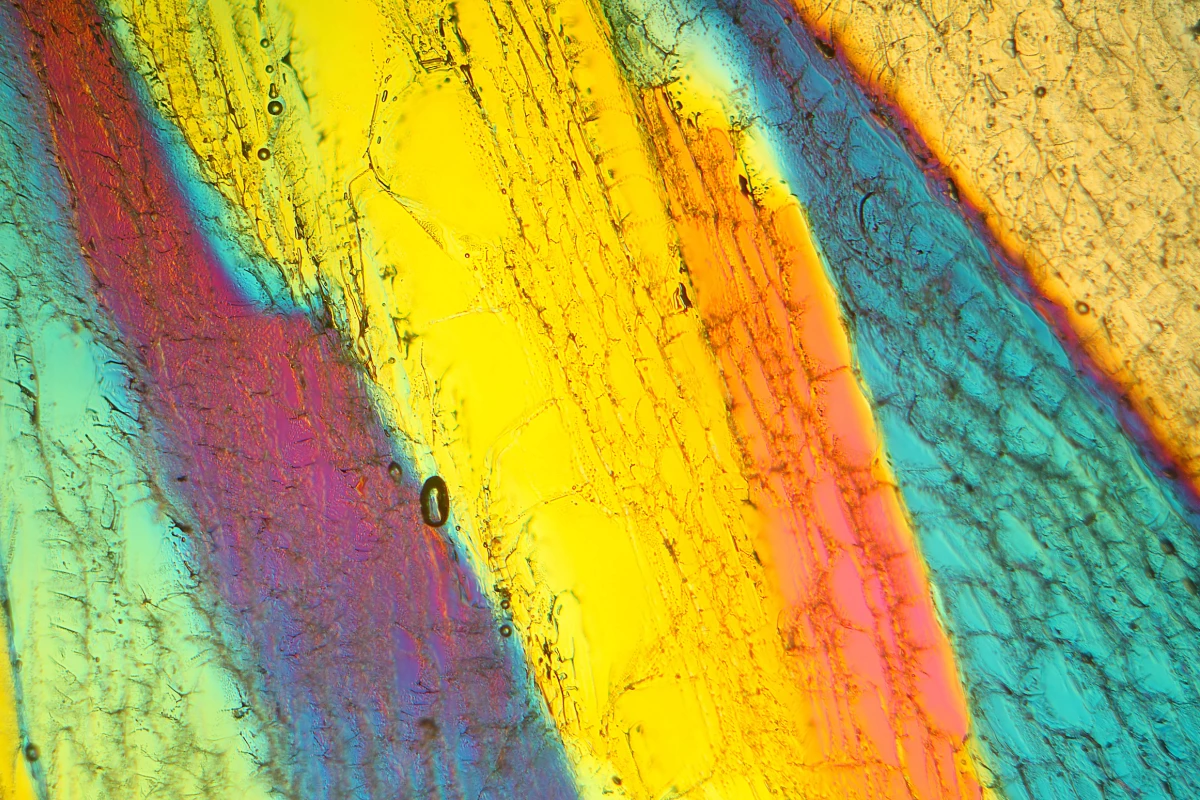
Researchers have unveiled a groundbreaking discovery in the world of ice, identifying a new type known as ice XXI, which can form at room temperature. This research, conducted by scientists at the Korea Research Institute of Standards and Science (KRISS), reveals the complex behavior of water under high pressure, potentially enhancing our understanding of icy environments on Earth and beyond.
Water is not merely a simple liquid; it is capable of existing in over 20 distinct forms of ice, each with unique structural properties. Some of these forms emerge under extreme conditions, such as high pressure found deep within the Earth’s mantle or on distant celestial bodies. The discovery of ice XXI adds to this intricate tapestry, demonstrating how water behaves under conditions previously thought to only yield more familiar ice types.
Geun Woo Lee, a leading scientist in the study, explained that using a combination of diamond anvils and X-ray lasers, researchers observed super-compressed water transitioning into ice XXI at approximately 1.6 gigapascals. Unlike its counterparts, ice XXI does not freeze in a single straightforward process. Instead, it undergoes a series of freeze-melt cycles, revealing a level of complexity in water’s behavior that had not been documented before.
Methodology and Findings
The research team employed cutting-edge technology to create high-pressure conditions. Water was placed in an ultra-thin metal chamber, and the scientists used a variety of tools, including high-speed cameras and laser sensors, to monitor the transformation in real time. This approach allowed them to capture the freezing process with remarkable precision, tracking changes in structure and volume.
The experiments revealed that water does not freeze uniformly. Instead, it cycles through multiple states before stabilizing into a known form, typically ice VI. Within this pressure zone, the team identified ice XXI, a form with a body-centered tetragonal crystal structure, which has a higher energy state than its more stable counterpart, MS-ice VII, at room temperature.
The implications of this discovery extend beyond mere academic curiosity. The behavior of ice XXI suggests that there may be other metastable ice phases yet to be identified. Rachel Husband, another member of the research team, indicated that these findings could provide valuable insights into the compositions of icy moons and planets, potentially influencing our understanding of where life might exist in the universe.
Potential Applications and Future Research
The ability of water to remain liquid at higher pressures than previously thought could have significant implications for various fields, including planetary science and materials engineering. The research highlights that water does not follow only one crystallization path when freezing, but can take at least five different routes, even at room temperature.
Lee stated, “With the unique X-ray pulses of the European XFEL, we have uncovered multiple crystallization pathways in H2O, which was rapidly compressed and decompressed over 1,000 times using a dynamic diamond anvil cell.” This intricate approach allows for a deeper understanding of ice formation under extreme conditions.
The study, published in the journal Nature Materials, represents a significant step forward in ice research. As scientists continue to explore the various forms of ice, the findings could lead to advancements in our understanding of not only terrestrial ice but also the potential for life on other planets. The exploration of ice XXI is just the beginning of a fascinating journey into the complexities of water and its many forms.

Hallmark’s ‘Christmas at the Catnip Café’ Premieres Tonight

Woman Arrested for Threatening U-Haul Worker with Baton

Japan’s PM Takaichi Vows Urgent Fiscal Management Amid Rate Trends

Bitcoin Plummets Below $88K Amid Tether Concerns and Warnings

Tottenville Falls Short in PSAL 4A Title Game Against Erasmus

Shark Teeth Study Reveals Urgent Clues to Prevent Extinction

Church Members Rally Together After Thanksgiving Fire Devastation

U.S. Investment in Canadian Energy Firms Surges Despite Low Oil Prices

Nick Jonas Unveils New Solo Album ‘Sunday Best’ Set for February Release

Urgent Update: Tom Aspinall’s Vision Deteriorates After UFC 321

MIT Scientists Uncover Surprising Genomic Loops During Cell Division

University of Hawaiʻi Joins $25.6M AI Project to Enhance Disaster Monitoring

AI Disruption: AWS Faces Threat as Startups Shift Cloud Focus

Time Crystals Revolutionize Quantum Computing Potential

Honeywell Forecasts Record Business Jet Deliveries Over Next Decade

Discover the Full Map of Pokémon Legends: Z-A’s Lumiose City

GOP Faces Backlash as Protests Surge Against Trump Policies

Parenthood Set to Depart Hulu: What Fans Need to Know
-
 Top Stories1 month ago
Urgent Update: Tom Aspinall’s Vision Deteriorates After UFC 321
-
 Health1 month ago
MIT Scientists Uncover Surprising Genomic Loops During Cell Division
-
Science4 weeks ago
University of Hawaiʻi Joins $25.6M AI Project to Enhance Disaster Monitoring
-
 Top Stories1 month ago
AI Disruption: AWS Faces Threat as Startups Shift Cloud Focus
-
 Science2 months ago
Time Crystals Revolutionize Quantum Computing Potential
-
 World2 months ago
Honeywell Forecasts Record Business Jet Deliveries Over Next Decade
-
 Entertainment1 month ago
Discover the Full Map of Pokémon Legends: Z-A’s Lumiose City
-
 Top Stories2 months ago
GOP Faces Backlash as Protests Surge Against Trump Policies
-
 Entertainment2 months ago
Parenthood Set to Depart Hulu: What Fans Need to Know
-

 Politics2 months ago
Judge Signals Dismissal of Chelsea Housing Case Citing AI Flaws
-

 Sports2 months ago
Yoshinobu Yamamoto Shines in Game 2, Leading Dodgers to Victory
-

 Health2 months ago
Maine Insurers Cut Medicare Advantage Plans Amid Cost Pressures