
Science
Researchers Uncover Alarming Rat Predation on Bats in Germany

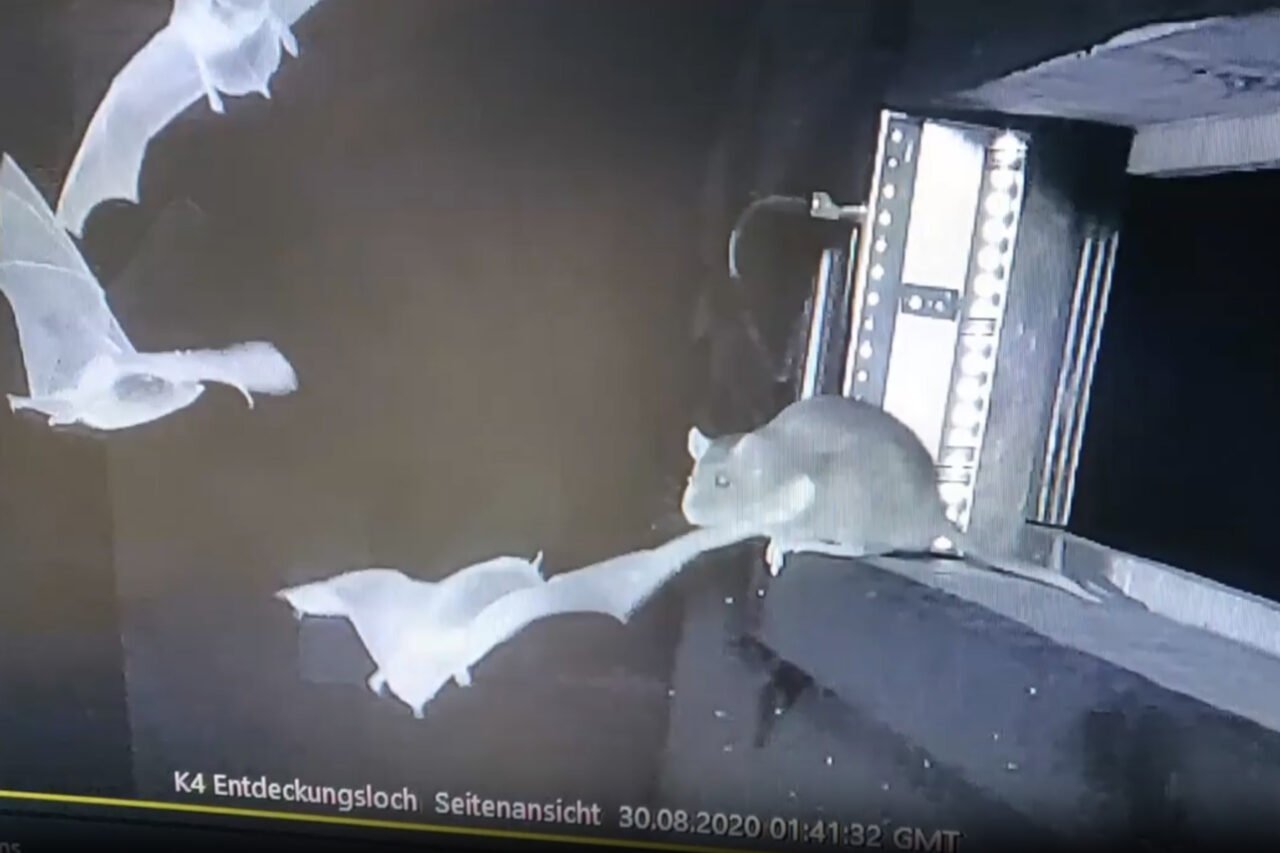
Scientists have revealed shocking findings about the predation of bats by rats in northern Germany. In a research paper published in *Global Ecology and Conservation*, they documented how brown rats, specifically *Rattus norvegicus*, are hunting and consuming local bat species, including *Myotis daubentonii* and *Myotis nattereri*. This alarming behavior poses significant risks to bat populations, particularly in two critical hibernation sites.
Systematic Hunting Techniques
The investigation began in 2020, using infrared surveillance cameras to monitor the rats’ activities around the Segeberger Kalkberg, one of the key winter refuges for bats. Over five weeks, researchers recorded a total of 30 predation attempts, with 13 confirmed kills. The study also uncovered remains of at least 52 bats, suggesting a pattern of regular feeding and potential food hoarding by the rats. The findings indicate that the rats employ two primary hunting strategies: intercepting bats midair or ambushing them on the ground.
When attacking, the rats position themselves strategically to launch a quick and lethal bite. If the first attempt does not succeed, they use their forelegs to restrain the bat, delivering a second bite to ensure the kill. Follow-up studies conducted between 2021 and 2024 further documented rat predation at the Lüneburger Kalkberg, where researchers found a cache of bat carcasses arranged similarly to those at Segeberger Kalkberg, indicating a systematic approach to hunting by the rats.
Ecological Implications
The findings raise serious concerns about the ecological impact of rat predation on bat populations. Although brown rats are not natural predators of bats, they opportunistically consume any available food source. In different environments, such as near Japanese fish markets, their diet can comprise up to 86% fish. While bats may not make up the entirety of the rats’ diet, they could represent a substantial portion, exacerbating the threat to bat populations that are already under pressure from habitat loss and disease.
Bats play crucial ecological roles, providing essential services such as insect suppression, seed dispersal, and pollination. The potential decline of bat populations due to rat predation could disrupt these ecological functions, further impacting local ecosystems.
Moreover, the interaction between bats and rats presents a public health concern. Both species are known carriers of various pathogens, including coronaviruses. Although the study did not directly investigate pathogen exchange, the potential for disease transmission between these wildlife reservoirs is a critical issue that warrants attention.
The researchers emphasize the need for further investigation into these dynamics and their implications for both wildlife and human health. The alarming predation behavior of brown rats highlights the intricate and often unpredictable relationships within ecosystems. As the study unfolds, the safety of bat populations hangs in the balance, prompting urgent calls for conservation efforts.

Hallmark’s ‘Christmas at the Catnip Café’ Premieres Tonight

Woman Arrested for Threatening U-Haul Worker with Baton

Japan’s PM Takaichi Vows Urgent Fiscal Management Amid Rate Trends

Bitcoin Plummets Below $88K Amid Tether Concerns and Warnings

Tottenville Falls Short in PSAL 4A Title Game Against Erasmus

Shark Teeth Study Reveals Urgent Clues to Prevent Extinction

Church Members Rally Together After Thanksgiving Fire Devastation

U.S. Investment in Canadian Energy Firms Surges Despite Low Oil Prices

Nick Jonas Unveils New Solo Album ‘Sunday Best’ Set for February Release

Urgent Update: Tom Aspinall’s Vision Deteriorates After UFC 321

MIT Scientists Uncover Surprising Genomic Loops During Cell Division

University of Hawaiʻi Joins $25.6M AI Project to Enhance Disaster Monitoring

AI Disruption: AWS Faces Threat as Startups Shift Cloud Focus

Time Crystals Revolutionize Quantum Computing Potential

Honeywell Forecasts Record Business Jet Deliveries Over Next Decade

Discover the Full Map of Pokémon Legends: Z-A’s Lumiose City

GOP Faces Backlash as Protests Surge Against Trump Policies

Parenthood Set to Depart Hulu: What Fans Need to Know
-
 Top Stories1 month ago
Urgent Update: Tom Aspinall’s Vision Deteriorates After UFC 321
-
 Health1 month ago
MIT Scientists Uncover Surprising Genomic Loops During Cell Division
-
Science4 weeks ago
University of Hawaiʻi Joins $25.6M AI Project to Enhance Disaster Monitoring
-
 Top Stories1 month ago
AI Disruption: AWS Faces Threat as Startups Shift Cloud Focus
-
 Science2 months ago
Time Crystals Revolutionize Quantum Computing Potential
-
 World2 months ago
Honeywell Forecasts Record Business Jet Deliveries Over Next Decade
-
 Entertainment1 month ago
Discover the Full Map of Pokémon Legends: Z-A’s Lumiose City
-
 Top Stories2 months ago
GOP Faces Backlash as Protests Surge Against Trump Policies
-
 Entertainment2 months ago
Parenthood Set to Depart Hulu: What Fans Need to Know
-

 Politics2 months ago
Judge Signals Dismissal of Chelsea Housing Case Citing AI Flaws
-

 Sports2 months ago
Yoshinobu Yamamoto Shines in Game 2, Leading Dodgers to Victory
-

 Health2 months ago
Maine Insurers Cut Medicare Advantage Plans Amid Cost Pressures