
Science
Climate Report Warns of Dangerous Path Ahead for Earth

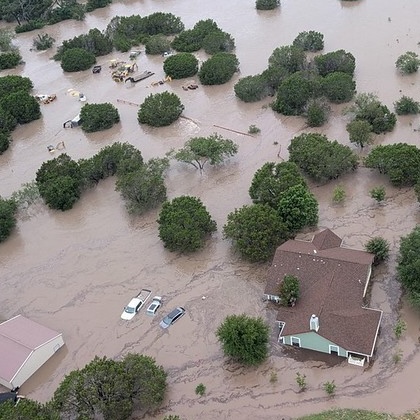
A new climate report reveals that 2024 was likely the hottest year on record and possibly the hottest in at least 125,000 years. Released by an international coalition led by scientists from Oregon State University, the findings highlight urgent risks facing the planet and emphasize the need for immediate action to avert catastrophic outcomes.
Co-lead author William Ripple warns that without effective strategies, humanity may encounter escalating risks that threaten peace, governance, and public health. “We’ll be on the fast track to climate-driven chaos,” he stated, underscoring the severity of the situation. The report, titled “The 2025 State of the Climate Report: A Planet on the Brink,” notes that 22 of the planet’s 34 vital signs are at record levels.
Despite these alarming findings, Ripple remains optimistic, stating, “It’s not too late to limit the damage even if we miss the temperature mitigation goal set by the 2015 Paris Agreement.” He highlights the pressing need for effective climate mitigation and adaptation strategies. These strategies should include incorporating climate resilience into national defense and foreign policy frameworks, as well as grassroots movements advocating for a socially just phaseout of fossil fuels.
Published in the journal BioScience, the report draws on global data from the Intergovernmental Panel on Climate Change. It proposes several “high-impact” strategies aimed at addressing climate change:
Renewable Energy: The report suggests that renewable energy sources like solar and wind could supply up to 70% of global electricity by 2050. A swift phaseout of fossil fuels is identified as a critical component of any climate mitigation strategy.
Ecosystem Protection: Protecting and restoring ecosystems such as forests and wetlands could avoid or remove approximately 10 gigatonnes of carbon dioxide emissions per year by 2050. This effort would also support biodiversity and enhance water security.
Food Systems: Reducing food loss and waste, which currently represents about 8-10% of global greenhouse gas emissions, along with a shift towards more plant-rich diets, can significantly lower emissions while promoting human health and food security.
Co-lead author Christopher Wolf, a former postdoctoral researcher at OSU, emphasizes the state of ecological overshoot where Earth’s resources are consumed faster than they can be replenished. He notes that population growth, livestock numbers, and meat consumption are at record highs, with an additional 1.3 million people and half a million ruminant livestock added weekly.
The report also highlights alarming trends in fossil fuel consumption. In 2024, fossil fuel energy usage reached an all-time high, while combined solar and wind consumption, despite increasing, remained 31 times lower than fossil fuel consumption. The report states that warming is accelerating due to factors such as reduced aerosol cooling and declines in albedo—the reflection of sunlight back into space.
As of August 2025, the European Union’s wildfire season had already set records, with more than 1 million hectares burned. The report also mentions devastating weather disasters, including floods in Texas that resulted in at least 135 fatalities, wildfires in Los Angeles causing damages exceeding $250 billion, and Typhoon Yagi, which claimed over 800 lives in Southeast Asia.
The weakening of the Atlantic Meridional Ocean Overturning Circulation poses further threats, potentially leading to major climate disruptions. Social tipping points, the authors note, can drive rapid change. They emphasize that every fraction of a degree of avoided warming is crucial for human and ecological well-being, reducing the risks of extreme weather, biodiversity loss, and food and water insecurity.
The authors stress that delaying action will result in higher costs and more severe impacts in the future. Conversely, coordinated measures can provide immediate benefits for communities and ecosystems worldwide. Ripple concludes, “Climate mitigation strategies are available, cost-effective, and urgently needed. We can still limit warming if we act boldly and quickly, but the window is closing.”
In addition to Ripple and Wolf, the report includes contributions from various experts, including Jillian Gregg from TERA, Michael Mann from the University of Pennsylvania, and others from respected institutions around the globe. Their collaborative efforts underscore the critical need for immediate action and comprehensive strategies to combat climate change effectively.

Philadelphia Parks Launch Free Earth Month Events Starting April 1

Bradford’s Fish Fry Fridays Serve Community with Delicious Dinners

Trump Faces Growing Challenges Amid Rising Tensions with Iran

Scientists Probe the Universe’s Missing Topological Defects

Samsung Galaxy Watch 9 to Feature Larger 435mAh Battery

UConn Huskies Aim to Defend Title in 2026 NCAA Women’s Tournament

U.S. Littoral Combat Ships Dock in Malaysia Amid Regional Tensions

Healthy Choice Wellness Reports Quarterly Earnings, Shares Rise

Urgent News: Charles M. Payment Passes Away at 78 in Duluth

University of Hawaiʻi Joins $25.6M AI Project to Enhance Disaster Monitoring

Major Grant Enhances Cancer Care and Research in Hawaiʻi

Joleen Chaney, Beloved Journalist, Passes Leaving Lasting Legacy

San Francisco’s SFO to Welcome 16 Airlines with Nonstop Flights to Europe in 2026

Goldman Sachs Unveils 2026 Catalyst Playbook for Biotech Investors

Discover Top Business Smartphones for Professionals in 2026

Urgent Update: Tom Aspinall’s Vision Deteriorates After UFC 321

Texas Roadhouse Honors Veterans with Free Meal Vouchers

CD Projekt Red Confirms No Release for The Witcher 4 in 2026
-
Science9 months ago
University of Hawaiʻi Joins $25.6M AI Project to Enhance Disaster Monitoring
-
 Health8 months ago
Major Grant Enhances Cancer Care and Research in Hawaiʻi
-
 Top Stories9 months ago
Joleen Chaney, Beloved Journalist, Passes Leaving Lasting Legacy
-
 World7 months ago
San Francisco’s SFO to Welcome 16 Airlines with Nonstop Flights to Europe in 2026
-
 Business8 months ago
Goldman Sachs Unveils 2026 Catalyst Playbook for Biotech Investors
-
 Business8 months ago
Discover Top Business Smartphones for Professionals in 2026
-
 Top Stories9 months ago
Urgent Update: Tom Aspinall’s Vision Deteriorates After UFC 321
-
 Lifestyle9 months ago
Texas Roadhouse Honors Veterans with Free Meal Vouchers
-
 Entertainment8 months ago
CD Projekt Red Confirms No Release for The Witcher 4 in 2026
-

 Top Stories10 months ago
AI Disruption: AWS Faces Threat as Startups Shift Cloud Focus
-

 Health10 months ago
MIT Scientists Uncover Surprising Genomic Loops During Cell Division
-

 Entertainment10 months ago
Discover the Full Map of Pokémon Legends: Z-A’s Lumiose City