
Science
Ochre Sea Stars Show Signs of Recovery Along Oregon Coast

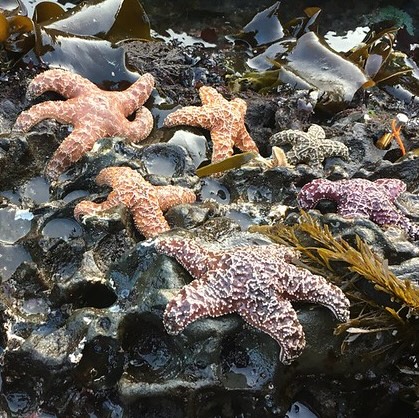
CORVALLIS, Ore. – A significant recovery of ochre sea star populations is underway along the Oregon Coast, following a substantial decline a decade ago. Research conducted by scientists from Oregon State University and Cal Poly San Luis Obispo has identified a remarkable resurgence among these sea stars, often referred to as a “baby boom.” The findings were published in the journal Ecosphere.
The study, which spans 23 years and includes data from eight locations along the coast, does not confirm whether this increase is a direct response to the wasting disease epidemic that nearly led to the species’ extinction in Oregon. Nonetheless, the evidence points to a significant rebound. “Wasting disease remains in circulation and populations continue to fluctuate, but there’s also much evidence that ochre sea stars are bouncing back,” stated Sarah Gravem, the study’s lead author and an assistant professor at Cal Poly.
The research team, which also included Bruce Menge, a distinguished professor of integrative biology at OSU, observed that many of the younger sea stars have matured into adults, with current population counts reaching or surpassing their pre-wasting disease levels. Gravem noted that after experiencing declines of up to 84% in sea star numbers in 2014, the population saw an astonishing 8,000% increase in young sea stars appearing on shore.
Ecological Impact of Recovery
The resurgence of ochre sea stars is crucial for the intertidal ecosystem. These sea stars serve as keystone predators, and their return is helping to restore balance in their environment. At approximately three-quarters of the study sites, predation on California mussels has improved, allowing other marine species to thrive. “We showed that sea stars have now grown abundant and large enough that they are eating mussels at similar rates to before the epidemic at most sites in Oregon,” added Menge, who has dedicated decades to studying the intertidal zone.
Despite these positive developments, challenges remain. The average body size of the sea stars is still 25% to 65% smaller than historical averages at almost all locations, indicating that the population has not fully stabilized. The researchers attribute this variability to ongoing pulses of young sea stars and sporadic outbreaks of the wasting disease, which continues to pose a threat.
Gravem remarked, “The connection between the sudden decline of ochre sea stars and the baby boom remains elusive. It’s certainly possible they are linked, which would mean these sea stars may be resilient to mass mortality events.” Alternatively, the recovery could be coincidental, driven by favorable conditions that allowed for rapid population growth.
Wasting disease manifests in sea stars through lesions and twisted arms, leading to a condition that appears as if they are melting away. The causative agent, a strain of the bacterium Vibrio pectenicida, was recently identified through collaborative research involving institutions such as the University of British Columbia and the U.S. Geological Survey. The findings of this collaboration were published in the journal Nature Ecology & Evolution.
The study underscores the resilience of ochre sea stars and their vital role in marine ecosystems, highlighting the importance of continued monitoring and research to ensure their ongoing recovery along the Oregon Coast.

Arlene Hartman, Beloved Community Figure, Passes Away at 87

Urgent: Vehicle Fire Closes Two Lanes on I-215 in Salt Lake City

Knicks Dominate Raptors 116-94, Extend Home Winning Streak

Hallmark’s ‘Christmas at the Catnip Café’ Premieres Tonight

Woman Arrested for Threatening U-Haul Worker with Baton

Japan’s PM Takaichi Vows Urgent Fiscal Management Amid Rate Trends

Bitcoin Plummets Below $88K Amid Tether Concerns and Warnings

Tottenville Falls Short in PSAL 4A Title Game Against Erasmus

Shark Teeth Study Reveals Urgent Clues to Prevent Extinction

Urgent Update: Tom Aspinall’s Vision Deteriorates After UFC 321

MIT Scientists Uncover Surprising Genomic Loops During Cell Division

University of Hawaiʻi Joins $25.6M AI Project to Enhance Disaster Monitoring

AI Disruption: AWS Faces Threat as Startups Shift Cloud Focus

Time Crystals Revolutionize Quantum Computing Potential

Honeywell Forecasts Record Business Jet Deliveries Over Next Decade

Discover the Full Map of Pokémon Legends: Z-A’s Lumiose City

GOP Faces Backlash as Protests Surge Against Trump Policies

Parenthood Set to Depart Hulu: What Fans Need to Know
-
 Top Stories1 month ago
Urgent Update: Tom Aspinall’s Vision Deteriorates After UFC 321
-
 Health1 month ago
MIT Scientists Uncover Surprising Genomic Loops During Cell Division
-
Science4 weeks ago
University of Hawaiʻi Joins $25.6M AI Project to Enhance Disaster Monitoring
-
 Top Stories1 month ago
AI Disruption: AWS Faces Threat as Startups Shift Cloud Focus
-
 Science2 months ago
Time Crystals Revolutionize Quantum Computing Potential
-
 World2 months ago
Honeywell Forecasts Record Business Jet Deliveries Over Next Decade
-
 Entertainment1 month ago
Discover the Full Map of Pokémon Legends: Z-A’s Lumiose City
-
 Top Stories2 months ago
GOP Faces Backlash as Protests Surge Against Trump Policies
-
 Entertainment2 months ago
Parenthood Set to Depart Hulu: What Fans Need to Know
-

 Politics2 months ago
Judge Signals Dismissal of Chelsea Housing Case Citing AI Flaws
-

 Sports2 months ago
Yoshinobu Yamamoto Shines in Game 2, Leading Dodgers to Victory
-

 Health2 months ago
Maine Insurers Cut Medicare Advantage Plans Amid Cost Pressures