
Business
Senate Stalemate Persists as Government Shutdown Enters Fifth Week

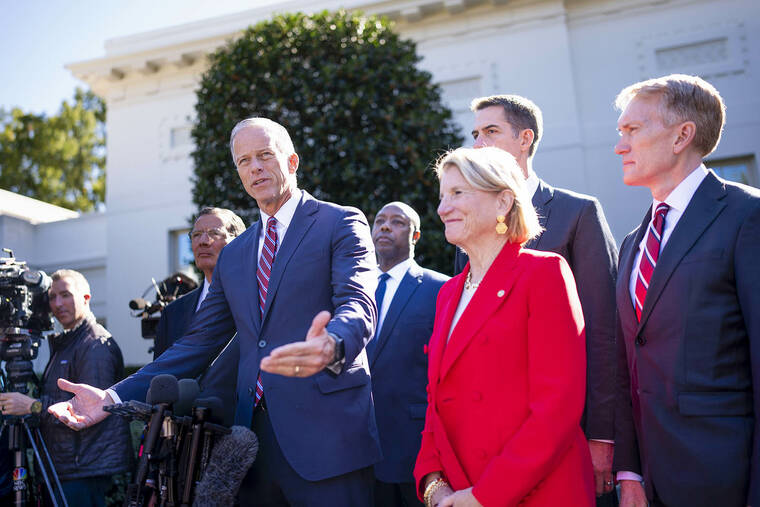
The ongoing government shutdown, now entering its fifth week, shows no signs of resolution as both Senate Republicans and Democrats remain entrenched in their positions. The largest federal employees union recently called for an end to the shutdown, hoping to spur action from labor-friendly Democrats. Yet, the Democrats appear largely unmoved, opting to wait for potential shifts in the political landscape.
Democrats are anticipating that rising health care premiums, linked to the expiration of Obamacare tax credits, will compel Republicans to negotiate on extending these subsidies. This expectation was not met with immediate action from GOP leaders, who have stated they will not engage in talks until the government reopens. As the standoff continues, the question looms: what will finally break this impasse?
Upcoming Inflection Points
Several critical deadlines are approaching that both parties are watching closely. The start of the Obamacare open enrollment period on November 1 is expected to highlight the financial impact of not extending tax credits, potentially swaying public opinion. Additionally, the impending suspension of federal nutrition benefits for approximately 40 million Americans could intensify pressure on lawmakers to act.
After 29 days of shutdown, Congress is on the verge of matching the record for the longest government closure in U.S. history, which stands at 34 days. Senator Lisa Murkowski of Alaska emphasized the urgency of the situation, stating, “There is so much — so much — that is coming at us like a freight train.” Yet both parties remain steadfast in their positions, with many lawmakers viewing the calendar as offering little incentive for compromise.
Senator Chris Murphy of Connecticut criticized the Republican approach, suggesting that the shutdown could be resolved quickly if genuine negotiations were to take place. “Their take-it-or-leave-it approach is totally unprecedented,” he remarked. In response to the ongoing hardships faced by federal employees, Everett B. Kelley, president of the American Federation of Government Employees, highlighted the financial struggles of workers without pay, urging senators to pass a short-term spending measure.
Political Dynamics and Strategic Calculations
Despite some expressions of sympathy from Republicans, Democrats blocked another vote on a stopgap bill aimed at reopening the government. They continue to insist that negotiations on extending Obamacare subsidies must occur first. “We can provide all the help — provide pay and furlough and back pay for federal workers and fix the health care crisis,” stated Senator Chuck Schumer, the minority leader. He emphasized that both issues could be addressed simultaneously if Republicans were willing to negotiate.
Republican leaders, including Senator John Thune, have expressed reluctance to initiate votes on specific bills that would address federal worker pay and nutrition benefits, fearing it could allow Democrats to gain political leverage. The strategy appears to hinge on leveraging the suspension of nutrition benefits as a means to pressure Democrats into conceding.
As both parties monitor the upcoming off-year elections in Virginia and New Jersey scheduled for next Tuesday, they are keenly aware that the results could reshape the political landscape. These elections may serve as a referendum on the current administration’s policies and could influence Congressional actions moving forward.
Some lawmakers remain skeptical about the impact of these elections. “I don’t expect to win those states because I never expect to win those states,” said Senator Kevin Cramer of North Dakota. The uncertainty surrounding the elections adds another layer of complexity to the already tense negotiations.
Presidential involvement may also play a role in the negotiations. Following his trip to Asia, President Donald Trump is expected to return to Washington, where he may refocus on the shutdown. Democrats have expressed doubts about the potential for progress in his absence, suggesting that the President’s engagement might be necessary to facilitate a resolution.
As the pressure builds, particularly with the Thanksgiving holiday approaching, federal employees continue to face financial uncertainty. Senator Lindsey Graham of South Carolina remarked, “The carnage is building up,” hinting at the growing urgency for lawmakers to find a solution. Kelley urged Congress to consider the approaching holiday season, stating, “No federal worker should have to turn to a food pantry to help prepare the family table.”
With critical deadlines looming and public sentiment potentially shifting, both parties are poised at a crossroads. The next steps taken by lawmakers will be instrumental in determining whether the government shutdown will soon come to an end or if it will continue to disrupt the lives of countless Americans.

Philadelphia Parks Launch Free Earth Month Events Starting April 1

Bradford’s Fish Fry Fridays Serve Community with Delicious Dinners

Trump Faces Growing Challenges Amid Rising Tensions with Iran

Scientists Probe the Universe’s Missing Topological Defects

Samsung Galaxy Watch 9 to Feature Larger 435mAh Battery

UConn Huskies Aim to Defend Title in 2026 NCAA Women’s Tournament

U.S. Littoral Combat Ships Dock in Malaysia Amid Regional Tensions

Healthy Choice Wellness Reports Quarterly Earnings, Shares Rise

Urgent News: Charles M. Payment Passes Away at 78 in Duluth

University of Hawaiʻi Joins $25.6M AI Project to Enhance Disaster Monitoring

Major Grant Enhances Cancer Care and Research in Hawaiʻi

Joleen Chaney, Beloved Journalist, Passes Leaving Lasting Legacy

San Francisco’s SFO to Welcome 16 Airlines with Nonstop Flights to Europe in 2026

Goldman Sachs Unveils 2026 Catalyst Playbook for Biotech Investors

Discover Top Business Smartphones for Professionals in 2026

Urgent Update: Tom Aspinall’s Vision Deteriorates After UFC 321

Texas Roadhouse Honors Veterans with Free Meal Vouchers

CD Projekt Red Confirms No Release for The Witcher 4 in 2026
-
Science9 months ago
University of Hawaiʻi Joins $25.6M AI Project to Enhance Disaster Monitoring
-
 Health8 months ago
Major Grant Enhances Cancer Care and Research in Hawaiʻi
-
 Top Stories9 months ago
Joleen Chaney, Beloved Journalist, Passes Leaving Lasting Legacy
-
 World7 months ago
San Francisco’s SFO to Welcome 16 Airlines with Nonstop Flights to Europe in 2026
-
 Business8 months ago
Goldman Sachs Unveils 2026 Catalyst Playbook for Biotech Investors
-
 Business7 months ago
Discover Top Business Smartphones for Professionals in 2026
-
 Top Stories9 months ago
Urgent Update: Tom Aspinall’s Vision Deteriorates After UFC 321
-
 Lifestyle9 months ago
Texas Roadhouse Honors Veterans with Free Meal Vouchers
-
 Entertainment8 months ago
CD Projekt Red Confirms No Release for The Witcher 4 in 2026
-

 Top Stories10 months ago
AI Disruption: AWS Faces Threat as Startups Shift Cloud Focus
-

 Health10 months ago
MIT Scientists Uncover Surprising Genomic Loops During Cell Division
-

 Entertainment10 months ago
Discover the Full Map of Pokémon Legends: Z-A’s Lumiose City