
Health
Luzerne County Reports Surge in Mosquitoes Infected with West Nile Virus

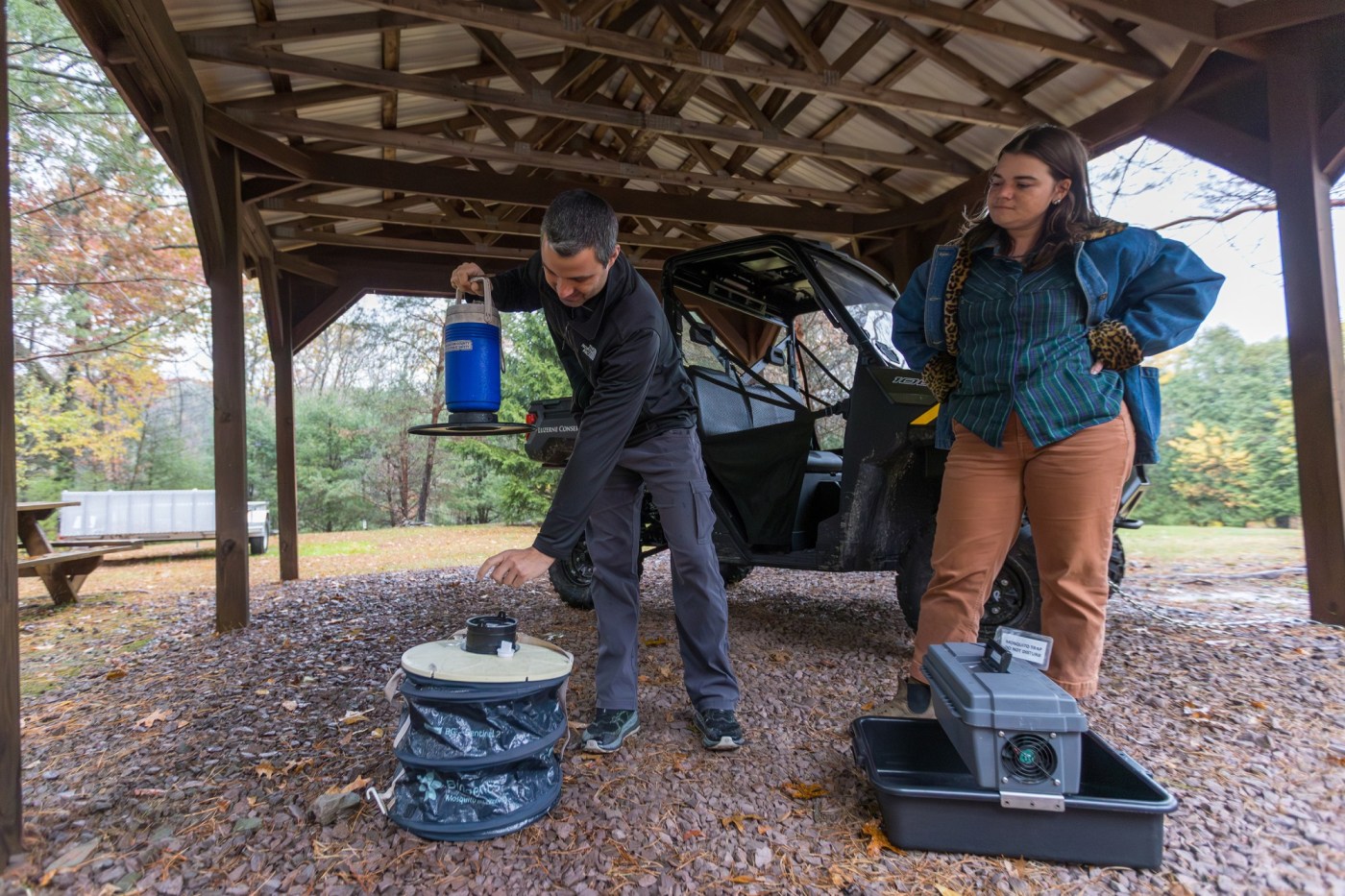
The presence of mosquitoes infected with the West Nile virus has significantly increased in Luzerne County, Pennsylvania. According to a recent report from the Luzerne Conservation District’s Mosquito-Borne Disease Control Program, staff found a total of 89 traps containing mosquitoes that tested positive for the West Nile virus in 2024. This marks an increase of three traps from the previous year and represents a striking 78% rise over the average number of positive traps recorded in the last four years.
In addition to West Nile virus, the conservation team also identified six traps with mosquitoes infected with the Jamestown Canyon virus. This virus was first discovered in Pennsylvania in 2023, with its initial detection occurring in Luzerne County. Deputy Director Keith George indicated that the rise in infected traps—four in 2024 compared to six this year—highlights the growing concern regarding mosquito-borne diseases in the region.
Understanding the Risks of Mosquito-Borne Diseases
West Nile virus is primarily transmitted through infected mosquito bites and remains the leading cause of mosquito-borne diseases in the United States. While most individuals infected with the virus experience no symptoms, some can develop severe neurological illnesses. According to the U.S. Centers for Disease Control and Prevention (CDC), from 2011 to 2024, there were over 59,000 reported human infections and approximately 2,900 deaths linked to the West Nile virus in the U.S. Similarly, infections from the Jamestown Canyon virus are often asymptomatic but can lead to serious conditions such as encephalitis or meningitis.
The increase in mosquito populations in 2025, attributed to early heavy rainfall followed by a hot, dry summer, has likely contributed to the rise in West Nile and Jamestown Canyon virus cases. The Mosquito-Borne Disease Control team typically places traps in areas with higher human populations and known mosquito hotspots. The program utilizes two types of traps throughout the spring to fall mosquito season.
Trapping and Testing Mosquito Populations
The first type of trap, known as a gravid trap, collects mosquitoes that have already taken a blood meal and are looking to lay eggs. These traps contain a mixture referred to as “stink water,” which attracts the mosquitoes. Once trapped, the mosquitoes are sent to a laboratory in Harrisburg for testing. The second type, a host-seeking trap, lures mosquitoes with carbon monoxide produced by dry ice.
George explained the trapping process: “We set 30 gravid traps a week and typically collect about six to twelve host-seeking traps on a biweekly cycle.” Due to the high volume of specimens collected, the lab tests groups of mosquitoes rather than individual samples.
The report noted that traps with West Nile virus-positive mosquitoes were located across various boroughs and townships, including Duryea, Edwardsville, Kingston, and Hazleton, among others. In contrast, positive traps for the Jamestown Canyon virus were found in Edwardsville, Kingston, and Plains.
According to George, there has been a noticeable increase in infected traps in areas such as Wilkes-Barre, Hazleton, and Pittston this year compared to previous years. He suggested that an increasing number of low-vegetation flood basins or stormwater basins might serve as potential breeding grounds for mosquitoes.
Environmental Factors and Cleanup Efforts
Natural predators, including dragonflies and frogs, can often be found in maintained flood basin habitats, which can help control mosquito populations. However, the presence of abandoned tires and appliances, common in Luzerne County due to illegal dumping practices, contributes to mosquito breeding. Such debris creates unsightly conditions and poses risks to public health by serving as breeding grounds for disease-carrying mosquitoes.
Efforts are underway to address these environmental challenges. The Eastern Pennsylvania Coalition for Abandoned Mine Reclamation has partnered with the conservation district to clean up illegal dumpsites, with plans to announce upcoming cleanup events soon.
As Luzerne County continues to grapple with rising mosquito populations and their associated health risks, public awareness and proactive measures remain vital in combating mosquito-borne diseases.

Urgent: Vehicle Fire Closes Two Lanes on I-215 in Salt Lake City

Knicks Dominate Raptors 116-94, Extend Home Winning Streak

Hallmark’s ‘Christmas at the Catnip Café’ Premieres Tonight

Woman Arrested for Threatening U-Haul Worker with Baton

Japan’s PM Takaichi Vows Urgent Fiscal Management Amid Rate Trends

Bitcoin Plummets Below $88K Amid Tether Concerns and Warnings

Tottenville Falls Short in PSAL 4A Title Game Against Erasmus

Shark Teeth Study Reveals Urgent Clues to Prevent Extinction

Church Members Rally Together After Thanksgiving Fire Devastation

Urgent Update: Tom Aspinall’s Vision Deteriorates After UFC 321

MIT Scientists Uncover Surprising Genomic Loops During Cell Division

University of Hawaiʻi Joins $25.6M AI Project to Enhance Disaster Monitoring

AI Disruption: AWS Faces Threat as Startups Shift Cloud Focus

Time Crystals Revolutionize Quantum Computing Potential

Honeywell Forecasts Record Business Jet Deliveries Over Next Decade

Discover the Full Map of Pokémon Legends: Z-A’s Lumiose City

GOP Faces Backlash as Protests Surge Against Trump Policies

Parenthood Set to Depart Hulu: What Fans Need to Know
-
 Top Stories1 month ago
Urgent Update: Tom Aspinall’s Vision Deteriorates After UFC 321
-
 Health1 month ago
MIT Scientists Uncover Surprising Genomic Loops During Cell Division
-
Science4 weeks ago
University of Hawaiʻi Joins $25.6M AI Project to Enhance Disaster Monitoring
-
 Top Stories1 month ago
AI Disruption: AWS Faces Threat as Startups Shift Cloud Focus
-
 Science2 months ago
Time Crystals Revolutionize Quantum Computing Potential
-
 World2 months ago
Honeywell Forecasts Record Business Jet Deliveries Over Next Decade
-
 Entertainment1 month ago
Discover the Full Map of Pokémon Legends: Z-A’s Lumiose City
-
 Top Stories2 months ago
GOP Faces Backlash as Protests Surge Against Trump Policies
-
 Entertainment2 months ago
Parenthood Set to Depart Hulu: What Fans Need to Know
-

 Politics2 months ago
Judge Signals Dismissal of Chelsea Housing Case Citing AI Flaws
-

 Sports2 months ago
Yoshinobu Yamamoto Shines in Game 2, Leading Dodgers to Victory
-

 Health2 months ago
Maine Insurers Cut Medicare Advantage Plans Amid Cost Pressures