
World
Séances Flourish After WWI as Families Seek Comfort from the Dead

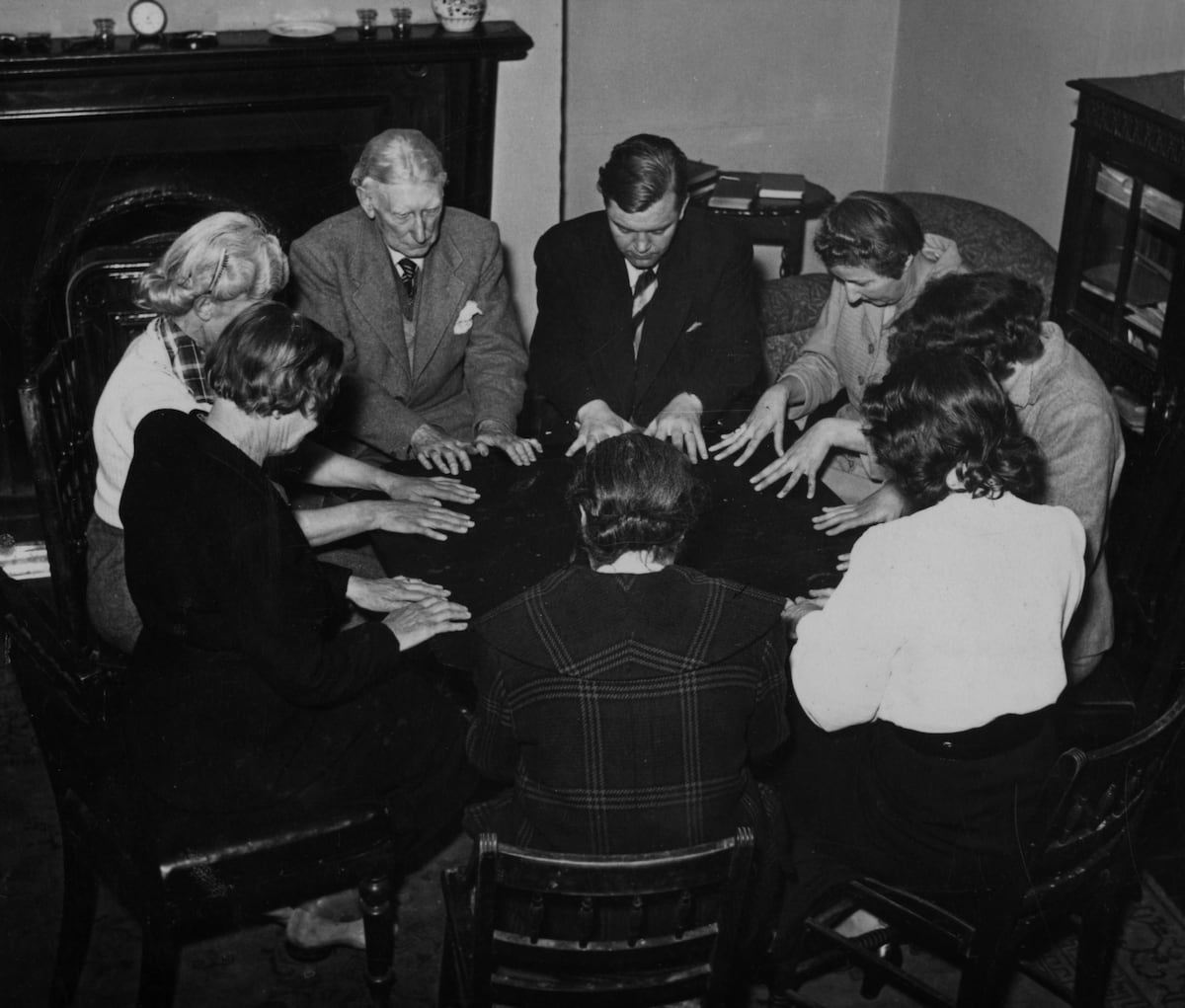
In the wake of World War I, a surge in the popularity of séances emerged as families sought to connect with deceased loved ones, including soldiers who had perished in battle. One notable case involved Raymond Lodge, a young British soldier who died at the front lines in September 1915. Shortly after his death, messages purportedly from Raymond began to circulate, providing solace to his grieving family and captivating the public.
Raymond’s father, Sir Oliver Lodge, a respected physicist and member of the Society for Psychical Research, was initially skeptical of spiritualism. However, he became deeply engaged in séances conducted by medium Mrs. Osborne Leonard. Messages from Raymond included affirmations of meeting friends in the afterlife, including F.W.H. Myers, a founding member of the society who had died in 1901. This communication compelled Sir Oliver to compile these messages into a book titled “Raymond, or Life and Death,” published in 1916. The book gained immense popularity, with many soldiers on the front receiving copies from their families.
The roots of spiritualism date back to the late 1840s, evolving from a pseudo-Christian practice that claimed the ability to communicate with the dead. Its appeal waned at the turn of the century but revived dramatically after the war, as the sheer scale of loss prompted widespread engagement with the practice. The success of Lodge’s book inspired numerous similar publications, including “Claude’s Book” in 1919, which was purportedly transcribed from séances with a young soldier named Claude by his mother, L. Kelway-Bamber.
As the war concluded, approximately 9 million soldiers had lost their lives, exacerbating public grief. Death had always been a part of life, but never had it claimed so many young lives in such a short period. This profound loss led many to seek comfort through spiritualism, as the possibility of communicating with the deceased provided a sense of hope and connection.
Although modern perspectives often view these séances with skepticism, they can also be seen as complex sociological phenomena shaped by collective grief. Individuals turned to spiritualism not just to contact their loved ones but to affirm the unique significance of their deaths amid widespread tragedy. For many, the séances offered reassurance that their loved ones were at peace, a stark contrast to the harsh realities of war.
Mary Lodge, Raymond’s mother, expressed the emotional relief these communications provided with a poignant statement included in her husband’s book: “We can face Christmas now.” This statement encapsulates the comfort many derived from the idea of connecting with their deceased family members, even in the face of ethical dilemmas surrounding the authenticity of such claims.
The history of ghost-hunting and séances is indeed filled with instances of fraud, but it also serves as an important lens through which to understand grief and the fear of death at pivotal moments in human history. By examining these practices with empathy, we gain insight into the profound human desire to maintain connections with those lost, making sense of sorrow in a world often marked by sudden and devastating loss.
Alice Vernon, a lecturer in Creative Writing and 19th-Century Literature at Aberystwyth University, suggests that while skepticism is necessary, understanding the motivations behind these séances can reveal significant truths about human experience and the enduring quest for connection beyond death.

Urgent Fire Erupts at Indigo Apartments in NW OKC, Residents Fearful

Arlene Hartman, Beloved Community Figure, Passes Away at 87

Urgent: Vehicle Fire Closes Two Lanes on I-215 in Salt Lake City

Knicks Dominate Raptors 116-94, Extend Home Winning Streak

Hallmark’s ‘Christmas at the Catnip Café’ Premieres Tonight

Woman Arrested for Threatening U-Haul Worker with Baton

Japan’s PM Takaichi Vows Urgent Fiscal Management Amid Rate Trends

Bitcoin Plummets Below $88K Amid Tether Concerns and Warnings

Tottenville Falls Short in PSAL 4A Title Game Against Erasmus

Urgent Update: Tom Aspinall’s Vision Deteriorates After UFC 321

MIT Scientists Uncover Surprising Genomic Loops During Cell Division

University of Hawaiʻi Joins $25.6M AI Project to Enhance Disaster Monitoring

AI Disruption: AWS Faces Threat as Startups Shift Cloud Focus

Time Crystals Revolutionize Quantum Computing Potential

Honeywell Forecasts Record Business Jet Deliveries Over Next Decade

Discover the Full Map of Pokémon Legends: Z-A’s Lumiose City

GOP Faces Backlash as Protests Surge Against Trump Policies

Parenthood Set to Depart Hulu: What Fans Need to Know
-
 Top Stories1 month ago
Urgent Update: Tom Aspinall’s Vision Deteriorates After UFC 321
-
 Health1 month ago
MIT Scientists Uncover Surprising Genomic Loops During Cell Division
-
Science4 weeks ago
University of Hawaiʻi Joins $25.6M AI Project to Enhance Disaster Monitoring
-
 Top Stories1 month ago
AI Disruption: AWS Faces Threat as Startups Shift Cloud Focus
-
 Science2 months ago
Time Crystals Revolutionize Quantum Computing Potential
-
 World2 months ago
Honeywell Forecasts Record Business Jet Deliveries Over Next Decade
-
 Entertainment1 month ago
Discover the Full Map of Pokémon Legends: Z-A’s Lumiose City
-
 Top Stories2 months ago
GOP Faces Backlash as Protests Surge Against Trump Policies
-
 Entertainment2 months ago
Parenthood Set to Depart Hulu: What Fans Need to Know
-

 Politics2 months ago
Judge Signals Dismissal of Chelsea Housing Case Citing AI Flaws
-

 Sports2 months ago
Yoshinobu Yamamoto Shines in Game 2, Leading Dodgers to Victory
-

 Health2 months ago
Maine Insurers Cut Medicare Advantage Plans Amid Cost Pressures