
Science
Scientists Unlock New Energy Potential in Iron for Batteries

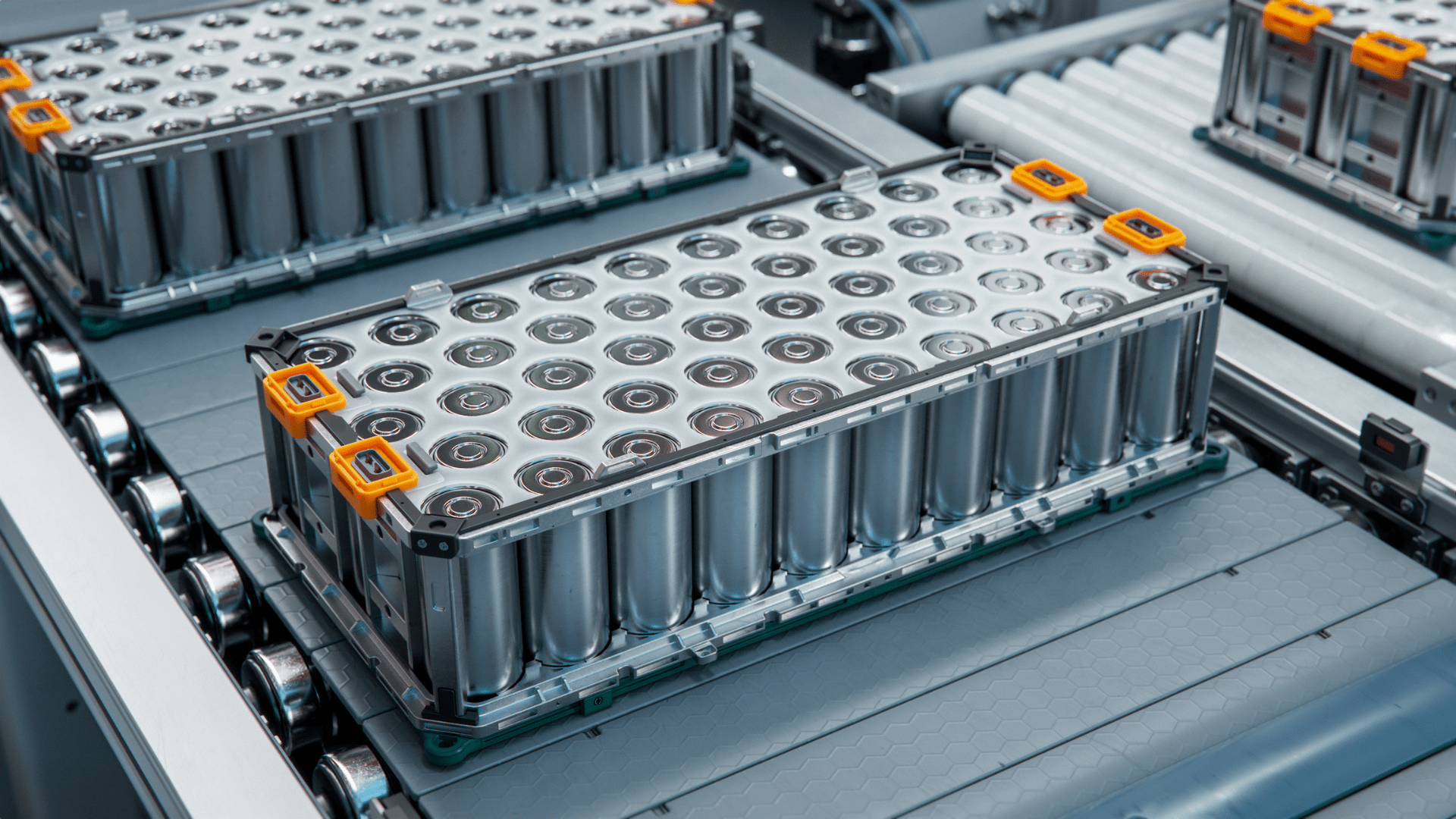
A team of researchers at Stanford University has made a groundbreaking discovery regarding iron, one of Earth’s most abundant metals. This team, led by PhD students Hari Ramachandran, Edward Mu, and Eder Lomeli, has demonstrated a method to elevate iron into a higher-energy state, which could revolutionize the future of battery technology, particularly lithium-ion systems. The implications of this advancement extend beyond batteries, potentially influencing various technologies reliant on magnetic and electronic properties.
The research indicates that iron can now release and reabsorb more electrons than previously believed feasible. This capability may lead to the development of batteries that are not only more efficient but also significantly less expensive than current cobalt- or nickel-based options. With this innovation, the vision for sustainable energy storage systems is becoming clearer.
Innovative Approaches to Iron’s Energy State
The collaborative effort involved a 23-member team from multiple U.S. universities, national laboratories, and international partners in Japan and South Korea. Their key achievement involved fine-tuning the structure of a compound consisting of lithium, iron, antimony, and oxygen. This compound, arranged at the nanoscale, allowed iron atoms to repeatedly release and reabsorb five electrons, surpassing the traditional limit of two or three.
Initially, Ramachandran and Mu faced challenges with their samples collapsing during charging cycles. The breakthrough came when they reduced the particle size to 300 to 400 nanometers, approximately 40 times smaller than previous attempts. “Making the particles very small turned out to be a challenge,” Ramachandran explained. The team eventually succeeded in growing the crystals from a carefully mixed liquid solution.
In verifying their findings, Lomeli partnered with his advisor, Tom Devereaux, a specialist in modeling X-ray spectra. Their analysis revealed that the additional electrons were not solely derived from iron atoms but were significantly influenced by oxygen as well. “It’s too simple to say that iron is the hero or oxygen is the hero,” Lomeli noted. “The atoms in this very nicely arranged material behave like a single entity.”
A New Era for Battery Technology
This innovative discovery marks a significant turning point in battery science. Iron, once regarded as too low-voltage for advanced energy storage, is now emerging as a viable alternative to cobalt, which is costly and often extracted under dangerous conditions. “A high-voltage, iron-based cathode could avoid the tradeoff between higher voltage and higher-cost metals that previously dominated cathode materials,” Mu stated.
The concept of pushing iron to higher oxidation states traces back to 2018 when former Stanford PhD student William Gent theorized that with appropriate spacing of neighboring atoms, this could be achieved. Although Gent did not complete the experiment, the current team has brought his vision to fruition. Early tests conducted at the SLAC-Stanford Battery Center demonstrated that the lithium-iron-antimony-oxygen compound maintained structural integrity, showing flexibility without breaking during charge cycles.
Co-lead author William Chueh emphasized the rarity of high-voltage iron-based materials in scientific literature. “Our detailed electronic structure exploration of this iron species provides conclusive evidence of oxidation beyond three electrons,” he remarked.
The full study detailing these findings was published in Nature Materials earlier this month, marking a significant advancement in the quest for sustainable and cost-effective energy storage solutions. This research not only showcases the potential of iron in battery technology but also sets the stage for broader applications in various high-tech fields.

Knicks Dominate Raptors 116-94, Extend Home Winning Streak

Hallmark’s ‘Christmas at the Catnip Café’ Premieres Tonight

Woman Arrested for Threatening U-Haul Worker with Baton

Japan’s PM Takaichi Vows Urgent Fiscal Management Amid Rate Trends

Bitcoin Plummets Below $88K Amid Tether Concerns and Warnings

Tottenville Falls Short in PSAL 4A Title Game Against Erasmus

Shark Teeth Study Reveals Urgent Clues to Prevent Extinction

Church Members Rally Together After Thanksgiving Fire Devastation

U.S. Investment in Canadian Energy Firms Surges Despite Low Oil Prices

Urgent Update: Tom Aspinall’s Vision Deteriorates After UFC 321

MIT Scientists Uncover Surprising Genomic Loops During Cell Division

University of Hawaiʻi Joins $25.6M AI Project to Enhance Disaster Monitoring

AI Disruption: AWS Faces Threat as Startups Shift Cloud Focus

Time Crystals Revolutionize Quantum Computing Potential

Honeywell Forecasts Record Business Jet Deliveries Over Next Decade

Discover the Full Map of Pokémon Legends: Z-A’s Lumiose City

GOP Faces Backlash as Protests Surge Against Trump Policies

Parenthood Set to Depart Hulu: What Fans Need to Know
-
 Top Stories1 month ago
Urgent Update: Tom Aspinall’s Vision Deteriorates After UFC 321
-
 Health1 month ago
MIT Scientists Uncover Surprising Genomic Loops During Cell Division
-
Science4 weeks ago
University of Hawaiʻi Joins $25.6M AI Project to Enhance Disaster Monitoring
-
 Top Stories1 month ago
AI Disruption: AWS Faces Threat as Startups Shift Cloud Focus
-
 Science2 months ago
Time Crystals Revolutionize Quantum Computing Potential
-
 World2 months ago
Honeywell Forecasts Record Business Jet Deliveries Over Next Decade
-
 Entertainment1 month ago
Discover the Full Map of Pokémon Legends: Z-A’s Lumiose City
-
 Top Stories2 months ago
GOP Faces Backlash as Protests Surge Against Trump Policies
-
 Entertainment2 months ago
Parenthood Set to Depart Hulu: What Fans Need to Know
-

 Politics2 months ago
Judge Signals Dismissal of Chelsea Housing Case Citing AI Flaws
-

 Sports2 months ago
Yoshinobu Yamamoto Shines in Game 2, Leading Dodgers to Victory
-

 Health2 months ago
Maine Insurers Cut Medicare Advantage Plans Amid Cost Pressures