
Politics
Minnesota Senate Election on November 4 Could Shift Control

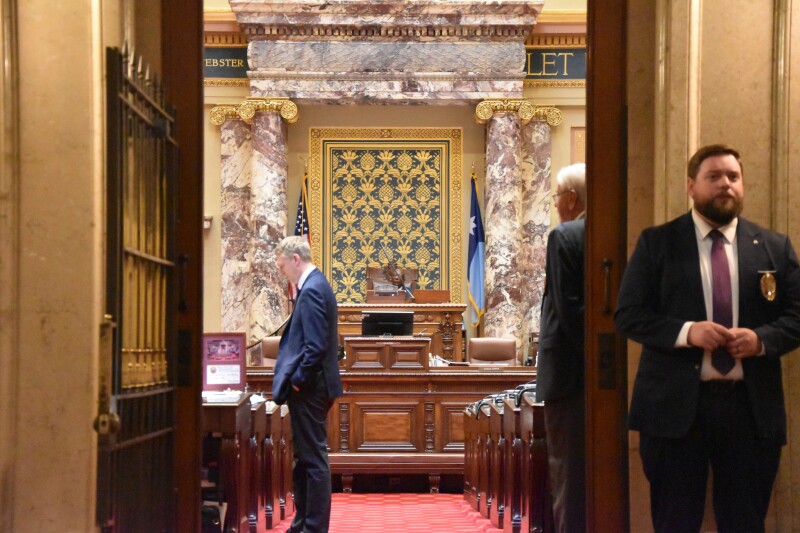
Two Minnesota Senate seats are set to be contested on Tuesday, November 4, with the potential to alter the balance of power in the currently Democratic-Farmer-Labor (DFL) led chamber. The vacancies arose following the resignation of former Senator Nicole Mitchell of Woodbury on July 25 and the unexpected death of Senator Bruce Anderson of Buffalo on July 21. If Republicans manage to retain Anderson’s seat and flip Mitchell’s, they could achieve a 34-33 majority in the Senate, shifting from the current 33-32 DFL majority. A win for Democrats in just one of the two seats would preserve their control.
The seats in question have not demonstrated characteristics typical of swing districts. According to the Secretary of State’s Office, Mitchell secured her seat in 2022 with 59% of the vote, while Anderson won his with a significant 68%.
In District 47, covering Woodbury, Democrat and current state Representative Amanda Hemmingsen-Jaeger is running against Republican Dwight Dorau for Mitchell’s former seat. Meanwhile, in District 29, which includes Buffalo and Monticello, Republican Michael Holmstrom is competing against Democrat Louis McNutt for Anderson’s seat.
Senate Majority Leader Erin Murphy, representing the DFL from St. Paul, expressed confidence in her party’s ability to maintain their majority. She praised her candidates, stating, “Louis and Amanda are campaigning hard, and the voters they’re meeting are concerned about the chaos and cruelty coming from Washington.” Murphy emphasized her belief that the DFL will continue to advocate for the interests of Minnesotans.
Conversely, Senate Minority Leader Mark Johnson, a Republican from East Grand Forks, eagerly awaits the election results. He believes that a Republican majority would return control from what he described as “left-wing activists” to “common sense Minnesotans.” Johnson outlined priorities for his party, including addressing issues such as eliminating fraud, enhancing education, and improving affordability for Minnesota families.
The political landscape is further complicated by the recent return to a 67-67 tie in the Minnesota House following a special election on September 16, which filled the seat of the late Speaker Emerita Melissa Hortman in Brooklyn Park. This tie means that any bill must secure bipartisan support to pass through the Legislature and reach the desk of Governor Tim Walz, regardless of the Senate’s composition.
As the election approaches, both parties are mobilizing their resources and supporters, anticipating outcomes that could significantly impact Minnesota’s legislative agenda. The stakes are high, with voters keenly aware that the results could shape the future of governance in the state.

Philadelphia Parks Launch Free Earth Month Events Starting April 1

Bradford’s Fish Fry Fridays Serve Community with Delicious Dinners

Trump Faces Growing Challenges Amid Rising Tensions with Iran

Scientists Probe the Universe’s Missing Topological Defects

Samsung Galaxy Watch 9 to Feature Larger 435mAh Battery

UConn Huskies Aim to Defend Title in 2026 NCAA Women’s Tournament

U.S. Littoral Combat Ships Dock in Malaysia Amid Regional Tensions

Healthy Choice Wellness Reports Quarterly Earnings, Shares Rise

Urgent News: Charles M. Payment Passes Away at 78 in Duluth

University of Hawaiʻi Joins $25.6M AI Project to Enhance Disaster Monitoring

Major Grant Enhances Cancer Care and Research in Hawaiʻi

Joleen Chaney, Beloved Journalist, Passes Leaving Lasting Legacy

San Francisco’s SFO to Welcome 16 Airlines with Nonstop Flights to Europe in 2026

Goldman Sachs Unveils 2026 Catalyst Playbook for Biotech Investors

Discover Top Business Smartphones for Professionals in 2026

Urgent Update: Tom Aspinall’s Vision Deteriorates After UFC 321

Texas Roadhouse Honors Veterans with Free Meal Vouchers

CD Projekt Red Confirms No Release for The Witcher 4 in 2026
-
Science9 months ago
University of Hawaiʻi Joins $25.6M AI Project to Enhance Disaster Monitoring
-
 Health8 months ago
Major Grant Enhances Cancer Care and Research in Hawaiʻi
-
 Top Stories9 months ago
Joleen Chaney, Beloved Journalist, Passes Leaving Lasting Legacy
-
 World7 months ago
San Francisco’s SFO to Welcome 16 Airlines with Nonstop Flights to Europe in 2026
-
 Business8 months ago
Goldman Sachs Unveils 2026 Catalyst Playbook for Biotech Investors
-
 Business7 months ago
Discover Top Business Smartphones for Professionals in 2026
-
 Top Stories9 months ago
Urgent Update: Tom Aspinall’s Vision Deteriorates After UFC 321
-
 Lifestyle9 months ago
Texas Roadhouse Honors Veterans with Free Meal Vouchers
-
 Entertainment8 months ago
CD Projekt Red Confirms No Release for The Witcher 4 in 2026
-

 Top Stories10 months ago
AI Disruption: AWS Faces Threat as Startups Shift Cloud Focus
-

 Health10 months ago
MIT Scientists Uncover Surprising Genomic Loops During Cell Division
-

 Entertainment10 months ago
Discover the Full Map of Pokémon Legends: Z-A’s Lumiose City