
Science
Walt Downing’s Volunteerism Fuels Innovation and Mentorship

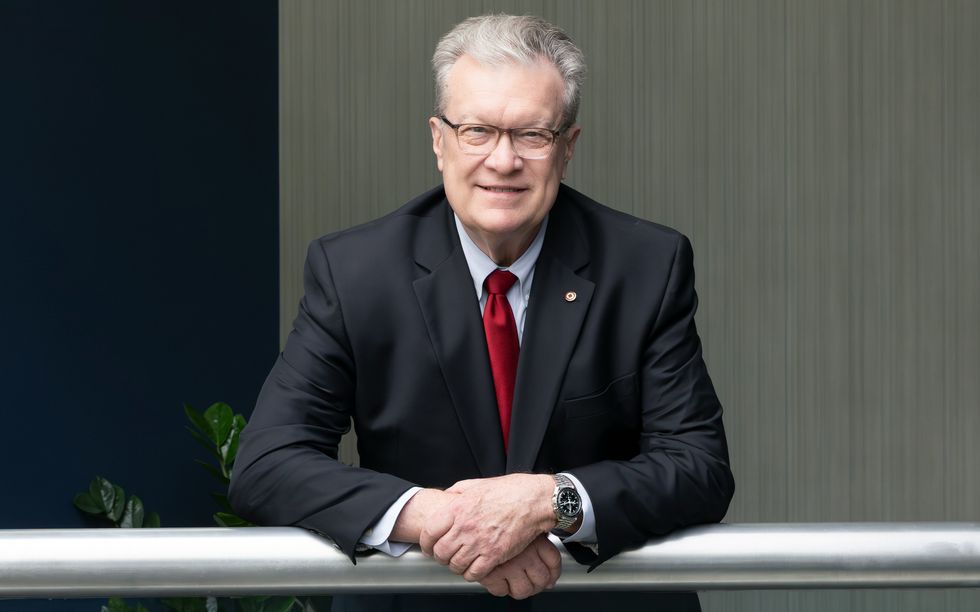
Volunteering plays a pivotal role in professional communities, fostering collaboration and personal growth. For many, including Walt Downing, a life senior member of the IEEE, this engagement has profound implications for both individual careers and the wider community. Downing, who serves as the executive vice president and chief operating officer at the Southwest Research Institute (SwRI) in San Antonio, exemplifies the impact of volunteerism through his unwavering dedication to advancing the field of engineering and inspiring others.
Throughout his journey with IEEE, Downing has held various leadership roles, including president of the IEEE Systems Council from 2022 to 2024 and current chair of the IEEE Lone Star Section. His commitment to the organization highlights the importance of leadership and collaboration, which are fundamental to IEEE’s mission. Collaborating with Downing has been a transformative experience for many, particularly for those involved in the IEEE Systems Council, where he has served as an editor and writer.
Walt Downing’s journey began in San Antonio, where his fascination with technology was ignited by early exposure to aviation through his father’s work at Kelly Air Force Base. Watching the historic Apollo 11 mission in 1969 solidified his desire to pursue a career in engineering, pushing him to contribute to significant technological advancements.
After earning a bachelor’s degree in electrical engineering from Southern Methodist University in 1973, Downing began his career at Brown & Root, now part of KBR, focusing on instrumentation and controls in the petrochemical sector. His transition to SwRI marked a critical point in his career, where he embraced challenges and contributed to advanced technology and scientific research for clients, including NASA.
At SwRI, Downing quickly rose through the ranks, eventually managing a section that specialized in automated test equipment for avionics. His work on the early applications of microprocessors for testing systems, including projects for the Minuteman missile and upgrades for legacy aircraft such as the A-10, F-16, and B-52, has significantly influenced the field of aerospace technology.
Downing’s involvement with IEEE began in 1981 at the IEEE AutoTestCon, an annual conference for the aerospace and military automatic test industry. His passion for contributing to the engineering community led him to numerous volunteer roles, including serving as president of the IEEE Aerospace and Electronic Systems Society. During his presidency, he adapted to the challenges posed by the COVID-19 pandemic, introducing online programming that allowed members to stay connected and engaged.
Reflecting on his career, Downing emphasizes the value of active engagement with IEEE, stating, “My involvement has expanded my network globally, creating opportunities to build relationships with other professionals.” He encourages young engineers to participate in key conferences within their fields to enhance their careers and stay connected with industry developments.
As Downing looks to the future, his legacy revolves around positively influencing the next generation of engineers and technologists. He believes that fostering connections and continuing education in emerging technologies are crucial for preventing obsolescence in a rapidly evolving field.
Downing’s experiences and dedication to volunteerism within IEEE underscore the transformative potential of active participation in professional communities. His story serves as an inspiring example of how commitment to volunteer efforts can lead to significant advancements in technology while nurturing the careers of aspiring engineers.

Knicks Dominate Raptors 116-94, Extend Home Winning Streak

Hallmark’s ‘Christmas at the Catnip Café’ Premieres Tonight

Woman Arrested for Threatening U-Haul Worker with Baton

Japan’s PM Takaichi Vows Urgent Fiscal Management Amid Rate Trends

Bitcoin Plummets Below $88K Amid Tether Concerns and Warnings

Tottenville Falls Short in PSAL 4A Title Game Against Erasmus

Shark Teeth Study Reveals Urgent Clues to Prevent Extinction

Church Members Rally Together After Thanksgiving Fire Devastation

U.S. Investment in Canadian Energy Firms Surges Despite Low Oil Prices

Urgent Update: Tom Aspinall’s Vision Deteriorates After UFC 321

MIT Scientists Uncover Surprising Genomic Loops During Cell Division

University of Hawaiʻi Joins $25.6M AI Project to Enhance Disaster Monitoring

AI Disruption: AWS Faces Threat as Startups Shift Cloud Focus

Time Crystals Revolutionize Quantum Computing Potential

Honeywell Forecasts Record Business Jet Deliveries Over Next Decade

Discover the Full Map of Pokémon Legends: Z-A’s Lumiose City

GOP Faces Backlash as Protests Surge Against Trump Policies

Parenthood Set to Depart Hulu: What Fans Need to Know
-
 Top Stories1 month ago
Urgent Update: Tom Aspinall’s Vision Deteriorates After UFC 321
-
 Health1 month ago
MIT Scientists Uncover Surprising Genomic Loops During Cell Division
-
Science4 weeks ago
University of Hawaiʻi Joins $25.6M AI Project to Enhance Disaster Monitoring
-
 Top Stories1 month ago
AI Disruption: AWS Faces Threat as Startups Shift Cloud Focus
-
 Science2 months ago
Time Crystals Revolutionize Quantum Computing Potential
-
 World2 months ago
Honeywell Forecasts Record Business Jet Deliveries Over Next Decade
-
 Entertainment1 month ago
Discover the Full Map of Pokémon Legends: Z-A’s Lumiose City
-
 Top Stories2 months ago
GOP Faces Backlash as Protests Surge Against Trump Policies
-
 Entertainment2 months ago
Parenthood Set to Depart Hulu: What Fans Need to Know
-

 Politics2 months ago
Judge Signals Dismissal of Chelsea Housing Case Citing AI Flaws
-

 Sports2 months ago
Yoshinobu Yamamoto Shines in Game 2, Leading Dodgers to Victory
-

 Health2 months ago
Maine Insurers Cut Medicare Advantage Plans Amid Cost Pressures