
Business
Exxon and Chevron Boost Oil Production Amid Global Surplus

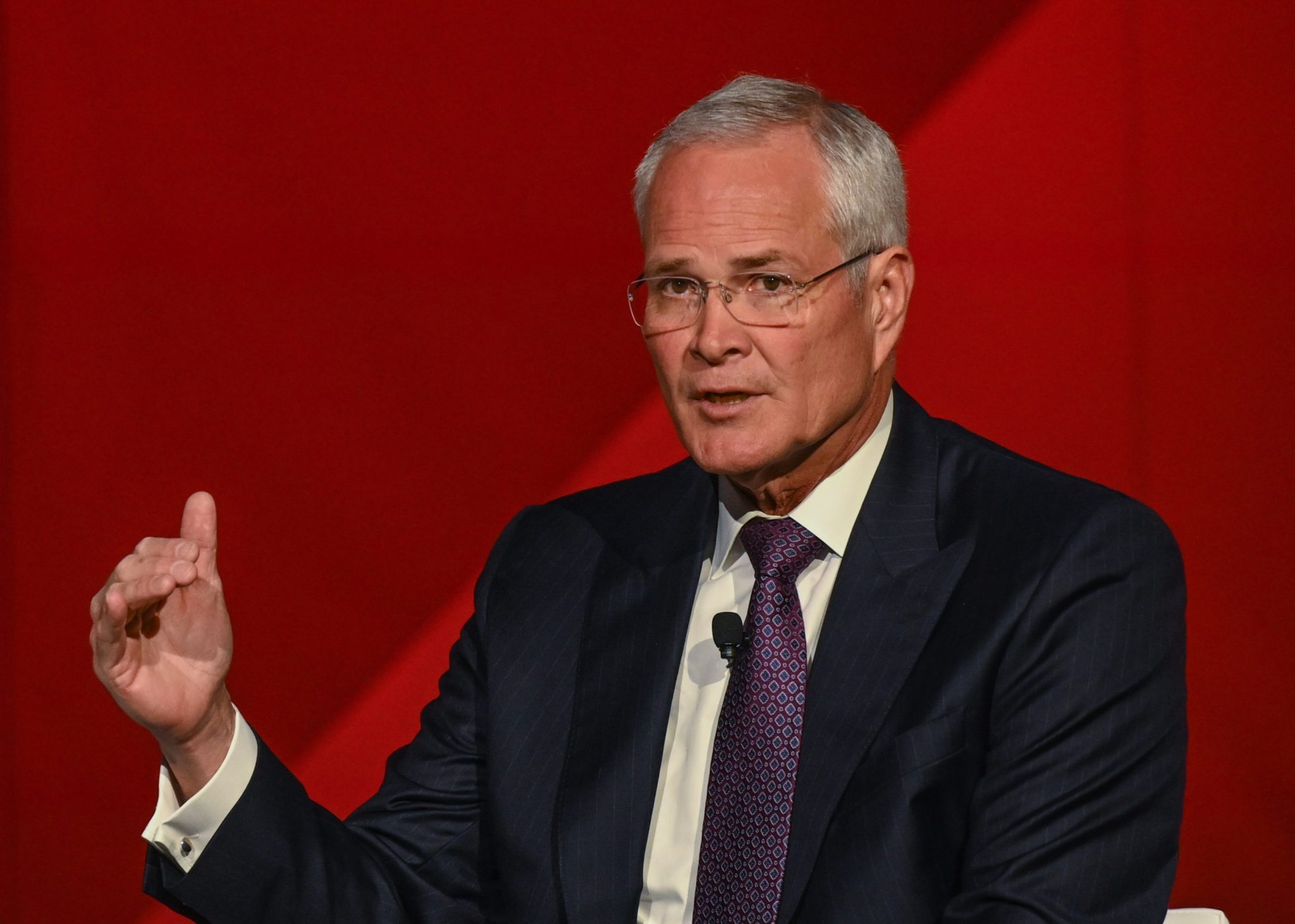
Major oil corporations, including Exxon Mobil and Chevron, are ramping up crude oil production despite a global surplus. This increase comes as OPEC continues to boost its exports, contributing to a market where oil prices are projected to decline further, with the U.S. benchmark hovering near $60 per barrel—a rate that challenges profitability for many companies.
Both Exxon and Chevron see potential in the Permian Basin, where exploration and production remain strong. Exxon reported a record production of 1.7 million barrels of oil equivalent per day during the third quarter of 2023, while Chevron produced 1.06 million barrels daily, making it the only other company to achieve over a million barrels in the region.
Production Trends and Future Outlook
Exxon’s Chairman and CEO Darren Woods emphasized the company’s commitment to growth during a recent earnings call. “We set yet another production record,” he stated, highlighting that the company’s output in the Permian is expected to continue rising into the next decade. Exxon aims to reach 5.4 million barrels of oil equivalent per day by 2030, largely driven by its operations in the Permian Basin and offshore developments in Guyana.
Chevron, although actively reducing its capital expenditure in the Permian to maintain steady production, still managed an increase of nearly 60,000 barrels per day from the previous quarter. CEO Mike Wirth noted that the company has achieved efficiency gains despite fewer drilling rigs and completions. He expressed optimism for the future, stating, “We expect to move into 2026 with good momentum.”
Despite these production increases, industry leaders are wary of pricing challenges. Shell CEO Wael Sawan acknowledged the potential for an oversupply in 2026, stating, “What we see at the moment is indeed headwinds on the supply-demand fundamentals going into 2026.” With U.S. oil production exceeding 13.6 million barrels per day, the market is under pressure, and prices may continue to fall.
Shifting Focus to Global Exploration
As the U.S. shale boom matures, major oil companies are realigning their strategies towards international exploration. Historically focused on U.S. shale, companies are now allocating more funds to offshore exploration in regions such as South America and Africa. This shift is crucial as U.S. shale wells typically experience rapid depletion after a few years of high output.
Woods pointed out that the industry must adopt a long-term perspective, stating, “With the [U.S. shale] depletion curve, the industry has to continue to think long term, invest, and find resources.” Similarly, Wirth noted that Chevron will adopt a more balanced approach, emphasizing frontier exploration in locations like Suriname, Brazil, Angola, and Nigeria.
Despite the challenges posed by lower commodity prices, Exxon and Chevron remain profitable. Exxon reported a net income of $7.55 billion for the recent quarter, down from $8.61 billion year-over-year. Chevron’s net profit was $3.54 billion, a decline from $4.49 billion in the previous year. Shell, on the other hand, saw an increase in net income to $5.32 billion, up from $4.29 billion year-over-year, although its adjusted earnings fell.
In conclusion, while the short-term outlook for oil prices remains uncertain, Exxon and Chevron’s production strategies indicate confidence in their long-term growth potential. The shift towards international exploration reflects an industry adapting to changing market dynamics and resource availability.

Philadelphia Parks Launch Free Earth Month Events Starting April 1

Bradford’s Fish Fry Fridays Serve Community with Delicious Dinners

Trump Faces Growing Challenges Amid Rising Tensions with Iran

Scientists Probe the Universe’s Missing Topological Defects

Samsung Galaxy Watch 9 to Feature Larger 435mAh Battery

UConn Huskies Aim to Defend Title in 2026 NCAA Women’s Tournament

U.S. Littoral Combat Ships Dock in Malaysia Amid Regional Tensions

Healthy Choice Wellness Reports Quarterly Earnings, Shares Rise

Urgent News: Charles M. Payment Passes Away at 78 in Duluth

University of Hawaiʻi Joins $25.6M AI Project to Enhance Disaster Monitoring

Major Grant Enhances Cancer Care and Research in Hawaiʻi

Joleen Chaney, Beloved Journalist, Passes Leaving Lasting Legacy

San Francisco’s SFO to Welcome 16 Airlines with Nonstop Flights to Europe in 2026

Goldman Sachs Unveils 2026 Catalyst Playbook for Biotech Investors

Discover Top Business Smartphones for Professionals in 2026

Urgent Update: Tom Aspinall’s Vision Deteriorates After UFC 321

Texas Roadhouse Honors Veterans with Free Meal Vouchers

CD Projekt Red Confirms No Release for The Witcher 4 in 2026
-
Science9 months ago
University of Hawaiʻi Joins $25.6M AI Project to Enhance Disaster Monitoring
-
 Health8 months ago
Major Grant Enhances Cancer Care and Research in Hawaiʻi
-
 Top Stories9 months ago
Joleen Chaney, Beloved Journalist, Passes Leaving Lasting Legacy
-
 World7 months ago
San Francisco’s SFO to Welcome 16 Airlines with Nonstop Flights to Europe in 2026
-
 Business8 months ago
Goldman Sachs Unveils 2026 Catalyst Playbook for Biotech Investors
-
 Business8 months ago
Discover Top Business Smartphones for Professionals in 2026
-
 Top Stories9 months ago
Urgent Update: Tom Aspinall’s Vision Deteriorates After UFC 321
-
 Lifestyle9 months ago
Texas Roadhouse Honors Veterans with Free Meal Vouchers
-
 Entertainment8 months ago
CD Projekt Red Confirms No Release for The Witcher 4 in 2026
-

 Top Stories10 months ago
AI Disruption: AWS Faces Threat as Startups Shift Cloud Focus
-

 Health10 months ago
MIT Scientists Uncover Surprising Genomic Loops During Cell Division
-

 Entertainment10 months ago
Discover the Full Map of Pokémon Legends: Z-A’s Lumiose City