
Science
Solar Discoveries and Dinosaur Revelations Dominate Science News

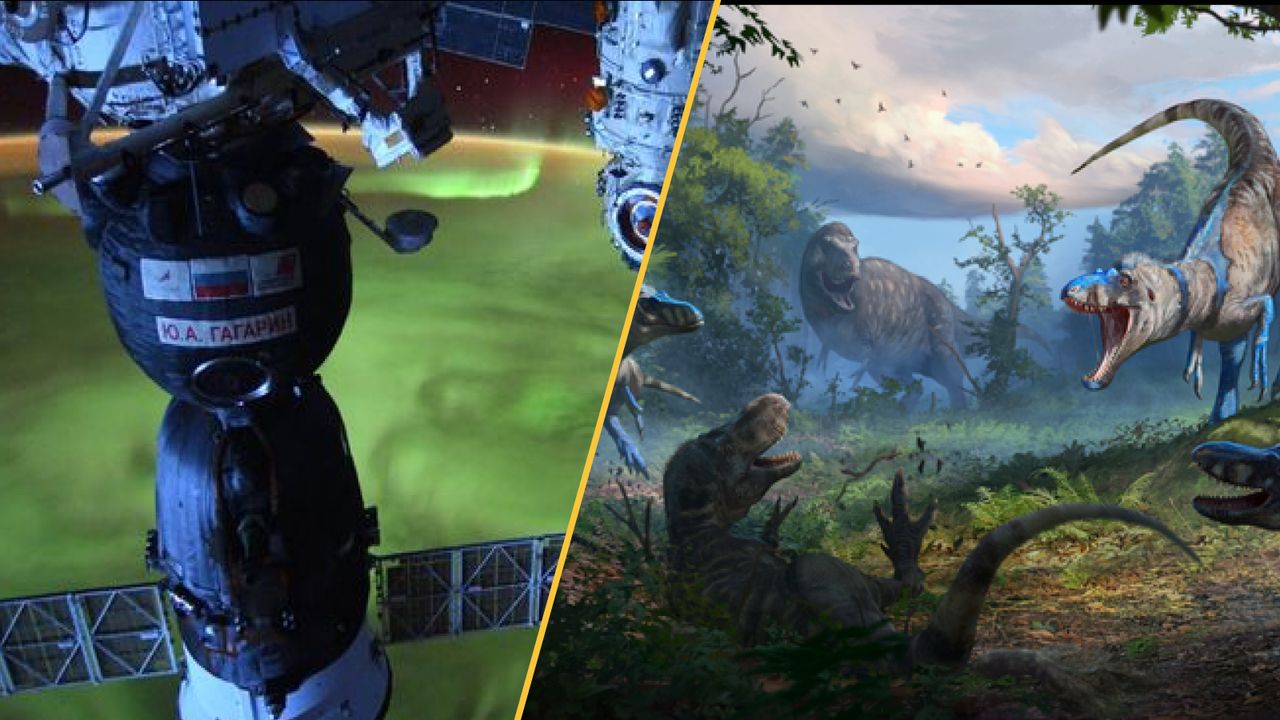
The latest scientific findings have unveiled significant revelations about solar phenomena, interstellar comets, and paleontology. This week, researchers made groundbreaking discoveries regarding the sun’s outer surface temperature, the true nature of a long-debated dinosaur species, and even the unexpected effects of user interactions with chatbots.
Solar Studies Illuminate Stellar Mysteries
A new study has provided insight into why the sun’s outer surface, known as the corona, is significantly hotter than its core. Scientists have identified magnetic waves that transport energy from the sun’s interior to its corona. These waves, theorized since the 1940s but only now detected, are crucial for understanding solar dynamics.
The sun’s magnetic fields can become unstable, leading to powerful solar flares and streams of charged particles that may cause geomagnetic storms on Earth. Another study revealed that the most severe of these storms could potentially damage satellites, posing a serious threat to modern technology. With the next superstorm inevitable, experts emphasize the urgency of monitoring solar activity.
In related news, Comet 3I/ATLAS has recently reached perihelion, its closest point to the sun. Observations by NASA spacecraft indicate that the comet is rapidly brightening and releasing gas at an unprecedented rate. The James Webb Space Telescope has found that the comet’s long journey through interstellar space altered its chemical composition due to space radiation exposure. As two spacecraft prepare to traverse the comet’s tail, additional data and images are expected in the coming days.
Paleontological Breakthroughs Reshape Dinosaur Understanding
In a remarkable development for paleontology, recent analysis of the “Dueling Dinosaurs” fossil has clarified the status of the diminutive Nanotyrannus. Previously thought to be a juvenile Tyrannosaurus rex, evidence suggests that Nanotyrannus is, in fact, a distinct species named Nanotyrannus lancensis. This fossil, discovered in 2006, depicts a fierce encounter between a Triceratops and a tyrannosaur, providing critical context for the debate that has persisted for nearly four decades.
Following this discovery, the paleontological community has largely accepted that Nanotyrannus represents a separate species. Adding to the complexity, another team has introduced a new species within the same genus, Nanotyrannus lethaeus. This revelation has sparked further discussions among researchers regarding the classification of these ancient creatures.
Another intriguing question has emerged regarding the dietary habits of Neanderthals. While they are often depicted as primarily meat-eaters, recent studies are exploring whether they consumed more plant-based foods than previously thought. This aspect of their diet could reshape our understanding of their lifestyle and survival strategies.
In the realm of artificial intelligence, a study has shown that being rude to chatbots, such as ChatGPT, may marginally enhance their accuracy. Researchers observed a 4% improvement in responses when users employed more aggressive language. However, they caution against this behavior, as it could negatively impact interpersonal interactions and potentially influence future AI development.
mRNA Research Faces Uncertain Future
The future of mRNA research, which played a pivotal role in the rapid development of COVID-19 vaccines, is now in jeopardy. Reports indicate that the current U.S. administration is retracting support for this vital area of scientific inquiry, leading to funding freezes and project cancellations. Scientists express concern that this withdrawal could hinder advances in treatments for cancer, genetic disorders, and immune deficiencies.
As the scientific community grapples with these developments, the potential consequences of reduced investment in mRNA technology could have far-reaching implications for public health and innovation.
In other news, the James Webb Space Telescope provided a striking image of the Red Spider Nebula, showcasing intricate details of cosmic phenomena. This nebula serves as a reminder of the life cycle of stars, including our sun, as it eventually reaches the end of its life.
As research continues to unfold across various disciplines, these discoveries signify the dynamic nature of science and its ongoing impact on our understanding of the universe and our place within it.

Knicks Dominate Raptors 116-94, Extend Home Winning Streak

Hallmark’s ‘Christmas at the Catnip Café’ Premieres Tonight

Woman Arrested for Threatening U-Haul Worker with Baton

Japan’s PM Takaichi Vows Urgent Fiscal Management Amid Rate Trends

Bitcoin Plummets Below $88K Amid Tether Concerns and Warnings

Tottenville Falls Short in PSAL 4A Title Game Against Erasmus

Shark Teeth Study Reveals Urgent Clues to Prevent Extinction

Church Members Rally Together After Thanksgiving Fire Devastation

U.S. Investment in Canadian Energy Firms Surges Despite Low Oil Prices

Urgent Update: Tom Aspinall’s Vision Deteriorates After UFC 321

MIT Scientists Uncover Surprising Genomic Loops During Cell Division

University of Hawaiʻi Joins $25.6M AI Project to Enhance Disaster Monitoring

AI Disruption: AWS Faces Threat as Startups Shift Cloud Focus

Time Crystals Revolutionize Quantum Computing Potential

Honeywell Forecasts Record Business Jet Deliveries Over Next Decade

Discover the Full Map of Pokémon Legends: Z-A’s Lumiose City

GOP Faces Backlash as Protests Surge Against Trump Policies

Parenthood Set to Depart Hulu: What Fans Need to Know
-
 Top Stories1 month ago
Urgent Update: Tom Aspinall’s Vision Deteriorates After UFC 321
-
 Health1 month ago
MIT Scientists Uncover Surprising Genomic Loops During Cell Division
-
Science4 weeks ago
University of Hawaiʻi Joins $25.6M AI Project to Enhance Disaster Monitoring
-
 Top Stories1 month ago
AI Disruption: AWS Faces Threat as Startups Shift Cloud Focus
-
 Science2 months ago
Time Crystals Revolutionize Quantum Computing Potential
-
 World2 months ago
Honeywell Forecasts Record Business Jet Deliveries Over Next Decade
-
 Entertainment1 month ago
Discover the Full Map of Pokémon Legends: Z-A’s Lumiose City
-
 Top Stories2 months ago
GOP Faces Backlash as Protests Surge Against Trump Policies
-
 Entertainment2 months ago
Parenthood Set to Depart Hulu: What Fans Need to Know
-

 Politics2 months ago
Judge Signals Dismissal of Chelsea Housing Case Citing AI Flaws
-

 Sports2 months ago
Yoshinobu Yamamoto Shines in Game 2, Leading Dodgers to Victory
-

 Health2 months ago
Maine Insurers Cut Medicare Advantage Plans Amid Cost Pressures