
Business
EV Charging Access Grows, Yet Range Anxiety Persists for Buyers

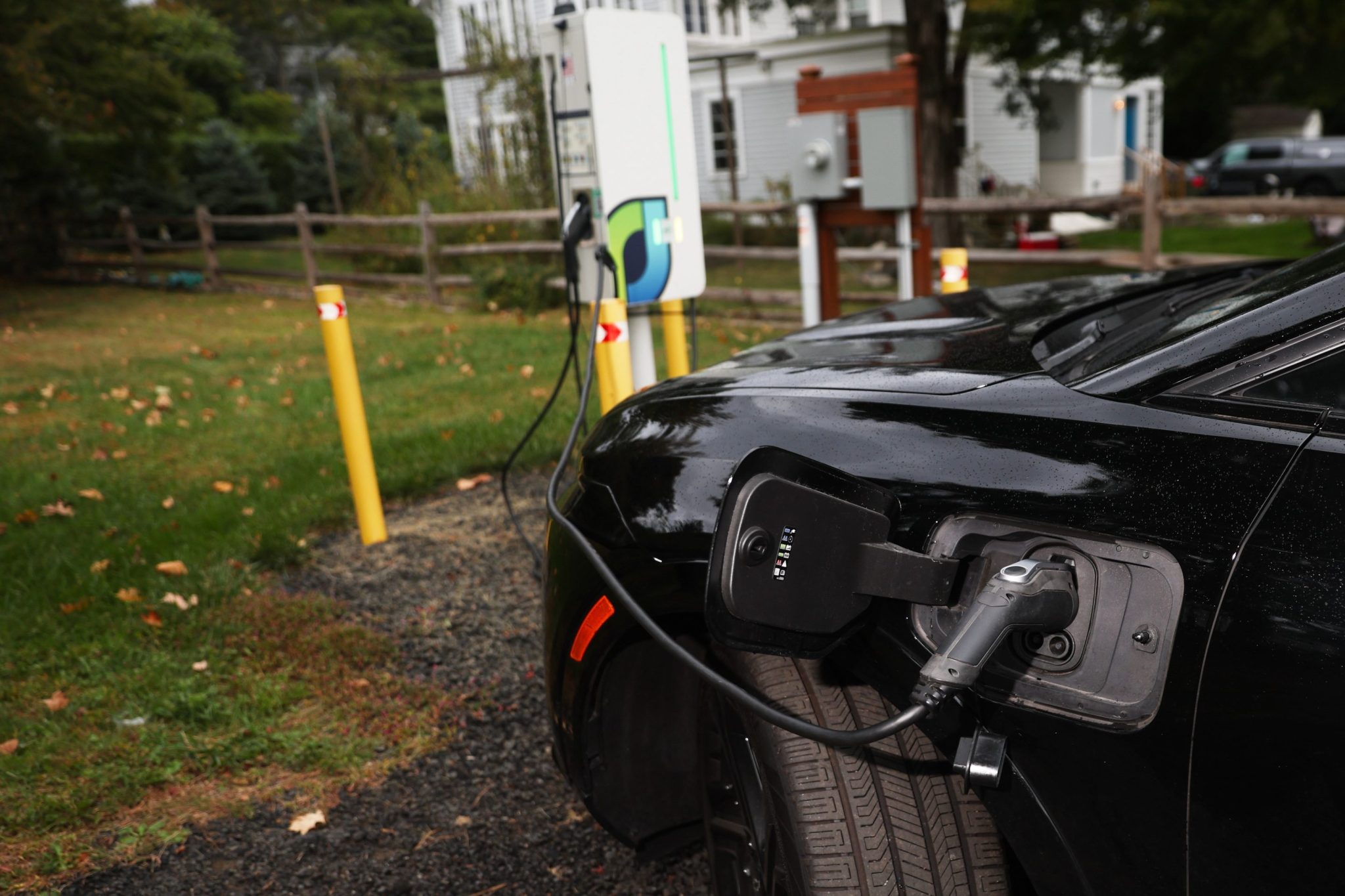
More than **70%** of the miles on the ten longest interstates in the United States are now within **10 miles** of a fast electric vehicle (EV) charger. Despite this significant advancement, many potential buyers continue to experience **range anxiety**, ranking it as a major concern alongside the high cost of EVs.
An analysis by the **Associated Press**, utilizing data from the **National Renewable Energy Laboratory**, reveals that over **12,000** fast chargers have been added near U.S. highways and interstates in just this year. This increase represents about **20%** of the total quick-charging ports currently available. Yet, a recent poll conducted by the **Associated Press-NORC Center for Public Affairs Research** and the **Energy Policy Institute at the University of Chicago** found that approximately **40%** of U.S. adults still cite range and charging time as significant reasons for hesitating to purchase an electric vehicle. Only **20%** of respondents indicated they would be “extremely” or “very” likely to choose an electric vehicle for their next car.
Daphne Dixon, a leader in a nonprofit advocating for clean transportation, is actively working to challenge these perceptions. Since **2022**, she has embarked on coast-to-coast road trips in an EV, utilizing a vibrant hot pink theme to draw attention. Throughout her **3,000-mile** (4,828-kilometer) journeys, Dixon shares her experiences and highlights the growing availability of charging stations, aiming to alleviate fears surrounding EV range.
Dixon asserts, “Range anxiety is stuck in people’s heads,” pointing out the increasing installation of chargers and the narrowing price gap between gas and electric vehicles. “A lot of people still fear that there’s not enough chargers, but what they’re not seeing is that chargers are being put in every single day.”
Expanded Charging Infrastructure
Traveling along **Interstate 80**, the longest interstate in the U.S., drivers can expect to find fast chargers within a reasonable distance. The distance between chargers has decreased significantly, with a **44%** increase in charger coverage on I-80 since **2021**. Nationwide, nearly **70%** of the combined length of the ten longest interstates is now within **10 miles** of a fast charger, up from only half five years ago.
Fast chargers play a crucial role in promoting EV adoption, as they can recharge a fully electric vehicle in as little as **20 minutes** to **an hour**, compared to home chargers that often require **four to ten hours** for a full charge.
In **Connecticut**, where Dixon resides, residents still express concerns about the availability of charging stations. During a recent trip along **Route 7**, which features a scenic landscape but limited charging options, Dixon noted the lack of fast chargers, particularly in rural areas. Lynn Mellis Worthington, chair of the town’s sustainability team in **Kent**, mentioned the only charging station in the area is a defunct machine at the town hall.
To address these challenges, Connecticut’s state government plans to allocate **$1.3 million** in federal funds for the installation of eight fast-charging ports at two stations in **New Milford**, located **15 miles** (24 kilometers) down Route 7 from Kent. These funds were initially set to be canceled earlier this year by the **Trump administration** but were reinstated in **August** after legal challenges from multiple states regarding the cessation of the **$5 billion** program established under the **Bipartisan Infrastructure Law** of **2021**.
Mellis Worthington and her husband contemplated purchasing an electric vehicle when replacing their **15-year-old Pontiac Vibe** this year. Ultimately, they opted for a hybrid due to the high prices of fully electric vehicles that met their range needs. “Our next car will definitely be an EV,” she stated.
Cost Remains a Major Barrier
While charging concerns persist, the cost of electric vehicles remains the primary barrier to purchase for many consumers. According to the AP-NORC/EPIC poll, only about **20%** of U.S. adults said that high prices do not deter them from considering an EV.
As of **2024**, electric vehicles hold approximately **8%** of the U.S. market share, a significant increase from **1.9%** five years ago, based on data from **Atlas Public Policy**. Daniel Wilkins, a policy analyst at Atlas, notes that while owning an EV may lead to lower long-term costs due to reduced maintenance and cheaper electricity compared to fuel, the initial sticker price remains a critical focus for buyers.
The expiration of federal incentives at the end of **September** effectively adds **$7,500** to the final bill for many prospective buyers, raising additional concerns.
Despite these challenges, advocates point out that the average American drives no more than **30 miles** (48 kilometers) per day, well within the range of modern electric vehicles. Most current EV owners, such as **Jim Warner** from **Bloomfield**, report that they charge their vehicles primarily at home. Warner, who owns both an EV and a plug-in hybrid, has successfully taken his **Chevy Bolt**, which has a range of approximately **250 miles** (402 kilometers) per charge, on multiple long trips without significant issues.
“The first trip, I turned the heat off. I made sure I drove 65,” Warner recalled. “The second time I just drove normally and had no problem.”
As the infrastructure for electric vehicles continues to grow, addressing consumer perceptions and financial barriers will be essential for increasing adoption rates across the country.

Philadelphia Parks Launch Free Earth Month Events Starting April 1

Bradford’s Fish Fry Fridays Serve Community with Delicious Dinners

Trump Faces Growing Challenges Amid Rising Tensions with Iran

Scientists Probe the Universe’s Missing Topological Defects

Samsung Galaxy Watch 9 to Feature Larger 435mAh Battery

UConn Huskies Aim to Defend Title in 2026 NCAA Women’s Tournament

U.S. Littoral Combat Ships Dock in Malaysia Amid Regional Tensions

Healthy Choice Wellness Reports Quarterly Earnings, Shares Rise

Urgent News: Charles M. Payment Passes Away at 78 in Duluth

University of Hawaiʻi Joins $25.6M AI Project to Enhance Disaster Monitoring

Major Grant Enhances Cancer Care and Research in Hawaiʻi

Joleen Chaney, Beloved Journalist, Passes Leaving Lasting Legacy

San Francisco’s SFO to Welcome 16 Airlines with Nonstop Flights to Europe in 2026

Goldman Sachs Unveils 2026 Catalyst Playbook for Biotech Investors

Discover Top Business Smartphones for Professionals in 2026

Urgent Update: Tom Aspinall’s Vision Deteriorates After UFC 321

Texas Roadhouse Honors Veterans with Free Meal Vouchers

CD Projekt Red Confirms No Release for The Witcher 4 in 2026
-
Science9 months ago
University of Hawaiʻi Joins $25.6M AI Project to Enhance Disaster Monitoring
-
 Health8 months ago
Major Grant Enhances Cancer Care and Research in Hawaiʻi
-
 Top Stories9 months ago
Joleen Chaney, Beloved Journalist, Passes Leaving Lasting Legacy
-
 World7 months ago
San Francisco’s SFO to Welcome 16 Airlines with Nonstop Flights to Europe in 2026
-
 Business8 months ago
Goldman Sachs Unveils 2026 Catalyst Playbook for Biotech Investors
-
 Business8 months ago
Discover Top Business Smartphones for Professionals in 2026
-
 Top Stories9 months ago
Urgent Update: Tom Aspinall’s Vision Deteriorates After UFC 321
-
 Lifestyle9 months ago
Texas Roadhouse Honors Veterans with Free Meal Vouchers
-
 Entertainment8 months ago
CD Projekt Red Confirms No Release for The Witcher 4 in 2026
-

 Top Stories10 months ago
AI Disruption: AWS Faces Threat as Startups Shift Cloud Focus
-

 Health10 months ago
MIT Scientists Uncover Surprising Genomic Loops During Cell Division
-

 Entertainment10 months ago
Discover the Full Map of Pokémon Legends: Z-A’s Lumiose City