
Top Stories
Powell Declares AI Spending Profitable, Not a Bubble—Urgent Insights

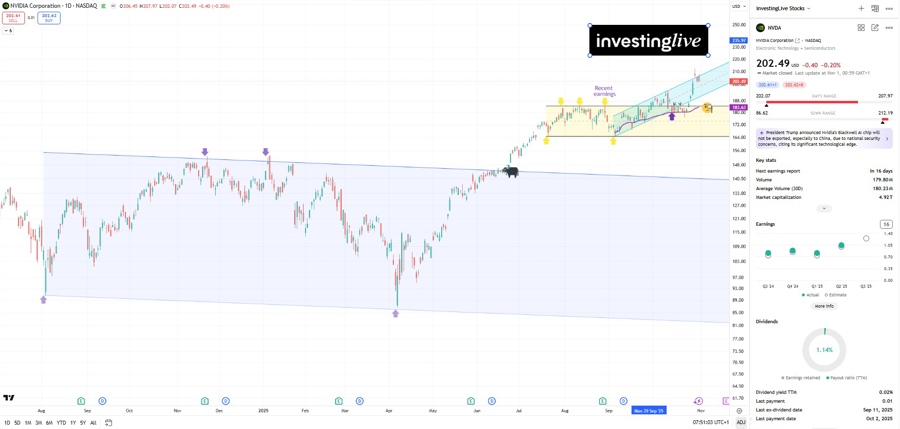
UPDATE: Federal Reserve Chair Jerome Powell has just clarified that the ongoing surge in artificial intelligence (AI) investment is fundamentally different from the infamous dot-com bubble of the late 1990s. In a revealing statement, Powell highlighted that today’s AI leaders are not only profitable but also generating substantial cash flow, contrasting sharply with the speculative nature of tech firms from decades ago.
Powell emphasized that major players like Microsoft, Alphabet, Amazon, Nvidia, and Meta are driving this AI boom with tangible earnings and robust capital. “They actually have earnings,” he noted, pointing to these companies’ strong financial health. This assertion comes at a crucial moment, as analysts and investors closely monitor AI’s economic impact.
Recent data underscores Powell’s insights. OpenAI is reportedly pulling in around $13 billion in annual revenue, supported by an estimated 30 to 40 million paying users. Meanwhile, Google’s Gemini app is making waves with hundreds of millions of users worldwide. Such figures reflect a significant shift in productivity; consulting firms like McKinsey predict generative AI could contribute several trillion dollars to global output each year.
However, while the financial outlook for leading AI firms is strong, critics voice concerns over the sustainability of current AI spending. Many businesses adopting AI technologies are still grappling with turning these investments into consistent profits. Analysts warn that although major AI companies are thriving, smaller developers may struggle to achieve the same economic viability.
In an interview with Finance Magnates, Itai Levitan, Head of Strategy at investingLive, stated, “AI is driving one of the largest productivity shifts in history.” He cited studies showing productivity gains exceeding ten percent among call-center agents utilizing AI tools, especially newer employees. This trend indicates that AI’s benefits are already being felt across various sectors.
Yet, Powell’s comments serve as a critical reminder for investors: not all AI projects will yield immediate returns. The challenge lies in discerning which investments create instant value versus those reliant on future profitability. Companies supplying AI infrastructure, such as chipmakers and cloud providers, are already reaping rewards, while smaller application developers may need additional time to prove their economic models.
Despite Powell’s optimistic assessment, this does not imply an open invitation for investors to rush into AI stocks like Nvidia, currently priced around $200 per share. Market behaviors around round numbers often trigger liquidity hunts and impact trading strategies. Investors must remain cautious, as Nvidia could easily retreat to around $194 or $187 based on market trends.
As the conversation around AI spending, investment timing, and profitability evolves, readers are encouraged to share their perspectives. Do you believe an AI bubble is forming, or are current investments justified by long-term productivity and returns? Your insights are vital as this discussion gains momentum.
Stay tuned for continuous updates on these urgent developments in AI and investment strategies.

Tottenville Falls Short in PSAL 4A Title Game Against Erasmus

Shark Teeth Study Reveals Urgent Clues to Prevent Extinction

Church Members Rally Together After Thanksgiving Fire Devastation

U.S. Investment in Canadian Energy Firms Surges Despite Low Oil Prices

Nick Jonas Unveils New Solo Album ‘Sunday Best’ Set for February Release

Researchers Urge Label Changes for Low-Alcohol Drinks to Aid Pregnant Women

Wedding Cookie Table Community Aims for World’s Largest Cookie Exchange

Mayor Appoints Alan Wong as New Supervisor for District 4

UK Report Reveals Growing Role of AI in University Research Assessments

Urgent Update: Tom Aspinall’s Vision Deteriorates After UFC 321

MIT Scientists Uncover Surprising Genomic Loops During Cell Division

University of Hawaiʻi Joins $25.6M AI Project to Enhance Disaster Monitoring

AI Disruption: AWS Faces Threat as Startups Shift Cloud Focus

Time Crystals Revolutionize Quantum Computing Potential

Honeywell Forecasts Record Business Jet Deliveries Over Next Decade

Discover the Full Map of Pokémon Legends: Z-A’s Lumiose City

GOP Faces Backlash as Protests Surge Against Trump Policies

Parenthood Set to Depart Hulu: What Fans Need to Know
-
 Top Stories1 month ago
Urgent Update: Tom Aspinall’s Vision Deteriorates After UFC 321
-
 Health1 month ago
MIT Scientists Uncover Surprising Genomic Loops During Cell Division
-
Science4 weeks ago
University of Hawaiʻi Joins $25.6M AI Project to Enhance Disaster Monitoring
-
 Top Stories1 month ago
AI Disruption: AWS Faces Threat as Startups Shift Cloud Focus
-
 Science2 months ago
Time Crystals Revolutionize Quantum Computing Potential
-
 World2 months ago
Honeywell Forecasts Record Business Jet Deliveries Over Next Decade
-
 Entertainment1 month ago
Discover the Full Map of Pokémon Legends: Z-A’s Lumiose City
-
 Top Stories2 months ago
GOP Faces Backlash as Protests Surge Against Trump Policies
-
 Entertainment2 months ago
Parenthood Set to Depart Hulu: What Fans Need to Know
-

 Politics2 months ago
Judge Signals Dismissal of Chelsea Housing Case Citing AI Flaws
-

 Sports2 months ago
Yoshinobu Yamamoto Shines in Game 2, Leading Dodgers to Victory
-

 Health2 months ago
Maine Insurers Cut Medicare Advantage Plans Amid Cost Pressures