
World
World Cup Excitement Meets Harsh Reality of Cartel Violence in Jalisco

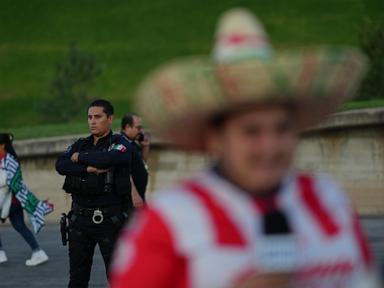
GUADALAJARA, Mexico — As fans celebrated a friendly soccer match in Zapopan, chanting “Mexico! Mexico!” they navigated a landscape marked by security measures such as police officers, bomb-sniffing dogs, and drone jammers. This scene unfolded just weeks before the 2026 FIFA World Cup, an event that promises significant economic benefits for the region. Yet just a few miles away, in stark contrast, National Guard troops stood watch while volunteers searched for the remains of some of Mexico’s 134,000 disappeared individuals.
This striking juxtaposition highlights the complex reality in Jalisco, a state that not only boasts 48,000-seat soccer stadiums and vibrant fan zones but also grapples with the presence of the Jalisco New Generation Cartel (CJNG). The cartel, known for its significant influence and an estimated 19,000 members operating across 21 of Mexico’s 32 states, casts a long shadow over the excitement surrounding the World Cup, which is set to take place in June 2026.
Jalisco, with a population of approximately 8 million, leads the nation in reported disappearances and ranks among the top four states for crime rates. As of October 2023, the state had seen around 1,000 disappearances, marking a 30% increase compared to the same period in the previous year, according to Mexico’s National Search Commission. Despite the ongoing violence, neither the enthusiastic fans nor the officials overseeing the match expressed apprehension about hosting an international sporting event in a territory heavily influenced by cartel activity.
Local perspectives varied on the issue. Some suggested there exists a fragile truce between the cartel and government forces, while others noted the security enhancements that large events typically bring. “If you don’t get yourself into trouble, nothing will happen,” said Javier Rodríguez, an 18-year-old college student attending the match.
Searching for Closure Amidst Violence
In a more somber effort south of Guadalajara, Indira Navarro and her team of volunteers were searching for human remains in an abandoned property. They are part of the Jalisco Search Warriors, a group dedicated to finding missing individuals, often at great personal risk. Navarro is searching for her brother, who disappeared in Sonora in 2015. Since her efforts have garnered media attention, she has received multiple death threats and now lives under constant protection from the National Guard.
Earlier this year, the search team uncovered hundreds of garments and burned bone fragments at a site previously thought to be a cartel training location. Authorities faced criticism for their inadequate initial investigation, which left many questions unanswered.
The CJNG has gained notoriety for its brazen attacks against security forces, including a 2020 incident where they downed a Mexican military helicopter with a rocket-propelled grenade. This level of violence has not been seen in Jalisco since the late 1980s, the last time the city hosted international matches during the 1986 World Cup.
Despite the stark realities, Roberto Alarcón, Jalisco’s state security strategy coordinator, downplayed the cartel’s impact, suggesting that the limited number of criminal organizations in the state simplifies security operations. “Not having a great number of criminal groups like other states allows security authorities to attack these groups in a better, more controlled way,” Alarcón stated, noting a downward trend in major crimes.
Security analyst David Saucedo anticipates a temporary agreement between the cartel and government forces, where law enforcement might refrain from targeting cartel leaders in exchange for reduced high-profile violence. However, he cautioned that this does not mean criminal activities would cease, warning that the cartel may exploit the World Cup to expand their operations in areas such as drug sales and ticket reselling.
Economic Promises Amidst Social Pain
On the eve of the October 14 match, Pablo Lemus, the Governor of Jalisco, along with local politicians and soccer federation officials, promoted the economic benefits the World Cup is expected to bring. They projected revenues of around $1 billion and the creation of 7,000 jobs in tourism and construction sectors. The state is currently working to add 12,000 new hotel rooms in preparation for the tournament.
“The 2026 World Cup is a great opportunity for Jalisco to position itself before the world,” Lemus told reporters, emphasizing the positive potential of hosting such a significant event.
For those like Navarro, however, the excitement surrounding the World Cup serves as a reminder of the unresolved issues plaguing the region. “They want to wash away everything that has to do with the issue of the disappeared,” she said. “But they won’t be able to do so because we’re going to continue fighting.”
As Jalisco prepares for the influx of visitors and the global spotlight, the state also faces the challenge of addressing its ongoing violence and the profound impact on families seeking justice for their missing loved ones. The legacy of the World Cup may extend beyond sports, with enhanced security measures and infrastructure potentially benefiting residents long after the event concludes.

Tottenville Falls Short in PSAL 4A Title Game Against Erasmus

Shark Teeth Study Reveals Urgent Clues to Prevent Extinction

Church Members Rally Together After Thanksgiving Fire Devastation

U.S. Investment in Canadian Energy Firms Surges Despite Low Oil Prices

Nick Jonas Unveils New Solo Album ‘Sunday Best’ Set for February Release

Researchers Urge Label Changes for Low-Alcohol Drinks to Aid Pregnant Women

Wedding Cookie Table Community Aims for World’s Largest Cookie Exchange

Mayor Appoints Alan Wong as New Supervisor for District 4

UK Report Reveals Growing Role of AI in University Research Assessments

Urgent Update: Tom Aspinall’s Vision Deteriorates After UFC 321

MIT Scientists Uncover Surprising Genomic Loops During Cell Division

University of Hawaiʻi Joins $25.6M AI Project to Enhance Disaster Monitoring

AI Disruption: AWS Faces Threat as Startups Shift Cloud Focus

Time Crystals Revolutionize Quantum Computing Potential

Honeywell Forecasts Record Business Jet Deliveries Over Next Decade

Discover the Full Map of Pokémon Legends: Z-A’s Lumiose City

GOP Faces Backlash as Protests Surge Against Trump Policies

Parenthood Set to Depart Hulu: What Fans Need to Know
-
 Top Stories1 month ago
Urgent Update: Tom Aspinall’s Vision Deteriorates After UFC 321
-
 Health1 month ago
MIT Scientists Uncover Surprising Genomic Loops During Cell Division
-
Science4 weeks ago
University of Hawaiʻi Joins $25.6M AI Project to Enhance Disaster Monitoring
-
 Top Stories1 month ago
AI Disruption: AWS Faces Threat as Startups Shift Cloud Focus
-
 Science2 months ago
Time Crystals Revolutionize Quantum Computing Potential
-
 World2 months ago
Honeywell Forecasts Record Business Jet Deliveries Over Next Decade
-
 Entertainment1 month ago
Discover the Full Map of Pokémon Legends: Z-A’s Lumiose City
-
 Top Stories2 months ago
GOP Faces Backlash as Protests Surge Against Trump Policies
-
 Entertainment2 months ago
Parenthood Set to Depart Hulu: What Fans Need to Know
-

 Politics2 months ago
Judge Signals Dismissal of Chelsea Housing Case Citing AI Flaws
-

 Sports2 months ago
Yoshinobu Yamamoto Shines in Game 2, Leading Dodgers to Victory
-

 Health2 months ago
Maine Insurers Cut Medicare Advantage Plans Amid Cost Pressures