
Politics
Trump Challenges Media on Immigration Policies During CBS Interview

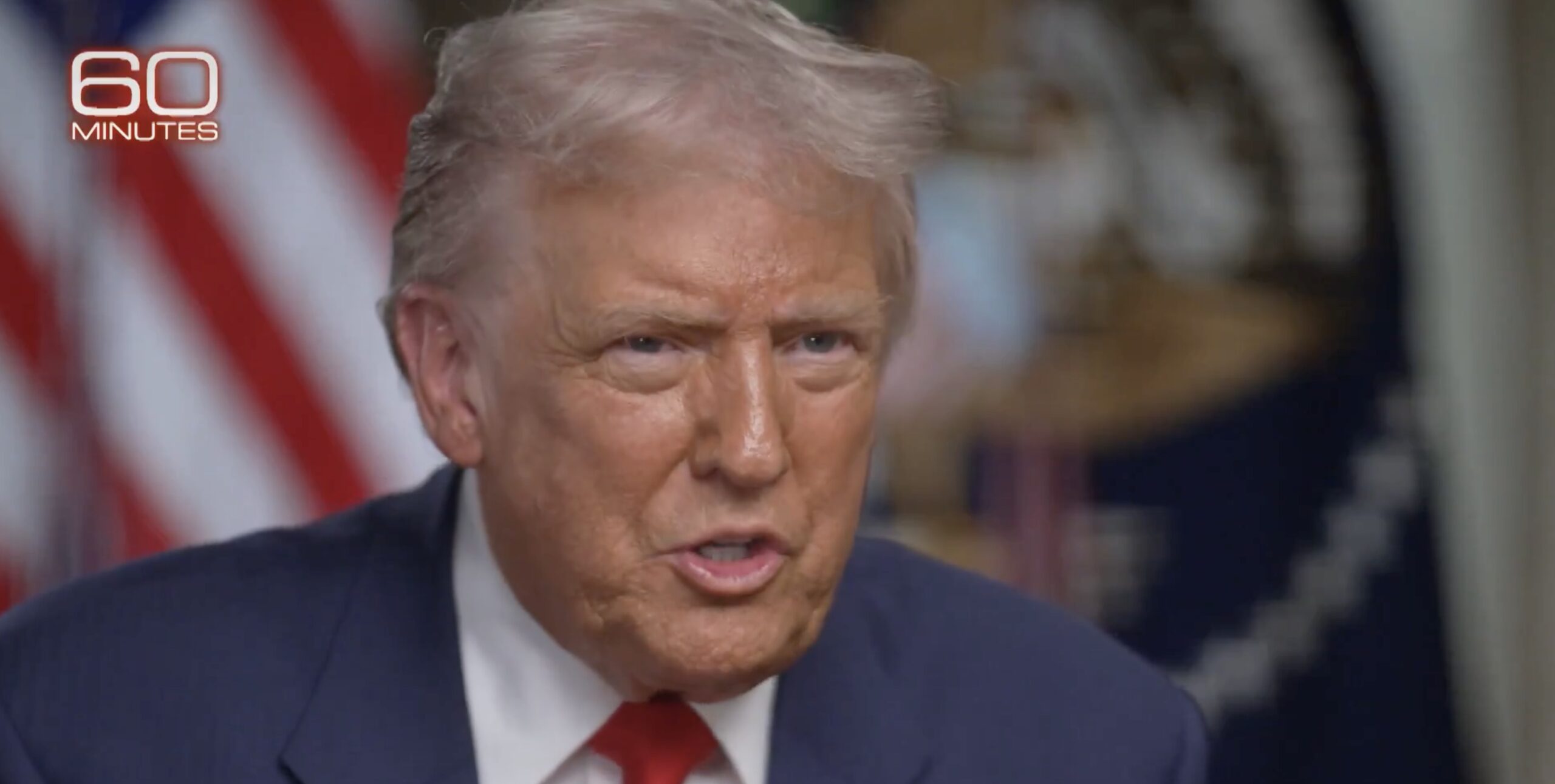
During a recent interview on CBS’s “60 Minutes,” President Donald Trump confronted media scrutiny regarding his immigration policies. In a discussion with anchor Norah O’Donnell, Trump provided firm responses to questions about the tactics used by Immigration and Customs Enforcement (ICE) during deportation efforts. His remarks came amid ongoing debates about the effectiveness and morality of these tactics.
O’Donnell raised concerns about the public’s perception of ICE operations, referencing videos that depicted agents engaging in aggressive actions, including the use of tear gas and physical confrontations. “Have some of these raids gone too far?” she asked. In a notable moment, Trump replied, “No, I think they haven’t gone far enough.” This statement underscores his administration’s strong stance on immigration enforcement.
The exchange highlighted a significant divergence between Trump’s views and those of his critics. O’Donnell pressed further, questioning the deportation of individuals without violent criminal records. Trump responded by stating, “Landscapers who are criminals, yeah,” reinforcing his administration’s policy that prioritizes deporting individuals who entered the country illegally, regardless of their specific offenses.
Defending Deportation Tactics
The president’s comments reflect a broader commitment to his immigration strategy, which he described as both just and compassionate. He elaborated, “We have to start off with a policy. And the policy has to be [that] you came into the country illegally [so] you’re gonna go out.” This approach indicates a willingness to use strict measures against illegal immigration while also proposing pathways for legal re-entry.
Trump’s refusal to back down from his position during the interview represents a departure from traditional political responses, where leaders often seek to appease media narratives. His supporters appreciate this straightforward approach, which they view as a reflection of his authenticity and commitment to his campaign promises from the Make America Great Again movement.
O’Donnell’s attempts to challenge Trump’s stance on ICE raids and the classification of deportees as criminals were met with unwavering defiance from the president. He emphasized the need for decisive action against individuals he described as threats to public safety, stating, “Many of them are murderers. Many of them are people that were thrown out of their countries because they were criminals.”
Comparisons to Previous Leaders
This interview draws parallels to past presidential figures who similarly faced media scrutiny yet maintained a commitment to their principles. Former President Ronald Reagan, for instance, famously delivered a speech in Berlin in June 1987 that challenged the Soviet Union directly, despite widespread criticism from the media and political opponents.
Reagan’s willingness to confront the establishment and speak his mind has often been cited as a hallmark of effective leadership, a sentiment that some supporters now attribute to Trump. Just as Reagan faced questions about his rhetoric and its potential consequences, Trump has similarly navigated criticism regarding his immigration policies and their implications for American society.
As the debate around immigration continues, Trump’s interview serves as a reminder of the contentious dynamics between political leaders and the media. His approach may resonate with a segment of the American population that values directness and a strong stance on national security issues.
The conversation surrounding immigration remains polarizing, with significant implications for policy and public perception. Trump’s unapologetic defense of his administration’s tactics illustrates a commitment to his agenda, one that prioritizes strict enforcement of immigration laws while engaging in discourse that resonates with his base.
In the months leading up to the next election, how these discussions evolve will likely play a critical role in shaping voter sentiment and the political landscape in the United States.

Woman Arrested for Threatening U-Haul Worker with Baton

Japan’s PM Takaichi Vows Urgent Fiscal Management Amid Rate Trends

Bitcoin Plummets Below $88K Amid Tether Concerns and Warnings

Tottenville Falls Short in PSAL 4A Title Game Against Erasmus

Shark Teeth Study Reveals Urgent Clues to Prevent Extinction

Church Members Rally Together After Thanksgiving Fire Devastation

U.S. Investment in Canadian Energy Firms Surges Despite Low Oil Prices

Nick Jonas Unveils New Solo Album ‘Sunday Best’ Set for February Release

Researchers Urge Label Changes for Low-Alcohol Drinks to Aid Pregnant Women

Urgent Update: Tom Aspinall’s Vision Deteriorates After UFC 321

MIT Scientists Uncover Surprising Genomic Loops During Cell Division

University of Hawaiʻi Joins $25.6M AI Project to Enhance Disaster Monitoring

AI Disruption: AWS Faces Threat as Startups Shift Cloud Focus

Time Crystals Revolutionize Quantum Computing Potential

Honeywell Forecasts Record Business Jet Deliveries Over Next Decade

Discover the Full Map of Pokémon Legends: Z-A’s Lumiose City

GOP Faces Backlash as Protests Surge Against Trump Policies

Parenthood Set to Depart Hulu: What Fans Need to Know
-
 Top Stories1 month ago
Urgent Update: Tom Aspinall’s Vision Deteriorates After UFC 321
-
 Health1 month ago
MIT Scientists Uncover Surprising Genomic Loops During Cell Division
-
Science4 weeks ago
University of Hawaiʻi Joins $25.6M AI Project to Enhance Disaster Monitoring
-
 Top Stories1 month ago
AI Disruption: AWS Faces Threat as Startups Shift Cloud Focus
-
 Science2 months ago
Time Crystals Revolutionize Quantum Computing Potential
-
 World2 months ago
Honeywell Forecasts Record Business Jet Deliveries Over Next Decade
-
 Entertainment1 month ago
Discover the Full Map of Pokémon Legends: Z-A’s Lumiose City
-
 Top Stories2 months ago
GOP Faces Backlash as Protests Surge Against Trump Policies
-
 Entertainment2 months ago
Parenthood Set to Depart Hulu: What Fans Need to Know
-

 Politics2 months ago
Judge Signals Dismissal of Chelsea Housing Case Citing AI Flaws
-

 Sports2 months ago
Yoshinobu Yamamoto Shines in Game 2, Leading Dodgers to Victory
-

 Health2 months ago
Maine Insurers Cut Medicare Advantage Plans Amid Cost Pressures