
Top Stories
Trump’s Tariff Crisis: Economists Challenge His Claims Now

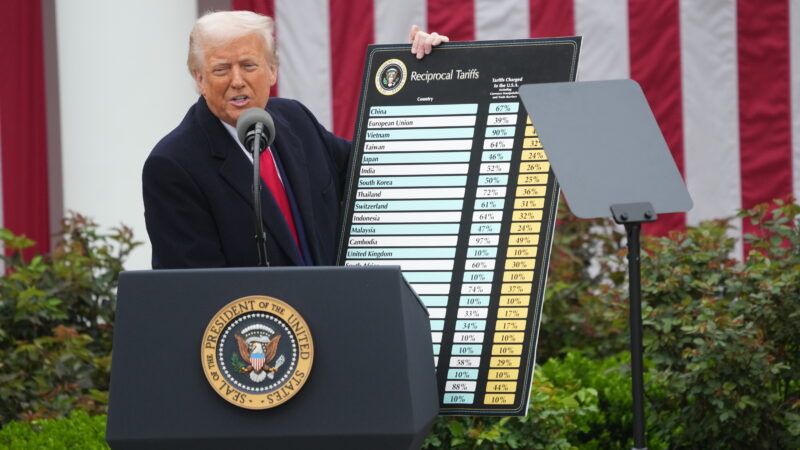
UPDATE: New reports confirm that President Donald Trump faces significant legal challenges regarding his tariffs on imported goods, as a brief signed by 45 economists directly contradicts his claims of a national emergency. This urgent legal battle is now under the scrutiny of the Supreme Court, which is set to address the legitimacy of Trump’s tariff authority under the International Emergency Economic Powers Act (IEEPA).
In April 2025, Trump announced sweeping tariffs aimed at nearly all countries, citing a supposed “unusual and extraordinary threat” to national security and the economy. However, the economists’ brief highlights that these assertions are fundamentally flawed. It notes that trade deficits—referred to by Trump as a crisis—are actually historical norms in U.S. economic patterns, existing consistently for over fifty years.
The pivotal question for the Supreme Court is whether the IEEPA, a law enacted in 1977 that does not mention tariffs, grants the president authority to impose such taxes unilaterally. Three lower courts have already ruled against Trump’s interpretation, raising the stakes for this ongoing legal dispute.
According to the economists, the trade deficits Trump cites do not constitute a national emergency. They argue, “Trade deficits are ordinary and commonplace,” and the notion that they present a threat to the U.S. economy is misleading. The brief underscores that when the U.S. imports more than it exports, it receives more foreign investment, which is a sign of strength, not weakness.
Trump’s tariffs, which were expected to reduce the trade deficit, have not shown the desired results. Data reveals that the U.S. trade deficit in goods rose between January and June 2025, despite the imposition of high tariffs. The economists warn that these tariffs could lead to significant economic repercussions, estimating impacts in the trillions of dollars over the next decade.
This legal debate also ties into the major questions doctrine, which necessitates clear congressional authorization for executive actions that could affect the economy profoundly. If these tariffs do not qualify as a major economic decision, then it raises questions about their legality.
As the Supreme Court prepares to hear this case, the implications extend beyond legal boundaries—they affect everyday Americans and the global economy. Trump’s economic policies, heavily scrutinized by experts, are now a focal point in this critical moment for U.S. trade policy.
Stay tuned for the latest updates on this developing story that could reshape the U.S. economic landscape.

ECB’s de Guindos Confirms Interest Rates Will Remain Steady

Zacks Research Lowers Earnings Forecast for Avanos Medical

“All’s Fair Season 1 Episode 7 Arrives December 2 on Hulu”

Rolette Record Transitions Ownership to Cando Editors in 1929 Sale

Bregman Seeks Debate Stage with Haaland in Gubernatorial Race

University of Arizona Research Reveals Key to Preventing Fibrosis

Rolette Record Sold to Cando Owners, New Era Begins

Urgent Fire Erupts at Indigo Apartments in NW OKC, Residents Fearful

Arlene Hartman, Beloved Community Figure, Passes Away at 87

Urgent Update: Tom Aspinall’s Vision Deteriorates After UFC 321

MIT Scientists Uncover Surprising Genomic Loops During Cell Division

University of Hawaiʻi Joins $25.6M AI Project to Enhance Disaster Monitoring

AI Disruption: AWS Faces Threat as Startups Shift Cloud Focus

Time Crystals Revolutionize Quantum Computing Potential

Honeywell Forecasts Record Business Jet Deliveries Over Next Decade

Discover the Full Map of Pokémon Legends: Z-A’s Lumiose City

GOP Faces Backlash as Protests Surge Against Trump Policies

Parenthood Set to Depart Hulu: What Fans Need to Know
-
 Top Stories1 month ago
Urgent Update: Tom Aspinall’s Vision Deteriorates After UFC 321
-
 Health1 month ago
MIT Scientists Uncover Surprising Genomic Loops During Cell Division
-
Science4 weeks ago
University of Hawaiʻi Joins $25.6M AI Project to Enhance Disaster Monitoring
-
 Top Stories1 month ago
AI Disruption: AWS Faces Threat as Startups Shift Cloud Focus
-
 Science2 months ago
Time Crystals Revolutionize Quantum Computing Potential
-
 World2 months ago
Honeywell Forecasts Record Business Jet Deliveries Over Next Decade
-
 Entertainment1 month ago
Discover the Full Map of Pokémon Legends: Z-A’s Lumiose City
-
 Top Stories2 months ago
GOP Faces Backlash as Protests Surge Against Trump Policies
-
 Entertainment2 months ago
Parenthood Set to Depart Hulu: What Fans Need to Know
-

 Politics2 months ago
Judge Signals Dismissal of Chelsea Housing Case Citing AI Flaws
-

 Sports2 months ago
Yoshinobu Yamamoto Shines in Game 2, Leading Dodgers to Victory
-

 Health2 months ago
Maine Insurers Cut Medicare Advantage Plans Amid Cost Pressures