
World
Ukrainian Drone Unit Enhances Capabilities Amid Operator Shortages

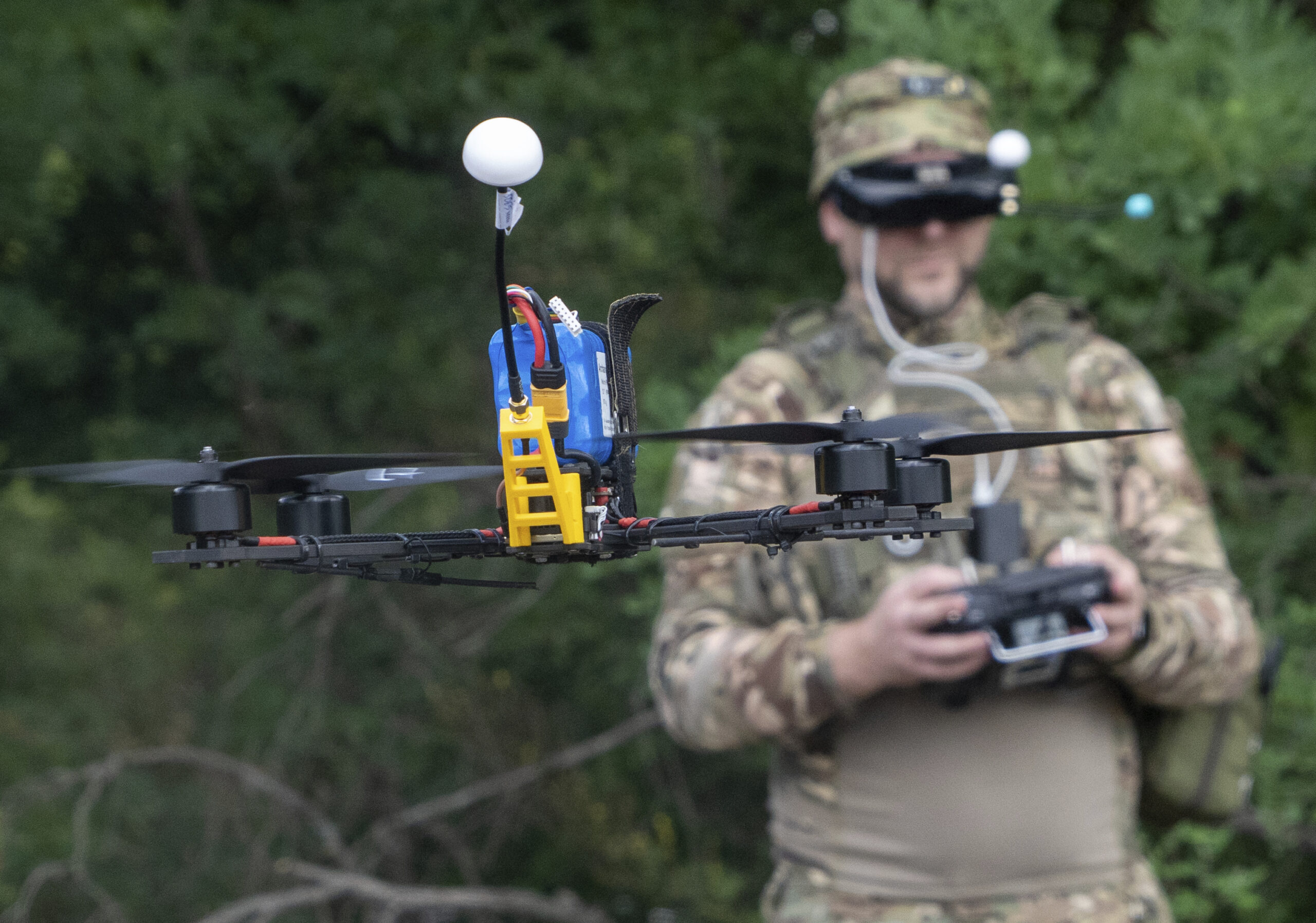
In a recent interview, a member of Ukraine’s National Guard, known by the callsign “Alex,” shared insights into the operations of the Typhoon unit, a specialized force established in 2024 focusing on unmanned systems. The unit has evolved from its initial role in frontline first-person-view (FPV) operations to a broader range of drone technologies, aiming to enhance combat capabilities and train operators effectively.
Alex highlighted that the unit is grappling with a significant shortage of both trained pilots and motivated individuals. The challenge lies not only in training pilots from scratch, which can take a minimum of three months, but also in ensuring they possess the technical knowledge necessary for operating and troubleshooting drones. “Pilots need to understand how the system works,” Alex stated, emphasizing the importance of engineering knowledge alongside piloting skills.
The unit has adopted a strategy focused on quality over quantity, providing pilots with up-to-date information on battlefield conditions. This includes knowledge on Russian electronic warfare tactics and the operational effectiveness of various frequencies.
Addressing Electronic Warfare Challenges
The primary challenge the Typhoon unit faces is acquiring real-time battlefield information while anticipating future developments. Russian systems can cover a vast range of frequencies, making it critical for Ukrainian operators to adapt quickly. Alex explained that skilled pilots can strike targets before Russian forces have the opportunity to activate their jamming systems.
To counteract this, some drones are equipped with multiple receivers and antennas, allowing them to maintain control even when certain frequencies are jammed. This redundancy significantly increases the likelihood of successful operations in environments plagued by electronic warfare.
When discussing the pressing needs for unmanned technologies, Alex noted that while many pilots rely on similar Chinese spare parts, the ability to quickly swap components is crucial for success. “Quality is more important than quantity,” he stated, pointing out that having a variety of spare parts can dramatically improve operational effectiveness.
Evaluating Western Technologies
Alex also assessed the performance of Western-supplied unmanned systems, identifying some of the most effective models as the German-made Vector drones and Polish FlyEye drones. These systems benefit from direct feedback from operators on the ground, leading to rapid modifications and improvements. However, he criticized some smaller drones, including those from U.S. company Skydio, for their inability to function effectively under current jamming conditions.
During testing of unmanned ground vehicles, Alex noted that many systems struggled to perform under conditions mimicking actual battlefield scenarios. The tests required manufacturers to operate their robots without direct line of sight, relying solely on onboard cameras and surveillance drones. Such scenarios revealed that many systems excel in controlled environments but falter when operators must rely on remote sensing in real-time.
Alex pointed out that the evolving tactics of Russian forces have led to the deployment of fixed-wing reconnaissance drones that can carry and release FPVs from significant distances. This method enhances connectivity and counteracts jamming efforts. He observed that Russian fiber-optic drones have also improved, extending their operational range from approximately 15-20 kilometers to as much as 30 kilometers.
The effectiveness of FPVs compared to fiber-optic drones is contingent upon several factors, including pilot skill and external conditions. Experienced FPV pilots report success rates between 70% and 80%, while less experienced operators may achieve rates as low as 20%. In contrast, fiber-optic drones typically see success rates of 40% to 50%, affected by environmental factors such as weather and artillery intensity.
As the conflict evolves, the Typhoon unit continues to refine its strategies, emphasizing the need for reliable technologies that can operate effectively under the severe constraints of modern warfare. Amidst these challenges, the integration of skilled pilots and advanced unmanned systems remains vital for Ukraine’s operational success on the battlefield.

Urgent Fire Erupts at Indigo Apartments in NW OKC, Residents Fearful

Arlene Hartman, Beloved Community Figure, Passes Away at 87

Urgent: Vehicle Fire Closes Two Lanes on I-215 in Salt Lake City

Knicks Dominate Raptors 116-94, Extend Home Winning Streak

Hallmark’s ‘Christmas at the Catnip Café’ Premieres Tonight

Woman Arrested for Threatening U-Haul Worker with Baton

Japan’s PM Takaichi Vows Urgent Fiscal Management Amid Rate Trends

Bitcoin Plummets Below $88K Amid Tether Concerns and Warnings

Tottenville Falls Short in PSAL 4A Title Game Against Erasmus

Urgent Update: Tom Aspinall’s Vision Deteriorates After UFC 321

MIT Scientists Uncover Surprising Genomic Loops During Cell Division

University of Hawaiʻi Joins $25.6M AI Project to Enhance Disaster Monitoring

AI Disruption: AWS Faces Threat as Startups Shift Cloud Focus

Time Crystals Revolutionize Quantum Computing Potential

Honeywell Forecasts Record Business Jet Deliveries Over Next Decade

Discover the Full Map of Pokémon Legends: Z-A’s Lumiose City

GOP Faces Backlash as Protests Surge Against Trump Policies

Parenthood Set to Depart Hulu: What Fans Need to Know
-
 Top Stories1 month ago
Urgent Update: Tom Aspinall’s Vision Deteriorates After UFC 321
-
 Health1 month ago
MIT Scientists Uncover Surprising Genomic Loops During Cell Division
-
Science4 weeks ago
University of Hawaiʻi Joins $25.6M AI Project to Enhance Disaster Monitoring
-
 Top Stories1 month ago
AI Disruption: AWS Faces Threat as Startups Shift Cloud Focus
-
 Science2 months ago
Time Crystals Revolutionize Quantum Computing Potential
-
 World2 months ago
Honeywell Forecasts Record Business Jet Deliveries Over Next Decade
-
 Entertainment1 month ago
Discover the Full Map of Pokémon Legends: Z-A’s Lumiose City
-
 Top Stories2 months ago
GOP Faces Backlash as Protests Surge Against Trump Policies
-
 Entertainment2 months ago
Parenthood Set to Depart Hulu: What Fans Need to Know
-

 Politics2 months ago
Judge Signals Dismissal of Chelsea Housing Case Citing AI Flaws
-

 Sports2 months ago
Yoshinobu Yamamoto Shines in Game 2, Leading Dodgers to Victory
-

 Health2 months ago
Maine Insurers Cut Medicare Advantage Plans Amid Cost Pressures