
Science
International Team Unlocks Insights Into High-Temperature Superconductivity

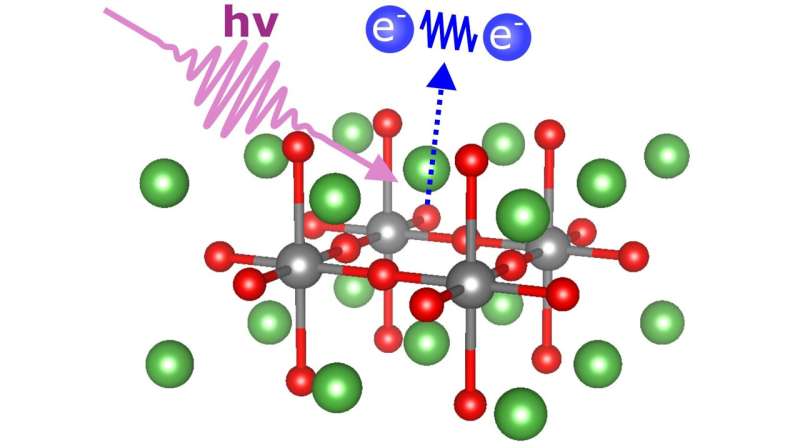
An international research team at BESSY II has made significant strides in understanding high-temperature superconductivity by measuring the energy of charge carrier pairs in undoped La2CuO4. Their findings indicate that interaction energies within the copper oxide layers, which have potential superconducting properties, are considerably lower than those in the insulating lanthanum oxide layers. This research, published in the journal Nature Communications, could provide crucial insights into other functional materials as well.
The phenomenon of high-temperature superconductivity, which allows materials to conduct electricity without loss, was first identified approximately 40 years ago. Unlike traditional superconductors, which require temperatures close to absolute zero, high-temperature superconductors operate at higher, yet still sub-room temperature levels. Despite their practical applications, the underlying mechanisms remain elusive.
The research, led by Professor Alexander Föhlisch, utilized samples from the University of Rome. These samples consist of alternating layers of copper and lanthanum oxide, specifically formulated as La2CuO4. When doped with foreign atoms, this compound can exhibit superconductivity below 40 Kelvin, with the superconducting activity localized in the CuO layers while the LaO layers stay insulating.
In their experiment, the researchers sought to understand the strength of interactions between charge carriers in the different oxide layers. According to Dr. Danilo Kühn, the first author of the study, the measurements were conducted at room temperature, focusing on the interactions between charge carriers around oxygen atoms.
The team employed a sophisticated method known as Auger photoelectron coincidence spectroscopy, utilizing time-of-flight spectrometers with a distinctive configuration. They directed special X-ray pulses at the sample, allowing them to monitor interaction processes occurring at an extremely rapid pace. This innovative approach enabled precise analysis of interactions specifically within the copper oxide layer, which is integral to superconductivity.
The results revealed that interaction energies in the copper oxide layer were significantly lower than in the insulating lanthanum oxide. “These findings enhance our understanding of the mechanisms underlying high-temperature superconductivity,” stated Föhlisch. He also noted that this measurement technique might shed light on the properties of other functional materials, expanding the potential applications of this research.
The study brings the scientific community closer to deciphering the complex behaviors associated with high-temperature superconductors, a field that continues to intrigue researchers worldwide. Further investigations could lead to advancements in technology and materials science, as understanding these interactions opens the door to new possibilities in superconducting applications.
For more detailed information, refer to the original research article by Danilo Kühn et al. titled “Direct observation of the on-site oxygen 2p two-hole Coulomb energy in La2CuO4,” available in Nature Communications (2025).

Woman Arrested for Threatening U-Haul Worker with Baton

Japan’s PM Takaichi Vows Urgent Fiscal Management Amid Rate Trends

Bitcoin Plummets Below $88K Amid Tether Concerns and Warnings

Tottenville Falls Short in PSAL 4A Title Game Against Erasmus

Shark Teeth Study Reveals Urgent Clues to Prevent Extinction

Church Members Rally Together After Thanksgiving Fire Devastation

U.S. Investment in Canadian Energy Firms Surges Despite Low Oil Prices

Nick Jonas Unveils New Solo Album ‘Sunday Best’ Set for February Release

Researchers Urge Label Changes for Low-Alcohol Drinks to Aid Pregnant Women

Urgent Update: Tom Aspinall’s Vision Deteriorates After UFC 321

MIT Scientists Uncover Surprising Genomic Loops During Cell Division

University of Hawaiʻi Joins $25.6M AI Project to Enhance Disaster Monitoring

AI Disruption: AWS Faces Threat as Startups Shift Cloud Focus

Time Crystals Revolutionize Quantum Computing Potential

Honeywell Forecasts Record Business Jet Deliveries Over Next Decade

Discover the Full Map of Pokémon Legends: Z-A’s Lumiose City

GOP Faces Backlash as Protests Surge Against Trump Policies

Parenthood Set to Depart Hulu: What Fans Need to Know
-
 Top Stories1 month ago
Urgent Update: Tom Aspinall’s Vision Deteriorates After UFC 321
-
 Health1 month ago
MIT Scientists Uncover Surprising Genomic Loops During Cell Division
-
Science4 weeks ago
University of Hawaiʻi Joins $25.6M AI Project to Enhance Disaster Monitoring
-
 Top Stories1 month ago
AI Disruption: AWS Faces Threat as Startups Shift Cloud Focus
-
 Science2 months ago
Time Crystals Revolutionize Quantum Computing Potential
-
 World2 months ago
Honeywell Forecasts Record Business Jet Deliveries Over Next Decade
-
 Entertainment1 month ago
Discover the Full Map of Pokémon Legends: Z-A’s Lumiose City
-
 Top Stories2 months ago
GOP Faces Backlash as Protests Surge Against Trump Policies
-
 Entertainment2 months ago
Parenthood Set to Depart Hulu: What Fans Need to Know
-

 Politics2 months ago
Judge Signals Dismissal of Chelsea Housing Case Citing AI Flaws
-

 Sports2 months ago
Yoshinobu Yamamoto Shines in Game 2, Leading Dodgers to Victory
-

 Health2 months ago
Maine Insurers Cut Medicare Advantage Plans Amid Cost Pressures